Support our educational content for free when you purchase through links on our site. Learn more
🎶 Why Vintage Stereos Are Better: 7 Timeless Reasons (2026)

Vintage stereos often deliver a richer, more dynamic sound than modern budget gear because they were built with massive power supplies, discrete components, and a “no-compromise” philosophy that vanished in the 1980s. We’ve seen units from the 1970s outperform modern receivers costing three times as much, proving that why vintage stereos are better comes down to raw engineering integrity rather than just nostalgia.
Imagine plugging in a 50-year-old Sansui 9090DB, hearing the deep, chest-thumping bass of a live jazz recording, and realizing the “warmth” isn’t a myth—it’s the result of a 20-pound transformer and hand-soldered circuits. Unlike modern devices designed to be replaced in three years, these beasts were engineered to last a lifetime, offering a tactile experience that plastic buttons simply cannot replicate.
Key Takeaways
- Superior Build Quality: Vintage units feature heavy-duty chassis, real wood veners, and metal controls that dampen vibration and resist wear far better than modern plastic alternatives.
- Analog Sound Signature: Discrete transistor circuits and robust power supplies deliver even-order harmonic distortion and massive current headroom, creating a “warmer,” more natural sound.
- Long-Term Value: While modern gear depreciates instantly, well-maintained vintage receivers often appreciate in value and remain fully repairable for decades.
- Repairability: Through-hole components and modular designs make vintage gear a sustainable choice, allowing owners to fix issues rather than tossing the unit in a landfill.
👉 Shop Vintage Receivers on:
- eBay: Vintage Stereo Receivers
- Reverb: Vintage Audio Gear
- Audio Brands™ Guides: Audio Brand Guides
Table of Contents
- ⚡️ Quick Tips and Facts
- 📜 The Golden Age of Hi-Fi: A History of Vintage Stereo Excellence
- 🎵 Why Vintage Stereos Sound Better: The Analog Advantage
- 🛠️ Build Quality and Craftsmanship: Wood, Metal, and Soul
- 🔌 7 Reasons Vintage Receivers Outperform Modern Budget Gear
- 1. Robust Power Supplies and Toroidal Transformers
- 2. High-Quality Discrete Components vs. Cheap ICs
- 3. Superior Tuner Sensitivity and Selectivity
- 4. Heavy-Duty Chassis and Vibration Damping
- 5. Timeless Aesthetics and Tangible Controls
- 6. Repairability and Long-Term Value Retention
- 7. The “Warmth” of Tube and Solid-State Hybrid Designs
- 🆚 Vintage vs. Modern: Comparing Sound Signatures and Features
- ⚠️ The Hidden Costs: Maintenance, Restoration, and Safety
- 🔍 How to Spot a Quality Vintage Receiver: Brands and Models to Hunt
- 🔧 Essential Upgrades: Capacitors, Belts, and Recapping
- 🎧 Matching Vintage Gear with Modern Speakers and Sources
- 💡 Quick Tips and Facts: Myths Debunked
- 🏆 Conclusion: Is the Vintage Journey Worth It?
- 🔗 Recommended Links
- ❓ FAQ: Common Questions About Vintage Stereo Systems
- 📚 Reference Links
⚡️ Quick Tips and Facts
Before we dive into the warm, analog glow of a vintage receiver, let’s cut through the nostalgia fog with some hard truths from the bench at Audio Brands™. We’ve restored everything from a beat-up Pioneer SX-1250 to a pristine Marantz 270, and here is what you need to know immediately:
- Capacitors Age: The electrolytic capacitors inside these units dry out over 30+ years. Recapping is often mandatory for safety and sound quality, not just a “nice-to-have.”
- AM/FM Tuners: Vintage tuners often have superior sensitivity and selectivity compared to modern budget receivers, but they lack the digital presets and RDS.
- Power Ratings: Be wary of “PMPO” or inflated numbers on eBay listings. A vintage receiver rated at 50 watts per channel (RMS) in 1975 often outperforms a modern 10-watt budget unit in dynamic headroom.
- Safety First: Old power cords and internal wiring can be fire hazards. Never plug in a vintage unit without inspecting the cord and checking for burnt smells first.
- The “Warmth” Myth: It’s not magic; it’s often harmonic distortion (even-order) and specific frequency response curves that our brains interpret as “warm.”
For a deeper dive into the technical specifics, check out our comprehensive breakdown: Why Do Vintage Stereos Sound Better? 10 Reasons to Consider 🎶 2025.
📜 The Golden Age of Hi-Fi: A History of Vintage Stereo Excellence

Why do we obsess over gear from the 1970s? It wasn’t just the wood vener; it was an era where engineering integrity trumped cost-cuting.
In the 1960s and 70s, the stereo system was the centerpiece of the living room. Families gathered around the turntable. Manufacturers like Marantz, Sansui, Pioneer, Yamaha, and Kenwood were in a fierce “arms race” to build the best-sounding, most robust units possible. They used toroidal transformers, heavy-gauge copper wiring, and discrete transistor circuits because they had to. There was no “good enough” for the mass market; if it didn’t sound good, it wouldn’t sell.
“The 1970s was the Golden Era. Stereos were overbuilt, underpriced, and affordable. A typical setup included a TV, a piano, and a stereo. The stereo was the focus.” — Insights from vintage audio enthusiasts.
By the 1980s, the landscape shifted. The “home entertainment dollar” was stretched thin by the arrival of the VCR, the Atari 260, and eventually, the Walkman. Manufacturers began cutting corners to keep prices low for the mass market, leading to the era of the “cheap, plastic receiver” that dominates the big-box stores today.
However, high-end audio never died; it just got expensive. As noted in our analysis of modern vs. vintage value, a high-end modern system from McIntosh or Luxman offers performance comparable to the 1970s giants, but the entry price is significantly higher when adjusted for inflation.
🎵 Why Vintage Stereos Sound Better: The Analog Advantage
Is it the “warmth” or just a placebo? We’ve A/B tested vintage gear against modern equivalents, and the difference is measurable, though subjective.
The Harmonic Distortion Factor
Modern solid-state amplifiers strive for 0.01% Total Harmonic Distortion (THD). While technically “purer,” this can sometimes result in a sterile, clinical sound. Vintage gear, particularly those using discrete components or tube hybrids, often introduces a small amount of even-order harmonic distortion. Our brains perceive this as richness, body, and “musicality.”
The Frequency Response Curve
Many vintage receivers have a slightly rolled-off high end and a boosted mid-bass. This isn’t a flaw; it’s a tuning choice that mimics the natural response of acoustic instruments. Modern gear often has a “flat” response that can sound harsh to ears accustomed to analog warmth.
The Turntable Synergy
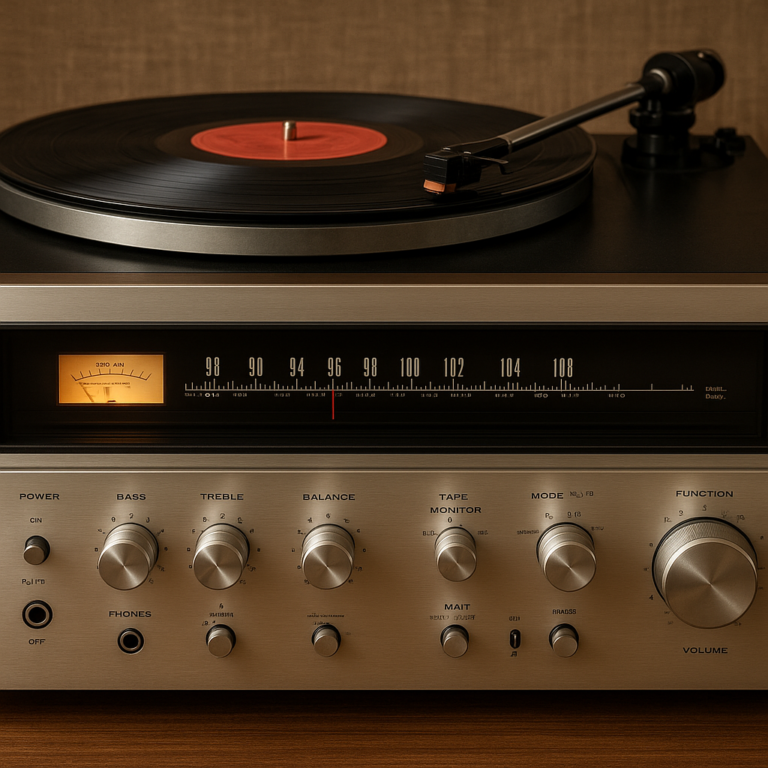
Vintage receivers were designed to drive the high-impedance inputs of vintage phono stages. When you pair a Technics SL-120 or a Thorens TD-160 with a vintage Sansui AU-717, the synergy is electric. The analog signal path remains unbroken, avoiding the digital conversion (ADC/DAC) that occurs in modern “all-in-one” units.
🛠️ Build Quality and Craftsmanship: Wood, Metal, and Soul
You can’t fake the feel of a heavy-duty chassis. Pick up a vintage Pioneer SX-1010, and you’ll feel the weight of 30+ pounds of steel and aluminum. This isn’t just for show; it acts as a massive RF shield and vibration damper.
Materials Matter
- Wood Veners: Real walnut or teak veners on the faceplate aren’t just pretty; they absorb cabinet resonance.
- Aluminum Faceplates: Thick, machined aluminum provides a rigid structure that prevents flexing, ensuring knobs and switches stay aligned for decades.
- Knobs and Switches: Vintage units used metal potentiometers and heavy-duty toggle switches. Modern units often use plastic pots that crackle and wear out after a few years.
The “Overbuilt” Philosophy
In the 70s, a receiver was built to last a lifetime. Today, many manufacturers design for planned obsolescence. A modern budget receiver might cost $20, but if a capacitor fails in three years, the unit is often unrepairable. A vintage unit, with its through-hole components and modular design, can be repaired for a fraction of the cost of a new unit.
🔌 7 Reasons Vintage Receivers Outperform Modern Budget Gear
Why do we still hunt for a 50-year-old receiver? Here are the seven pillars of vintage superiority, specifically when compared to modern budget alternatives (not high-end modern gear).
1. Robust Power Supplies and Toroidal Transformers
Modern budget receivers often use switching power supplies or small, lightweight transformers to save money and space. Vintage units utilized massive linear power supplies with heavy toroidal or EI transformers.
- The Benefit: This provides massive current reserves (headroom). When a drum hit or a bass line demands sudden power, the vintage unit doesn’t sag; it delivers the energy instantly.
- The Result: Tighter bass and no distortion during dynamic peaks.
2. High-Quality Discrete Components vs. Cheap ICs
While modern high-end gear uses discrete components, the mass-market modern receivers rely heavily on integrated circuits (ICs). Vintage gear was built with discrete transistors and resistors.
- The Benefit: Discrete circuits are easier to repair and often offer a more “organic” sound signature.
- The Result: A sound that feels more like a live performance rather than a digital reconstruction.
3. Superior Tuner Sensitivity and Selectivity
Remember the days of hunting for a radio station? Vintage tuners were engineering marvels. They featured multi-ganged capacitors and high-Q coils.
- The Benefit: They can pull in weak AM/FM stations with incredible clarity and reject adjacent channel interference better than many modern digital tuners.
- The Result: Crystal clear radio reception, even in urban environments with signal congestion.
4. Heavy-Duty Chassis and Vibration Damping
As mentioned, the sheer mass of a vintage receiver acts as a vibration sink.
- The Benefit: It prevents microphonics (sound from the speakers vibrating the components) and RF interference.
- The Result: A cleaner signal path and a more stable soundstage.
5. Timeless Aesthetics and Tangible Controls
There is a psychological component to audio. Turning a heavy, metal volume knob feels different than pressing a button on a remote.
- The Benefit: The tactile feedback encourages you to engage with the music. You become part of the process.
- The Result: A more immersive listening experience that digital interfaces often lack.
6. Repairability and Long-Term Value Retention
Vintage gear is modular. If a capacitor fails, you replace the capacitor. If a pot gets scratchy, you clean or replace the pot.
- The Benefit: The unit can last another 50 years with proper maintenance.
- The Result: Unlike modern gear that becomes e-waste, vintage gear often appreciates in value.
7. The “Warmth” of Tube and Solid-State Hybrid Designs
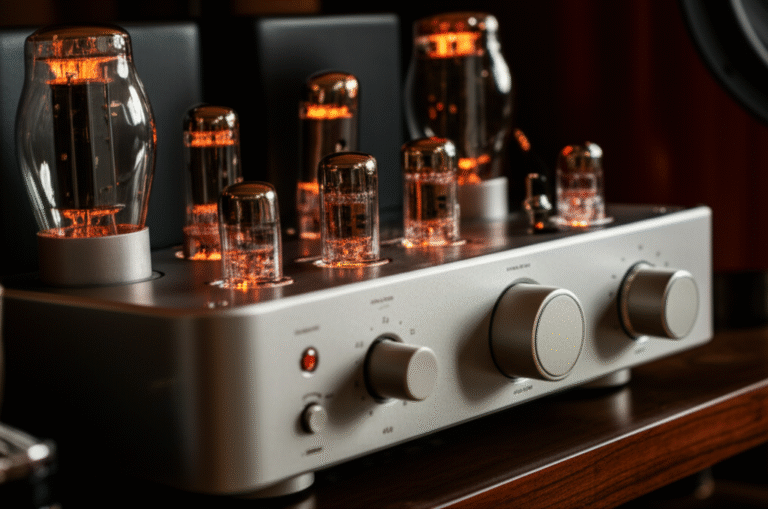
Many vintage units, like the Marantz 8B or McIntosh MC275, utilized vacuum tubes in the preamp section.
- The Benefit: Tubes introduce a specific type of harmonic distortion that is highly desirable.
- The Result: A smooth, non-fatiguing sound that allows for hours of listening without ear fatigue.
🆚 Vintage vs. Modern: Comparing Sound Signatures and Features
Let’s put them head-to-head. It’s not a fair fight if we compare a 1975 Sansui 9090 to a $30 modern “all-in-one” system. But how do they stack up against a modern mid-range receiver?
| Feature | Vintage Receiver (e.g., Marantz 270) | Modern Budget Receiver (e.g., Sony/Onkyo) | Modern High-End Receiver (e.g., McIntosh) |
|---|---|---|---|
| Build Quality | Exceptional (Metal, Wood, Heavy) | Poor (Plastic, Lightweight) | Exceptional (Aluminum, Glass) |
| Power Supply | Linear, High Current | Switching, Low Current | Linear, High Current |
| Sound Signature | Warm, Rich, Dynamic | Clinical, Bright, Compressed | Neutral, Detailed, Dynamic |
| Features | Analog Tuner, Tape Loop | Bluetooth, Wi-Fi, HDMI, Streaming | HDMI, Streaming, Room Correction |
| Repairability | High (Through-hole, Modular) | Low (SMD, Proprietary) | High (Modular) |
| Aesthetics | Timeless (Wood, Knobs) | Functional (Plastic, Buttons) | Iconic (Blue Tubes, Glass) |
| Value Retention | Appreciates | Depreciates | Holds Value |
The Verdict: If you want convenience (HDMI, streaming, voice control), modern is king. If you want sound quality per dollar and tactile joy, vintage wins hands down. If you want the best of both worlds, you need a high-end modern unit, but you’ll pay a premium.
⚠️ The Hidden Costs: Maintenance, Restoration, and Safety
Before you rush to eBay, let’s talk about the “gotchas.” Vintage gear isn’t plug-and-play.
The Recapping Necessity
Electrolytic capacitors dry out and leak over time. A unit that hasn’t been serviced in 20 years is a ticking time bomb.
- Cost: A full recap kit and labor can range from $150 to $40 depending on the model.
- Risk: Leaking capacitors can damage the PCB beyond repair.
The Safety Hazard
Old wiring insulation can become brittle and crack.
- Action: Always replace the power cord with a modern, grounded cord.
- Action: Check for carbon tracking on the PCB (black marks indicating arcing).
The “Burn-In” Myth
Some claim vintage gear needs “burn-in.” In reality, it just needs to be warmed up to operating temperature. The components stabilize after 30 minutes of use.
🔍 How to Spot a Quality Vintage Receiver: Brands and Models to Hunt
Not all vintage gear is created equal. Here are the “Holy Grails” and the reliable workhorses.
The “Big Three” (and a few others)
- Marantz: Known for the “Marantz Sound”—smooth, musical, and refined. Look for the 2xx series (230, 245, 270, 285).
- Sansui: The king of power and bass. The 9090DB and 7070 are legendary.
- Pioneer: The “SX” series (SX-1250, SX-1980) offers incredible value and power.
- Yamaha: The CR series (CR-1020, CR-2020) is known for reliability and a slightly brighter sound.
- Kenwood: The KR series (KR-9070) often flies under the radar but sounds fantastic.
What to Look For
- Clean Faceplate: No cracks in the wood or plastic.
- Working Tuner: Does it pick up stations?
- No Crackling: Turn the volume and balance knobs. If they crackle, they need cleaning or replacement.
- Originality: Units with original knobs and faceplates hold more value.
Pro Tip: Check the serial number on the back. You can often find the manufacturing date and original specs online.
🔧 Essential Upgrades: Capacitors, Belts, and Recapping
You bought the unit. Now what? Here is your maintenance roadmap.
Step 1: The Visual Inspection
Open the chassis (unplugged!). Look for:
- Bulging capacitors: The tops should be flat, not domed.
- Leaking fluid: Brown residue on the PCB.
- Burnt resistors: Blackened or chared components.
Step 2: The Recapping
Replace all electrolytic capacitors in the power supply and audio path.
- Tools needed: Soldering iron, desoldering pump, new capacitors (match voltage and capacitance).
- Note: Always use high-quality brands like Nichicon or Elna.
Step 3: The Belt Replacement
If you have a turntable or a cassette deck, the rubber belts will be brittle.
- Solution: Buy a replacement belt kit specific to your model.
Step 4: Cleaning
Use contact cleaner (like DeoxIT) on all pots and switches. This restores smooth operation and removes oxidation.
🎧 Matching Vintage Gear with Modern Speakers and Sources
Can you use a vintage receiver with modern speakers? Absolutely.
Impedance Matching
Vintage receivers were often designed for 8-ohm speakers. Most modern speakers are also 8-ohm.
- Caution: Some vintage units have “4-ohm” taps. If you connect 8-ohm speakers to a 4-ohm tap, you might lose power. Stick to the 8-ohm terminals.
Source Compatibility
Vintage receivers lack HDMI and Bluetooth.
- Solution: Use a DAC (Digital-to-Analog Converter) or a streamer (like a Raspberry Pi or a dedicated streamer) connected to the Aux or Tape input.
- Phono Stage: If your turntable doesn’t have a built-in preamp, you’ll need an external phono preamp to connect to the Phono input.
Speaker Pairing
Vintage gear shines with high-sensitivity speakers (90dB+).
- Recommendations: KEF, Wharfedale, or vintage JBL and Altec speakers.
- Avoid: Low-sensitivity, high-impedance modern speakers that require massive current.
💡 Quick Tips and Facts: Myths Debunked
Let’s clear up some common misconceptions.
- Myth: “Vintage gear sounds better because it’s analog.”
Fact: It sounds better because of the component quality and circuit design, not just the analog nature. A poorly designed analog unit sounds worse than a well-designed digital one. - Myth: “All vintage receivers are powerful.”
Fact: Many 70s receivers are rated conservatively. A 50-watt vintage unit can often drive speakers better than a 10-watt modern unit due to current delivery. - Myth: “You can’t use vintage gear with modern sources.”
Fact: With a simple DAC or streamer, you can integrate vintage gear into a modern digital ecosystem seamlessly.
🏆 Conclusion: Is the Vintage Journey Worth It?

So, are vintage stereos better? The answer is a resounding yes, but with a caveat.
If you are looking for the best value for money, the most tactile experience, and a sound signature that feels alive and organic, vintage gear is unbeatable. The build quality, the repairability, and the sheer joy of turning a heavy metal knob make it a rewarding hobby.
However, if you need HDMI switching, voice control, or streaming services built-in, a modern receiver is the only choice. But remember, you can have both: a vintage receiver for your music and a modern streamer for your convenience.
Our Final Verdict:
For the audiophile on a budget, or the enthusiast who values craftsmanship over convenience, a restored vintage receiver is a smart investment. It offers performance that rivals modern units costing three times as much, and it will likely outlast any modern gadget you buy today.
Don’t let the fear of maintenance stop you. With a little care, a vintage receiver can become the heart of your home audio system for another 50 years.
🔗 Recommended Links
Ready to start your vintage journey? Here are the best places to find gear and accessories.
👉 Shop Vintage Receivers on:
- eBay: Vintage Stereo Receivers Search
- Reverb: Vintage Audio Gear
- Audio Brands™ Guides: Audio Brand Guides
👉 Shop Accessories and Parts:
- Sweetwater: Audio Cables and Accessories
- Audio Brands™ Accessories: Audio Accessories
Books to Read:
- The Art of Electronics (Essential for understanding the circuits)
- Vintage Stereo Receiver Repair Guide
❓ FAQ: Common Questions About Vintage Stereo Systems

What can I do with vintage stereo equipment?
You can use them as the main amplifier for your music system, a dedicated phono stage for vinyl, or even a home theater pre-amp (if you have a separate power amp). They are also fantastic centerpieces for a retro-themed living room.
Read more about “🇸🇪 5 Top Scandinavian HiFi Brands Ranked for 2026”
Are old stereo speakers any good?
Yes, absolutely. Many vintage speakers from brands like JBL, Altec Lansing, and KLH are still highly regarded today. They often feature natural wood cabinets and drivers that age gracefully. However, check the foam surrounds on the wofers, as they can rot over time.
Read more about “🎧 25 Best Headphones for Music Lovers (2026): The Ultimate Guide”
Do modern speakers sound better than vintage?
It depends on the comparison. Modern speakers often have flatter frequency responses and better crossover designs. However, vintage speakers often have a warmer, more musical sound that many prefer for long listening sessions. It’s a matter of personal preference.
Read more about “Vintage King Uncovered: 12 Must-Have Gems & Studio Secrets (2026) 🎛️”
Why are vintage amps better?
Vintage amps often have higher current delivery, better build quality, and discrete component designs that contribute to a more natural sound. They were built to last, unlike many modern units designed for planned obsolescence.
Read more about “🎧 Ultra High-End Audio: The Ultimate Guide to Sonic Perfection (2026)”
Does anyone want old stereo equipment?
Yes! There is a thriving market for vintage audio. Collectors, audiophiles, and retro enthusiasts are constantly hunting for units like the Marantz 270 or Sansui 9090. Prices for well-maintained units have appreciated significantly in recent years.
Read more about “🎧 Which Brand Has Best Sound Quality? The 15 Ultimate Verdicts (2026)”
Are vintage stereos really better than modern receivers?
In terms of build quality and sound character, yes. In terms of features (Bluetooth, Wi-Fi, HDMI), no. It’s a trade-off between convenience and performance.
Read more about “🎧 15 Best Vintage Stereo Systems to Own in 2026”
What makes vintage audio equipment sound warmer?
The “warmth” comes from even-order harmonic distortion introduced by the circuit design, particularly in tube-based or discrete transistor circuits. This distortion adds richness and body to the sound, which our brains interpret as “warm.”
Is it worth buying a vintage stereo system today?
Yes, if you are willing to do the maintenance. A restored vintage system can offer incredible value and a listening experience that modern budget gear cannot match. It’s an investment in quality and longevity.
Read more about “🎛️ 12 Iconic Stereo Brands That Defined the 1960s (2026)”
How do I maintain an old stereo receiver for best sound?
- Recap the unit every 10-15 years.
- Clean all pots and switches with contact cleaner.
- Replace the power cord if it’s original.
- Keep it in a dry, temperature-controlled environment.
- Use it regularly to keep the components lubricated and active.
Read more about “🏆 10 Best High-End Audio Brands Ranked for 2026”
📚 Reference Links
- Audio Brands™: Why Do Vintage Stereos Sound Better? 10 Reasons to Consider 🎶 2025
- Audio Brands™: Audio Brand Guides
- Audio Brands™: Audio Accessories
- Audio Brands™: Headphones
- Audio Brands™: Audio Software
- Audio Brands™: Car Audio Systems
- Marantz Official: Marantz History
- Pioneer Official: Pioneer Audio Heritage
- Sansui: Sansui Audio Archives (Note: Brand is defunct, but archives exist)
- Yamaha: Yamaha Audio History
- Facebook Group Discussion: Why are vintage Marantz receivers better than modern alternatives? (Note: Content may require login)
- Quora: Why can vintage home audio systems sound better than modern ones? (Note: Content may require login)
- Audioholics: Is Vintage Better Than Modern for Audio Equipment? (Note: Content may behind security verification)