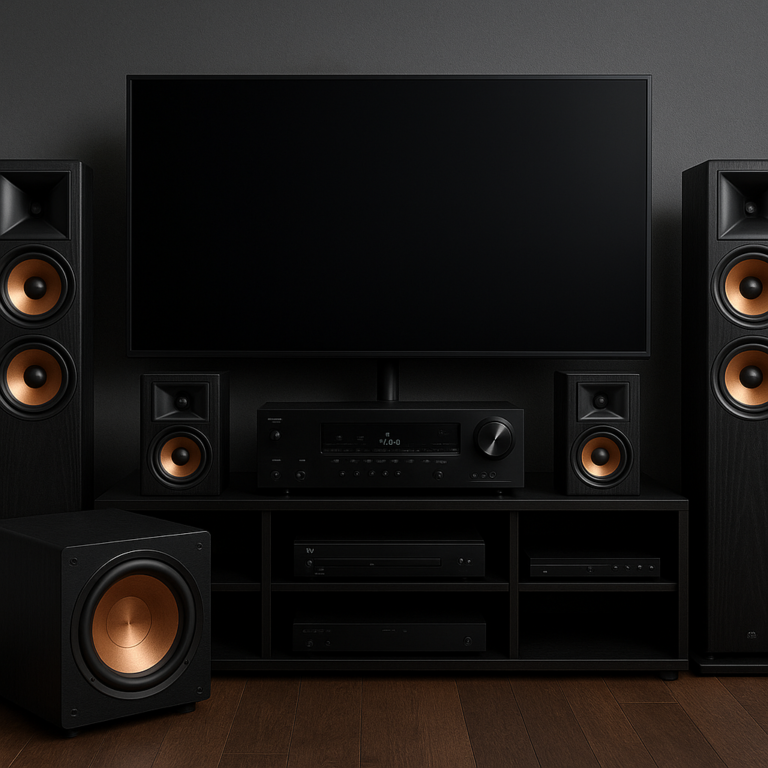
Support our educational content for free when you purchase through links on our site. Learn more
25 Best High-End Audio Brands for Audiophiles 🎶

The best high-end audio brands for audiophiles and music enthusiasts include KEF, Focal, Bowers & Wilkins, JBL, McIntosh, Naim, Sennheiser, and Audeze—but the right choice depends on your room, listening habits, and the sound you enjoy. Our picks cover speakers, amplifiers, headphones, turntables, and digital audio, so you can build a system around music rather than a logo.
We’ve seen a speaker’s placement change a listening session more than a component swap. That’s why this guide looks beyond brand prestige to sound, system matching, usability, room fit, and support—the details that help great gear earn its place in your home.
Key Takeaways
- Start with the part of the system you use most: speakers, headphones, vinyl, or streaming.
- Audition specific models, not just brands. Sound and comfort vary across each manufacturer’s lineup.
- Room placement and system matching matter. A compatible, well-set-up system can outperform a pricier collection of mismatched gear.
- Look beyond specifications and reputation: consider usability, service, warranty, and your own listening preferences.
- Keep the goal in view: choose equipment that makes you want to hear more music.
Explore brands and gear:
Table of Contents
- ⚡️ Quick Tips and Facts
- 🎼 What Makes an Audio Brand “High-End”?
- Hi-Fi, High-End, and True High Fidelity Explained
- Build Quality, Sound, Engineering, and Support
- 📜 A Brief History of High-End Audio and Audiophile Hi-Fi
- 🏆 25 Best High-End Audio Brands for Audiophiles and Music Enthusiasts
- 1. Bowers & Wilkins: British Speakers with Studio Heritage
- 2. KEF: Innovative Speakers and Uni-Q Drivers
- 3. Focal: French Loudspeakers and Headphones
- 4. Wilson Audio: Reference-Grade American Speakers
- 5. Magico: Precision-Built High-End Loudspeakers
- 6. Sonus faber: Italian Craftsmanship and Musical Warmth
- 7. Dynaudio: Danish Speaker Engineering
- 8. JBL: Studio Monitors and Legendary Horn Speakers
- 9. Klipsch: High-Efficiency Horn-Loaded Speakers
- 10. McIntosh: Iconic Amplifiers and Home Audio Systems
- 11. Pass Labs: High-End Class Amplification
- 12. Luxman: Refined Japanese Amplifiers and Components
- 13. Accuphase: Precision Japanese Hi-Fi Electronics
- 14. Naim Audio: British Amplification and Music Streaming
- 15. Hegel: Powerful Integrated Amplifiers and DACs
- 16. Mark Levinson: High-End Stereo Amplifiers and Sources
- 17. dCS: Reference Digital Audio and DACs
- 18. Esoteric: Flagship SACD Players and Digital Components
- 19. Chord Electronics: Distinctive DACs and Headphone Amplifiers
- 20. Audeze: Planar Magnetic Audiophile Headphones
- 21. Sennheiser: Reference Headphones and Open-Back Classics
- 22. Meze Audio: Premium Headphones with Distinctive Design
- 23. Ortofon: Phono Cartridges and Vinyl Playback
- 24. Pro-Ject: Turntables and Analog Hi-Fi
- 25. Linn: High-End Turntables, Speakers, and Streaming
- 🔍 How to Choose the Right Audiophile Audio Brand
- Match Speakers and Amplifiers to Your Room
- Choose Components for Your Music and Listening Style
- Consider Headphones, Vinyl, Streaming, and Home Theater
- 🔗 System Matching: Speakers, Amplifiers, DACs, and Sources
- 🏠 Room Acoustics, Speaker Placement, and Listening Position
- 📡 Streaming, Hi-Res Audio, Vinyl, and Digital Sources
- 💸 High-End Audio Budget: Where to Spend and Where to Save
- 🛠️ Auditioning Hi-Fi Gear, Buying Used, and Avoiding Pitfalls
- ❓ FAQ
- Which high-end audio brand is best overall?
- Are expensive audiophile brands worth the money?
- Which brands make the best speakers for music?
- What are the best high-end headphone brands?
- Do speakers or amplifiers make a bigger difference?
- Is high-resolution audio audible?
- Can you mix audio brands in a hi-fi system?
- How long should high-end audio equipment last?
- ✅ Conclusion
- 🔗 Recommended Links
- 📚 Reference Links
⚡️ Quick Tips and Facts
The first line of our guide top audio brands is simple: the best high-end audio brand is the one that fits your room, your music, your hearing, and your budget—not the one with the most dramatic brochure.
| Quick question | Short answer |
|---|---|
| What counts as high-end audio? | Carefully engineered speakers, headphones, amplifiers, sources, and systems that prioritize sound quality, build, and long-term support. There is no single price threshold. |
| Which component should you choose first? | Usually speakers or headphones: they have a major influence on what you hear and must suit your listening space and preferences. |
| Do prestigious brands guarantee better sound? | No. Brand reputation can indicate engineering and support, but design, setup, room acoustics, and personal fit matter more than prestige alone. |
| Do you need matching brands? | No. A mixed-brand system can work beautifully when its components are electrically and acoustically compatible. |
| Is hi-res audio automatically better? | No. A good recording and competent mastering matter more than a large file specification. The Audio Engineering Society offers research and technical publications on audio perception and reproduction. |
| What should you do before buying? | Audition familiar music, check return and service policies, and listen at a comfortable level. If possible, compare gear in your own room. |
A few useful audiophile truths 🎧
- ✅ Room and placement matter. The Acoustical Society of America publishes research on how sound interacts with rooms and listening environments.
- ✅ Measurements help explain a product; listening helps decide whether you like it. For independent speaker measurements and explanations, see Erin’s Audio Corner.
- ❌ A bigger amplifier is not automatically a better amplifier. Match amplifier output to speaker sensitivity, impedance, listening distance, and desired volume.
- ❌ “Audiophile” is not a guarantee of neutrality. Some products aim for accurate reproduction; others deliberately favor warmth, punch, spaciousness, or a particular design character.
- 🎶 Use live music as a reference, not as a shopping contest. Keith Yates’s essay “Are Audiophiles Music Lovers?” challenges listeners to spend time with performances as well as equipment.
🎼 What Makes an Audio Brand “High-End”?
“High-end” can describe a meticulously designed, repairable amplifier, an ambitious loudspeaker, or a set of premium headphones. It does not mean that one brand is best for every listener.
At Audio Brands™, our engineers and listening-panel members compare the whole experience: sound, engineering, usability, compatibility, support, and how well a product serves the music you actually play. Browse our broader Audio Brand Guides for more brand-by-brand perspectives.
Hi-Fi, High-End, and True High Fidelity Explained
Hi-fi means high fidelity: reproducing recorded sound with a high degree of accuracy. High-end audio usually refers to products positioned around advanced engineering, careful construction, premium materials, or specialist design. The terms overlap, but they are not identical.
A simple, well-designed system can deliver excellent fidelity without being a luxury showpiece. Conversely, expensive equipment can have a distinctive sound that you enjoy but that is not strictly neutral. Neither outcome is automatically wrong. The key is knowing what you value.
| Term | What it generally describes | What it does not guarantee |
|---|---|---|
| Hi-fi | Sound reproduction intended to preserve the recording faithfully | That every recording will sound pleasant |
| High-end | Premium design, construction, features, or system ambition | That it will suit every room or listener |
| Audiophile | Someone especially interested in sound quality and playback | A specific listening preference or technical standard |
| Reference-grade | Equipment intended as a high-performance comparison or monitoring tool | A universally superior or more enjoyable presentation |
The Consumer Technology Association and Audio Engineering Society provide useful background on audio technology and standards. But brand labels are not substitutes for a careful audition.
Build Quality, Sound, Engineering, and Support
A credible high-end brand should earn its reputation through more than polished styling. Look for:
- Engineering: published specifications, coherent design choices, and useful technical documentation.
- Sound: a presentation that works for your music, hearing, and preferences.
- Build and serviceability: durable construction, accessible service, and replacement parts where practical.
- System compatibility: sensible electrical and connection requirements.
- Usability: controls and software you can live with every day.
- Support: a responsive dealer or manufacturer with a clear warranty and repair process.
Our listening notes often reveal an unglamorous truth: a less expensive component that is easy to position and operate can be a better long-term companion than a showpiece that demands compromises. A product should make listening easier, not turn your living room into a troubleshooting department.
📜 A Brief History of High-End Audio and Audiophile Hi-Fi

The high-end audio story is not one straight march toward ever-more-expensive equipment. It is a series of changing technologies and listening priorities: the growth of recorded music, the arrival of stereo, transistor amplifiers, solid-state and tube designs, vinyl’s persistence, digital recording, and today’s streaming systems.
Brands such as JBL, KEF, Bowers & Wilkins, Klipsch, McIntosh, Linn, and Sennheiser have helped shape different chapters of that story. Some built reputations in studios or cinemas; others developed home loudspeakers, amplifiers, turntables, or headphones. Their histories matter, but a famous logo is not a substitute for checking a product’s current design and support.
A useful historical perspective comes from Keith Yates’s account of his “Grand Experiment”. In 1989, Yates built a high-end audio store around a chamber-music venue designed for 140 listeners. He recalls that customers were keen to audition equipment but often did not attend the concerts. His challenge is still relevant: does a system bring you closer to music, or mainly make you want to shop for more equipment?
🏆 25 Best High-End Audio Brands for Audiophiles and Music Enthusiasts
This is a curated shortlist, not a universal ranking. Each brand below has a recognizable area of strength, but products within the same brand can differ substantially. We recommend comparing specific models and, whenever practical, listening before you commit.
The first YouTube video featured in this article celebrates ambitious loudspeaker engineering, including horn-loaded designs, exotic driver materials, time alignment, room correction, and large-scale systems. Its showcase language—“the boundary between playback and performance disappears”—captures the aspiration behind high-end audio. Treat that as an ideal to audition against, not a measurable guarantee.
| Brand | Best-known strengths | A good starting point if you value… | Check before buying |
|---|---|---|---|
| Bowers & Wilkins | Home and studio loudspeakers, headphones | Polished design and detailed presentation | Model-specific tonal balance and room fit |
| KEF | Coaxial Uni-Q drivers, wireless systems, speakers | Imaging and flexible system options | Placement, app features, and model generation |
| Focal | Loudspeakers and headphones | A broad product range and energetic detail | Matching presentation to your listening taste |
| Wilson Audio | Large, high-performance loudspeakers | Custom installation and system building | Size, setup, room requirements, and service |
| Magico | Rigid-cabinet loudspeakers | Precision construction and ambitious engineering | Amplifier demands, placement, and room scale |
| Sonus faber | Italian loudspeakers and headphones | Craft-led design and a distinctive presentation | Model-by-model tonal character |
| Dynaudio | Loudspeakers and studio monitors | Danish engineering across home and professional audio | Amplifier compatibility and placement |
| JBL | Studio, cinema, and home loudspeakers | Live-impact presentation and wide product choice | Differences between consumer and professional lines |
| Klipsch | Horn-loaded loudspeakers | High sensitivity and dynamic immediacy | Room reflections and treble preference |
| McIntosh | Amplifiers, sources, and systems | Classic styling and full-system options | Product dimensions, service, and system needs |
| Pass Labs | Power amplifiers and preamplifiers | Specialist amplification | Heat, speaker matching, and system scale |
| Luxman | Amplifiers and source components | Refined Japanese electronics | Availability, inputs, and local support |
| Accuphase | Amplifiers and source components | Meticulous controls and construction | Distribution and service access |
| Naim Audio | Amplification and music streaming | Integrated systems and a focused ecosystem | Connectivity needs and system compatibility |
| Hegel | Integrated amplifiers and digital inputs | A streamlined stereo setup | Network features and speaker load |
| Mark Levinson | Amplifiers and digital sources | Premium stereo electronics | Current model features and dealer support |
| dCS | Digital-to-analog conversion and sources | Advanced digital playback | Whether your existing system benefits from the added complexity |
| Esoteric | Digital sources and electronics | Premium disc and digital playback | Format needs and service availability |
| Chord Electronics | DACs and headphone amplifiers | Distinctive digital designs and headphone listening | Connections, ergonomics, and sonic preference |
| Audeze | Planar-magnetic headphones | Full-size headphone listening | Weight, fit, and amplification requirements |
| Sennheiser | Headphones and professional audio | Established headphone options across categories | Open- versus closed-back design and fit |
| Meze Audio | Headphones | Comfort-conscious, design-led headphone options | Fit, sound preference, and model differences |
| Ortofon | Phono cartridges and pickup systems | Vinyl setup and cartridge upgrades | Cartridge compatibility and correct alignment |
| Pro-Ject | Turntables and analog components | Practical routes into vinyl playback | Cartridge setup, phono stage, and isolation |
| Linn | Turntables, speakers, streaming, and systems | Long-running modular hi-fi expertise | System configuration and local dealer support |
1. Bowers & Wilkins: British Speakers with Studio Heritage
Bowers & Wilkins is known for loudspeakers and headphones across home, studio, and portable categories. Its long association with recording and monitoring environments makes the brand especially familiar to music listeners who value detailed presentation.
What it does well: a broad product family, distinctive industrial design, and a strong reputation in home loudspeakers. What to consider: a detailed sound can be revealing of both excellent recordings and rough production; listen with albums you know well.
2. KEF: Innovative Speakers and Uni-Q Drivers
KEF is a British speaker maker whose Uni-Q driver places the tweter at the acoustic center of a midrange driver. The brand applies that design principle across multiple speaker ranges, alongside wireless and compact options.
What it does well: flexible choices for different rooms and systems, with a design focus on coherent sound from a compact driver arrangement. What to consider: no driver technology removes the need for careful placement or room-aware listening. Compare the model you want with alternatives at your intended listening distance.
3. Focal: French Loudspeakers and Headphones
Focal makes home and professional loudspeakers, headphones, and related audio products. Its range spans compact speakers through ambitious floorstanders, giving shoppers several ways to build a system around the same manufacturer.
What it does well: breadth, engineering identity, and products for both loudspeaker and headphone listeners. What to consider: models can sound and behave quite differently; avoid assuming a brand-wide sound signature from one audition.
4. Wilson Audio: Reference-Grade American Speakers
Wilson Audio builds high-performance loudspeakers, often with substantial cabinets and extensive setup requirements. Its products are best considered as part of a room-and-system design rather than as simple box swaps.
What it does well: ambitious speaker engineering and a strong dealer-led installation culture. What to consider: room size, placement, system matching, and service logistics. A speaker that is physically imposing may be thrilling in the right room and impractical in the wrong one.
5. Magico: Precision-Built High-End Loudspeakers
Magico focuses on high-performance loudspeakers and engineering-led cabinet and driver designs. The brand’s scale ranges from smaller speakers to very large reference systems.
What it does well: a clear emphasis on construction and technical design. What to consider: speaker placement, room acoustics, suitable amplification, and the practical demands of large cabinets. Ask for a home demonstration if the product is intended for a dedicated listening room.
6. Sonus faber: Italian Craftsmanship and Musical Warmth
Sonus faber is recognized for Italian design and loudspeakers that bring visual craft into the listening room. Its product catalog spans home loudspeakers, electronics, and headphones.
What it does well: distinctive finishes and a design identity that feels at home in a living space. What to consider: assess sound independently of cabinetry. A beautiful speaker still needs to fit your room, listening distance, and preferred tonal balance.
7. Dynaudio: Danish Speaker Engineering
Dynaudio makes home loudspeakers and professional monitors. The brand’s range can appeal to listeners who want a speaker maker with experience in both domestic and studio environments.
What it does well: broad model choice and a clear engineering focus. What to consider: check the particular speaker’s sensitivity and impedance against your amplifier. An audition at realistic volume can reveal whether the system has the dynamic headroom you want.
8. JBL: Studio Monitors and Legendary Horn Speakers
JBL spans consumer audio, professional monitors, cinema systems, and large loudspeakers. That range means the JBL name can appear on products designed for very different settings.
What it does well: extensive experience in professional and consumer audio, plus plenty of options for listeners who like dynamic presentation. What to consider: compare the intended use and product family carefully; a studio monitor, portable speaker, and home hi-fi speaker are not interchangeable.
9. Klipsch: High-Efficiency Horn-Loaded Speakers
Klipsch is closely associated with horn-loaded loudspeakers and high-sensitivity designs. These can produce robust output without requiring a high-powered amplifier, though amplifier matching still matters.
What it does well: dynamic, lively playback and options that can work with lower-powered amplification. What to consider: horns can interact strongly with room reflections, and listeners vary in how much high-frequency energy they enjoy. Try familiar recordings before deciding.
10. McIntosh: Iconic Amplifiers and Home Audio Systems
McIntosh makes amplifiers, preamplifiers, digital sources, loudspeakers, and home audio systems. Its recognizable styling is part of the appeal, but the more useful question is how a particular model fits your setup.
What it does well: an established product ecosystem and a distinctive visual identity. What to consider: equipment footprint, system complexity, connectivity, and the support available where you live. Match amplifier capability to the speaker rather than buying by faceplate alone.
11. Pass Labs: High-End Class Amplification
Pass Laboratories specializes in amplifiers and preamplifiers. It is a brand to consider when amplification is the part of your system you specifically want to explore, rather than as a default requirement for every setup.
What it does well: focused expertise in high-performance electronics. What to consider: the practicalities of heat, space, power requirements, and speaker compatibility. Ask your dealer to demonstrate the amplifier with speakers similar to yours.
12. Luxman: Refined Japanese Amplifiers and Components
Luxman makes stereo amplifiers and source components with a long-established Japanese hi-fi identity. Its catalog is worth exploring if you want carefully finished electronics for a traditional stereo system.
What it does well: a coherent approach to premium home audio and a broad component lineup. What to consider: verify local support, input requirements, and whether a particular amplifier offers the connections your system needs.
13. Accuphase: Precision Japanese Hi-Fi Electronics
Accuphase builds amplifiers, preamplifiers, digital sources, and other hi-fi components. Its reputation is tied to careful construction and precision-oriented product design.
What it does well: a dedicated electronics lineup and clear attention to system integration. What to consider: distribution and service access vary by region. Confirm support before buying, especially if you plan to keep a component for many years.
14. Naim Audio: British Amplification and Music Streaming
Naim Audio offers amplifiers, streamers, all-in-one systems, and other components. Its ecosystem can make it easier to build a coordinated system, while individual products can also be used in mixed-brand setups.
What it does well: integration options and products that combine amplification with digital playback. What to consider: app and network needs, connection compatibility, and whether an all-in-one or separates system better suits your habits.
15. Hegel: Powerful Integrated Amplifiers and DACs
Hegel is best known for integrated amplifiers and digital audio components. For listeners who want a straightforward stereo system, an integrated amp can reduce component count and simplify setup.
What it does well: combines key functions in a compact system plan. What to consider: check the exact model’s inputs, streaming capabilities, and speaker compatibility. “Integrated” does not necessarily mean “everything included,” so read the specification carefully.
16. Mark Levinson: High-End Stereo Amplifiers and Sources
Mark Levinson makes stereo electronics, including amplifiers and digital sources. The brand is a familiar name in high-end audio, but its products should be evaluated by current features and performance rather than reputation alone.
What it does well: a focused premium electronics range. What to consider: system matching, dealer support, and whether its feature set complements rather than duplicates your existing equipment.
17. dCS: Reference Digital Audio and DACs
dCS specializes in digital playback components. A dedicated digital source or DAC can make sense for listeners who have clear requirements, such as multiple digital inputs or integration into a carefully assembled system.
What it does well: specialist expertise in digital audio. What to consider: do not buy a complex source on the assumption that it will transform every recording. Compare it with a competent, simpler DAC in your system and focus on usability as well as sound.
18. Esoteric: Flagship SACD Players and Digital Components
Esoteric makes digital sources, disc players, and related electronics. Its products may appeal to listeners with substantial disc collections or a particular interest in premium digital playback.
What it does well: an established focus on disc and digital components. What to consider: format compatibility, repair support, and whether your listening routine still depends on physical media.
19. Chord Electronics: Distinctive DACs and Headphone Amplifiers
Chord Electronics makes DACs, headphone amplifiers, and other digital audio electronics. Its product designs often stand out visually, but the buying decision should still come down to inputs, output levels, control layout, and system fit.
What it does well: a range of products for digital playback and headphone listening. What to consider: connection needs and usability; make sure the controls and display suit the way you listen.
20. Audeze: Planar Magnetic Audiophile Headphones
Audeze is known for planar-magnetic headphones across consumer and professional categories. Planar designs use a thin diaphragm driven across a magnetic field, but the technology alone does not determine whether a headphone will suit you.
What it does well: options for listeners seeking detailed, full-size headphones. What to consider: weight, clamping force, fit, and amplification requirements. A brief shop demo may not reveal comfort over a long listening session, so check the return policy.
21. Sennheiser: Reference Headphones and Open-Back Classics
Sennheiser makes headphones and professional audio products across a wide range of use cases. Its lineup includes models for home listening, studio work, and travel.
What it does well: breadth and long experience in headphones. What to consider: open-back headphones leak sound and provide little isolation, while closed-back designs can be more practical around other people. Fit and comfort are personal; audition both types if you can.
22. Meze Audio: Premium Headphones with Distinctive Design
Meze Audio makes full-size headphones and earphones with a strong design identity. The brand appeals to listeners who want a thoughtfully finished product as well as a particular listening experience.
What it does well: distinctive styling and several headphone formats. What to consider: comfort, weight, and the sound signature of the specific model. For headphones, a few minutes of auditioning can reveal fit problems faster than a page of specifications.
23. Ortofon: Phono Cartridges and Vinyl Playback
Ortofon is known for phono cartridges, headshells, and related products. Cartridge upgrades can be worthwhile, but setup is part of the result.
What it does well: a broad catalog for vinyl playback and cartridge replacement. What to consider: cartridge type, tonearm mass, tracking force, stylus condition, and phono-stage compatibility. Incorrect alignment can undermine an otherwise excellent cartridge.
24. Pro-Ject: Turntables and Analog Hi-Fi
Pro-Ject Audio Systems makes turntables and analog components, with models for listeners entering vinyl and those building more advanced systems.
What it does well: a dedicated turntable focus and multiple routes into analog playback. What to consider: whether a phono preamp is built in, how much setup is required, and whether the included cartridge suits your needs. Vinyl rewards patience; the record does not self-align.
25. Linn: High-End Turntables, Speakers, and Streaming
Linn makes turntables, speakers, streaming products, and system components. The brand has a long history in high-end audio and offers several ways to build an integrated listening setup.
What it does well: breadth across analog and digital playback, with system-building expertise. What to consider: configuration complexity, dealer support, and whether you want a manufacturer-led ecosystem or a mix of brands.
🔍 How to Choose the Right Audiophile Audio Brand
Start with the music and listening space you already have. Then shortlist products that satisfy your practical requirements before auditioning for sound. Our Audio Brand Guides help you compare manufacturers, while Audio Accessories covers the useful supporting gear that should solve a real problem rather than merely look purposeful.
Match Speakers and Amplifiers to Your Room
A speaker’s size, sensitivity, bass output, and dispersion all affect how it behaves in a room. Amplifier matching depends on the speaker’s impedance and sensitivity as well as your listening distance and preferred volume.
A practical matching checklist
- Measure the room. Note width, length, ceiling height, open doorways, and likely speaker positions.
- Choose a realistic speaker size. Large floorstanders need space, but a smaller speaker placed well can outperform a bigger model squeezed into a corner.
- Check sensitivity and impedance. Use the manufacturer’s specifications as a starting point; ask a knowledgeable dealer if the speaker presents a challenging load.
- Confirm amplifier power and connections. Match the amplifier to your speaker and sources rather than selecting a wattage figure in isolation.
- Audition at a comfortable level. Listen for clear vocals, convincing bass, and fatigue over several tracks.
- Test placement before buying accessories. Move the speakers, adjust toe-in, and experiment with listening position before spending on room treatments.
The National Research Council Canada has published research on sound reproduction and listening-room considerations. For practical placement and measurement discussions, Audioholics provides technical articles, though room-specific advice should be tested in your space.
Choose Components for Your Music and Listening Style
Make a short playlist of recordings you know well. Include a vocal track, dense or dynamic music, acoustic instruments, and something with deep bass. Listen for:
- Vocal naturalness: Do voices sound believable rather than sharpened or softened?
- Rhythm and dynamics: Does the system preserve changes in pace and intensity?
- Bass control: Are low notes distinct, or do they blur together?
- Treble comfort: Can you listen for an hour without turning down the volume?
- Spatial presentation: Do instruments feel clearly placed without sounding artificially exaggerated?
- Long-session appeal: Do you want to keep listening?
We once watched two listeners disagree about the same speaker after a single familiar jazz track. One loved the sense of space; the other wanted more bass weight. The useful result was not a winner. It was a better understanding of each person’s priorities. The right brand for you may be the one that keeps you reaching for another record.
Consider Headphones, Vinyl, Streaming, and Home Theater
Choose the system type that fits how you live:
| Listening format | Strong points | Trade-offs |
|---|---|---|
| Stereo loudspeakers | Shared listening and natural room presentation | Room acoustics, placement, and neighbors |
| Headphones | Private listening with fewer room effects | Fit, comfort, and reduced physical scale |
| Vinyl | Tactile, collectible, and engaging playback | Setup, maintenance, surface noise, and record care |
| Streaming | Convenient access and easy discovery | Network, service, and app dependencies |
| Home theater | Immersive film and multichannel music options | More components, calibration, and setup complexity |
If you are building a system around an amplifier, explore the Audio Brands™ amplifier category. For a broader software setup, see Audio Software. Car listening is a separate acoustic challenge, covered in Car Audio Systems.
🔗 System Matching: Speakers, Amplifiers, DACs, and Sources
You do not need one manufacturer for every component. You do need components that connect correctly, operate at compatible levels, and work well together in your room.
| Component | What it does | What to check |
|---|---|---|
| Loudspeakers | Convert amplifier signal into sound | Sensitivity, impedance, placement, room fit |
| Integrated amplifier | Combines preamplifier and power amplifier | Inputs, speaker connections, power, streaming features |
| Preamplifier | Selects sources and controls level | Input types, output level, connection compatibility |
| Power amplifier | Drives passive speakers | Power, load compatibility, ventilation |
| DAC | Converts digital audio into analog | Digital inputs, output level, supported formats |
| Streamer | Connects streaming services or network libraries | Services, app support, network stability |
| Phono stage | Amplifies and equalizes cartridge output | Moving-magnet or moving-coil compatibility |
| Headphone amplifier | Drives headphones | Output power, connector, gain, headphone match |
Step-by-step system matching
- List your sources. Note turntable, TV, CD player, phone, computer, and streaming needs.
- Decide between integrated amplification and separates. An integrated amp is simpler; separates can offer flexibility but add boxes and cables.
- Check connections end to end. Digital outputs must match digital inputs, and a turntable may require a phono input or external phono stage.
- Confirm speaker compatibility. Review sensitivity, impedance, recommended amplification, and room size.
- Check everyday operation. Make sure the remote, app, input switching, and startup behavior suit your routine.
- Keep the chain simple until you hear a clear reason to add complexity. More components create more opportunities for setup problems.
For reputable technical context on digital audio and perceptual testing, consult the Audio Engineering Society and EBU technical publications. Do not assume a higher supported sample rate alone will make a system sound better.
🏠 Room Acoustics, Speaker Placement, and Listening Position
Your room is part of the audio system. Walls, floors, windows, furnishings, and speaker positions affect reflections and bass response. An expensive loudspeaker cannot simply ignore geometry.
A useful setup sequence
- Start symetrically. Place left and right speakers at similar distances from side walls where possible.
- Create space behind the speakers. Begin with the manufacturer’s guidance, then adjust by listening.
- Set the listening position. Avoid placing your seat exactly against a wall if you have other options.
- Adjust toe-in gradually. Small changes can affect imaging and treble balance.
- Listen for bass problems. Move the speakers and seat before buying a subwoofer or bass treatment.
- Use measurement as a tool. A measurement microphone and room-analysis software can show where a problem occurs; your ears help decide whether the correction improves the experience.
- Treat the room modestly and purposefully. Rugs, curtains, bookshelves, or acoustic panels may help, but randomly covering every surface can make a room unpleasantly dull.
The Acoustical Society of America and Audioholics offer information on acoustics and room behavior. For equipment that solves a practical placement or connection issue, browse Audio Accessories.
📡 Streaming, Hi-Res Audio, Vinyl, and Digital Sources
The best source is the one that gives you reliable access to music you enjoy. A streaming service, well-maintained turntable, CD player, or local library can all be the right answer.
| Source | Advantages | Practical considerations |
|---|---|---|
| Streaming services | Convenient, broad catalogs, easy discovery | Subscription, network stability, app support |
| Local digital library | Control over files and organization | Storage, backups, and playback software |
| CD and SACD | Physical media and predictable playback | Disc availability and compatible player |
| Vinyl | Hands-on listening and collectible releases | Setup, cleaning, wear, and room noise |
| Hi-res digital files | Higher technical specifications where available | Recording and mastering quality still matter |
What matters most in digital playback?
- Mastering and recording quality usually matter more than a format label.
- A stable connection and reliable software can matter more to daily enjoyment than exotic file support.
- A DAC should be selected for compatibility, features, and verified performance, not a claim that it makes every source sound dramatically different.
- Keep a backup of music you own. Cloud libraries and streaming catalogs can change.
The Audio Engineering Society provides technical resources on recorded sound. For independent listening and measurement perspectives, see Audio Science Review. Measurement can identify performance differences, but it cannot decide which system you will personally prefer.
💸 High-End Audio Budget: Where to Spend and Where to Save
You do not need to distribute your budget evenly across the system. Spend first on the components and setup choices that have the biggest effect on your experience.
| Spend thoughtfully on… | Why it can matter | Save by… |
|---|---|---|
| Speakers or headphones | They shape the sound and must suit your room or ears | Auditioning several models before upgrading |
| Room setup | Placement can improve clarity and bass | Moving existing furniture before buying treatments |
| Reliable amplification | It must drive your speakers cleanly | Avoiding unnecessary power or features |
| Source usability | Convenience keeps music in regular use | Choosing a well-supported streamer or player |
| Maintenance and service | Protects long-term ownership | Checking support and parts availability before purchase |
Avoid common budget traps
- ❌ Buying an expensive cable before solving a placement or connection problem.
- ❌ Choosing an amplifier only by its power rating.
- ❌ Assuming a costly component will fix a poor recording or untreated room.
- ❌ Buying a full system at once without auditioning the individual pieces.
- ✅ Budget for stands, setup, and a phono stage where required.
- ✅ Keep money for records, concert tickets, and actual listening.
We have seen a small adjustment to speaker position produce a more obvious improvement than swapping electronics. That is not an argument against good gear. It is a reminder that setup is part of the system, and it costs nothing to try.
🛠️ Auditioning Hi-Fi Gear, Buying Used, and Avoiding Pitfalls
A careful audition reduces the risk of buying a product you admire more than you enjoy.
How to audition a component
- Bring familiar music. Use recordings you know well, including music you play often.
- Ask for a level-matched comparison. A slightly louder component can seem more impressive even when it is not better.
- Listen for several qualities. Check vocals, bass, treble, dynamics, imaging, and fatigue.
- Try more than one recording. A system should not make all albums sound the same.
- Use realistic volume. If the system only impresses at a level you cannot use at home, that matters.
- Ask about home trials and returns. Your room is the final test environment.
- Confirm warranty and service. Get the policy in writing and find out who handles repairs.
Buying pre-owned: a balanced checklist
Potential benefits: access to discontinued models, reduced depreciation, and the ability to try established products.
Potential drawbacks: unknown history, worn parts, missing accessories, shipping damage, and limited warranty coverage.
Before buying used, check:
- Model and serial number, including regional variants.
- Physical condition, controls, connectors, and display.
- Whether the product has been serviced or modified.
- Availability of replacement parts.
- Return terms and seller reputation.
- Safe packing and insured shipping.
For buyer-protection guidance, read the Federal Trade Commission’s advice online shopping. For independent product testing, consult outlets that publish their methods and measurements rather than relying on anonymous ratings alone.
The most reliable “review” is still a combination: technical evidence, trusted ownership reports, a sensible return policy, and your own listening. Online reviews can reveal long-term reliability or setup frustrations, but a star rating cannot tell you whether a speaker’s tonal balance fits your room.
❓ FAQ

Which high-end audio brand is best overall?
There is no defensible single winner across speakers, headphones, amplifiers, turntables, and digital sources. KEF, Focal, Bowers & Wilkins, JBL, and Dynaudio are useful loudspeaker shortlists; McIntosh, Hegel, Naim, Luxman, and Pass Labs are worth exploring for amplification; Audeze, Sennheiser, Focal, and Meze Audio offer headphone options. Choose by product, not logo.
Read more about “🏆 Top Audio Brands: 20 Best Picks for 2026”
Are expensive audiophile brands worth the money?
They can be worth it when the design, build, sound, service, or ownership experience addresses a need you genuinely have. They are not automatically better value than more affordable equipment. Compare models at matched volume, check service policies, and spend on room setup before treating premium electronics as a cure-all.
Read more about “20 Car Audio Companies: Which Brands Are Worth It? 🔊”
Which brands make the best speakers for music?
There is no universal best speaker. KEF, Focal, Bowers & Wilkins, Dynaudio, JBL, Klipsch, Sonus faber, and Wilson Audio all offer distinct approaches. Room size, speaker placement, listening distance, and sound preference are decisive. Listen to several models with your own music.
Read more about “12 Best Wireless Speaker Systems for Home Use (2026) 🔊”
What are the best high-end headphone brands?
Consider Sennheiser, Audeze, Focal, and Meze Audio as starting points. Compare open-back and closed-back designs, then pay close attention to comfort, fit, weight, isolation, and amplifier needs. A technically accomplished headphone is not a good buy if you cannot wear it comfortably.
Read more about “🎧 30 High-End Headphone Brands Worth Hearing (2026)”
Do speakers or amplifiers make a bigger difference?
Speakers usually have a more direct influence on the sound and interact strongly with the room. Amplifiers matter when they are poorly matched, strained, noisy, or unable to drive the speaker properly. Start with speaker and room fit, then select a compatible amplifier.
Read more about “18 Best Active Bookshelf Speaker Brands to Know 🔊”
Is high-resolution audio audible?
It depends on the recording, mastering, playback chain, and listener. A higher sample rate or bit depth does not automatically mean a better-sounding release. Compare the same mastering at carefully matched levels, and use the Audio Engineering Society for broader technical research.
Can you mix audio brands in a hi-fi system?
Yes. Most stereo systems combine brands. Check electrical compatibility, input and output connections, speaker requirements, and control needs. A mixed-brand system often gives you more freedom to choose the best component for each job.
Read more about “15 Multi-Room Wireless Audio Brands to Know in 2026 🎶”
How long should high-end audio equipment last?
It depends on design, use, environment, and parts availability. Passive speakers can serve for many years, while electronics may eventually need repair or software support. Before buying, check warranty terms, local service access, and whether the manufacturer supports older models.
Read more about “15 Noise Cancelling Headphone Brands Worth Knowing 🎧”
What should you listen for when auditioning audiophile gear?
Use familiar music and listen for natural vocals, clear bass, comfortable treble, convincing dynamics, and long-session appeal. Compare at similar volume and try several recordings. Ask whether you enjoy the music more—not simply whether one component sounds more dramatic during a short demo.
Read more about “🎵 What Are the 20 Most Expensive Hi-Fi Systems in 2026?”
Do you need dedicated room treatment for high-end speakers?
Not always. Start with placement, listening position, and practical furnishings. If a specific problem remains, measurements and targeted treatment may help. A room should still feel comfortable for everyday life; it does not need to look like a recording studio.