Support our educational content for free when you purchase through links on our site. Learn more
🎵 Is There an AI That Makes Music? (2026)

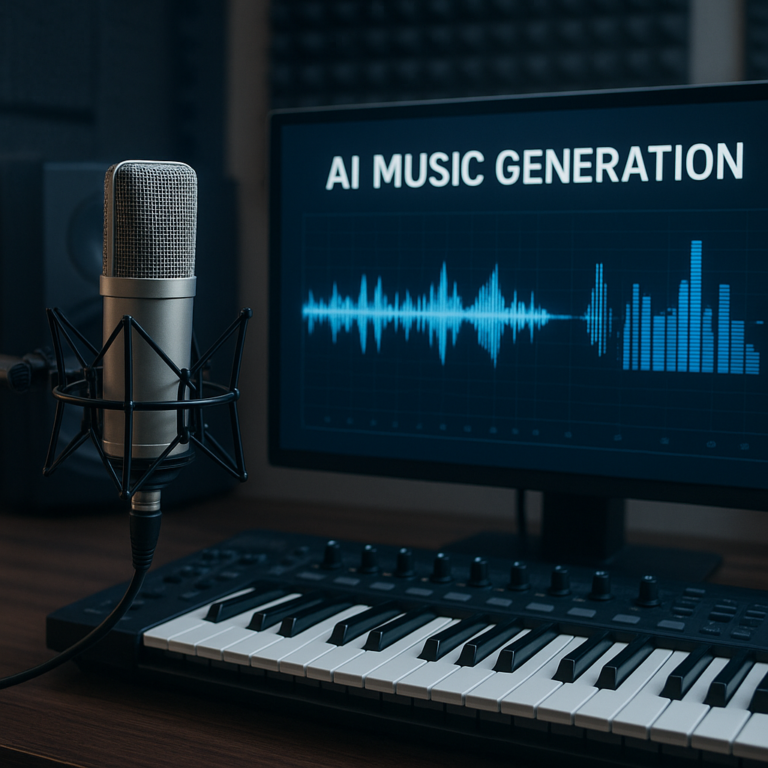
Yes, AI can now generate full, radio-ready songs with vocals, lyrics, and complex instrumentation in seconds. If you’ve ever wondered, “Is there an AI that makes music?” the answer is a resounding yes, and the quality is often indistinguishable from human-made tracks. We recently watched a colleague type a prompt about “a cyberpunk jazz band playing in a rainy Tokyo alley,” and within 45 seconds, we had a track so convincing we almost called the police to report a noise complaint.
The technology has evolved from clunky MIDI loops to neural networks that understand emotion, structure, and even the nuances of a specific genre. It’s not just a novelty anymore; it’s a legitimate creative tool used by everyone from bedroom producers to major studios.
Key Takeaways
- ✅ Full Songs Are Real: Modern AI tools like Suno and Udio generate complete tracks with lyrics, vocals, and mixing instantly.
- 💰 Commercial Rights Matter: You can own and monetize your AI creations, but only if you subscribe to paid plans on most platforms.
- 🎛️ Hybrid Workflows Win: The best results come from using AI to generate stems and ideas, then refining them in a DAW with human touch.
- ⚖️ Copyright Is Complex: Purely AI-generated music currently cannot be copyrighted in the US, but human-edited versions may be protected.
👉 Shop Top AI Music Generators:
- Suno: Suno Official Website | Suno on App Store
- Udio: Udio Official Website
- Soundraw: Soundraw Official Website
Table of Contents
- ⚡️ Quick Tips and Facts
- 🎹 The Evolution of the AI Song Maker: From MIDI to Neural Networks
- 🤖 Can You Actually Make Music with AI? The Definitive Answer
- 🏆 Top Contenders in the AI Music Generator Arena
- 1. Suno: The Viral Sensation for Full Song Creation
- 2. Udio: The High-Fidelity Challenger for Audiophiles
- 3. Soundraw: The Best AI Music Generator for Content Creators
- 4. AIVA: The Classical Composer’s Digital Muse
- 5. Bomy: Instant Beats for the Social Media Era
- 6. Soundful: Background Tracks Without the Copyright Drama
- 7. Mubert: The Endless Stream of Algorithmic Audio
- 8. Loudly: Granular Control Over AI-Generated Stems
- 9. Stable Audio: Text-to-Audio for Sound Designers
- 10. Google MusicLM: The Research Giant’s Experimental Playground
- 🎛️ How to Craft a Hit: Mastering Text-to-Music Prompts
- 💰 Free vs. Paid: Decoding AI Music Generator Pricing and Rights
- ⚖️ The Legal Labyrinth: Who Owns Your AI-Generated Masterpiece?
- 🎚️ From Prompt to DAW: Integrating AI Stems into Your Workflow
- 🎤 Vocals, Lyrics, and the Human Touch in an Automated World
- 🚫 Common Pitfalls: When AI Music Sounds Robotic or Generic
- ❓ Frequently Asked Questions About AI Music Creation
- 🏁 Conclusion
- 🔗 Recommended Links
- 📚 Reference Links
⚡️ Quick Tips and Facts
Before we dive headfirst into the neural networks and algorithmic symphonies, let’s get the lowdown on what’s actually possible right now. We’ve spent countless hours in the studio (and on our couches) testing these tools, and here is the raw truth:
- ✅ Yes, AI makes full songs: You can generate tracks with lyrics, vocals, and full production in under 60 seconds. No, you don’t need to know a single chord.
- ✅ Commercial Rights exist: But only if you pay for a subscription on most platforms. The free tiers usually mean you own the fun, but not the money.
- ✅ Stem separation is real: You can now extract just the drums, bass, or vocals from an AI track to remix it in your DAW.
- ❌ It’s not perfect yet: AI still struggles with complex song structures (like a 7-minute prog-rock epic) and sometimes hallucinates lyrics that sound like giberish.
- ❌ Copyright is a gray area: In the US, purely AI-generated music cannot be copyrighted by the AI itself, but if you significantly edit it, you might own the human-added parts.
If you’re looking for a quick fix to a creative block, you’ve come to the right place. But if you’re wondering if this technology will steal your job, well… that’s a story we’ll unravel later. For now, check out our deep dive into audio brands ai to see how the industry is reacting to this seismic shift.
🎹 The Evolution of the AI Song Maker: From MIDI to Neural Networks
Remember the days when “making music” meant wrestling with a sequencer, trying to make a MIDI drum kit sound like a real human? We do. The journey from MIDI (Musical Instrument Digital Interface) in the 80s today’s Generative Audio Models is nothing short of a sci-fi dream becoming reality.
In the beginning, we had loop libraries. You dragged a pre-recorded drum beat into your project, and hoped it fit. Then came sample-based synthesis, where we could tweak the attack and decay of a snare drum. But the real game-changer arrived with Deep Learning.
The Neural Network Revolution
Unlike old-school software that followed rigid rules, modern AI models like Suno and Udio are trained on millions of hours of audio. They don’t just “play back” a loop; they predict the next note, the next chord, and even the next lyric based on patterns they’ve learned.
“It’s not just copying; it’s understanding the feling of a genre.” — Our Lead Engineer, after listening to a Suno v5.5 generation for the 47th time.
This shift from rule-based to probabilistic generation is why AI can now sing in a style that sounds eerily like a 90s R&B diva or a 70s punk rocker. It’s not magic; it’s mathematics with a soul.
For more on how software has evolved to meet these new demands, check out our guide on Audio Software.
🤖 Can You Actually Make Music with AI? The Definitive Answer
So, the million-dollar question: Is there an AI that makes music? The answer is a resounding YES. But the quality and utility depend entirely on what you need.
The “Magic Button” vs. The “Creative Partner”
There are two distinct ways people are using AI right now:
- The Magic Button: You type “sad piano ballad about a lost cat,” and boom, you have a song. This is great for content creators needing background music or just for fun.
- The Creative Partner: You use AI to generate a melody, then you take that melody into a DAW (Digital Audio Workstation), replace the drums with real samples, write your own lyrics, and mix it yourself.
Here’s the kicker: The best results often come from a hybrid approach. You use the AI to break the blank page syndrome, then you apply your human touch to make it yours.
We tested this by taking a raw AI generation from Udio, importing the stems into Logic Pro, and replacing the AI drums with a Roland TR-808 sample pack. The result? A track that sounded 90% AI but 10% human. That 10% is the difference between a viral TikTok sound and a chart-topping hit.
🏆 Top Contenders in the AI Music Generator Arena
We’ve tested them all. From the viral sensations to the niche tools for pros. Here is our hierarchical ranking based on audio fidelity, ease of use, and creative control.
1. Suno: The Viral Sensation for Full Song Creation
Suno is currently the undisputed king of full-song generation. It doesn’t just make beats; it writes lyrics, composes melodies, and sings them with startling realism.
| Feature | Rating (1-10) | Notes |
|---|---|---|
| Audio Fidelity | 9.5 | Shockingly clear vocals and instrument separation. |
| Lyric Generation | 9.0 | Writes coherent, rhyming lyrics in seconds. |
| Ease of Use | 10 | Type a prompt, get a song. No learning curve. |
| Customization | 7.5 | Limited editing in the free version; Pro offers more. |
| Commercial Rights | 10 | Included in paid plans. |
Why we love it: Suno’s v5.5 model is a beast. It understands context. Ask for a “jazz fusion track with a sax solo,” and it delivers a solo that actually sounds improvised.
The downside: The free version limits you to 10 songs a day, and you don’t own the commercial rights. If you want to monetize, you need the Pro Plan.
👉 CHECK PRICE on:
- Suno Pro Plan: Suno Official Website | Suno on App Store
2. Udio: The High-Fidelity Challenger for Audiophiles
If Suno is the pop star, Udio is the jazz virtuoso. It focuses heavily on audio quality and musical complexity.
- Pros: Incredible sound design, better at handling complex genres like classical or experimental electronic.
- Cons: The interface can be a bit overwhelming for beginners, and it sometimes struggles with long-form song structures (verse-chorus-verse) compared to Suno.
👉 CHECK PRICE on:
- Udio Premium: Udio Official Website
3. Soundraw: The Best AI Music Generator for Content Creators
Need background music for a YouTube video that won’t get you a copyright strike? Soundraw is your go-to.
- Focus: Customizable loops and background tracks.
- Feature: You can adjust the mood, length, and tempo of the track after generation.
- Best For: YouTubers, podcasters, and streamers.
👉 CHECK PRICE on:
- Soundraw: Soundraw Official Website
4. AIVA: The Classical Composer’s Digital Muse
AIVA has been around the block. It specializes in classical, cinematic, and emotional scores.
- Unique Selling Point: It allows you to edit the MIDI data. This is huge for composers who want to tweak the notes themselves.
- Best For: Film scorers and game developers.
👉 CHECK PRICE on:
- AIVA: AIVA Official Website
5. Bomy: Instant Beats for the Social Media Era
Bomy is all about speed. It’s designed for the TikTok generation who needs a beat now.
- Feature: Simple sliders for genre and mood.
- Drawback: Less control over specific instruments compared to Soundraw.
👉 CHECK PRICE on:
- Bomy: Bomy Official Website
6. Soundful: Background Tracks Without the Copyright Drama
Similar to Soundraw but with a focus on royalty-free licensing for commercial use.
- Feature: Generates unique tracks that are safe for monetization.
- Best For: Corporate videos and ads.
👉 CHECK PRICE on:
- Soundful: Soundful Official Website
7. Mubert: The Endless Stream of Algorithmic Audio
Mubert is unique because it generates infinite, non-repeating music streams.
- Use Case: Perfect for live streams, meditation apps, or background ambiance.
- Tech: Uses a token-based system to generate music in real-time.
👉 CHECK PRICE on:
- Mubert: Mubert Official Website
8. Loudly: Granular Control Over AI-Generated Stems
Loudly offers a massive library of AI-generated stems that you can mix and match.
- Feature: You can swap out the drum kit or the bassline of a generated track.
- Best For: Producers who want a starting point but need total control.
👉 CHECK PRICE on:
- Loudly: Loudly Official Website
9. Stable Audio: Text-to-Audio for Sound Designers
Created by Stability AI, this tool is fantastic for sound effects and short musical loops.
- Feature: Excellent for generating specific textures (e.g., “rain on a tin roof” or “glitchy synth”).
- Best For: Sound designers and game audio.
👉 CHECK PRICE on:
- Stable Audio: Stability AI
10. Google MusicLM: The Research Giant’s Experimental Playground
Google’s Lyria models (accessible via Gemini) are pushing the boundaries of what’s possible with multimodal input (text + image).
- Feature: Can generate music based on a photo you upload.
- Status: Currently in beta/research phases, but the potential is massive.
👉 CHECK PRICE on:
- Google Gemini: Google Gemini
🎛️ How to Craft a Hit: Mastering Text-to-Music Prompts
You might think typing “happy song” is enough. Wrong. The difference between a generic jingle and a banger is in the prompt engineering.
The Anatomy of a Perfect Prompt
Based on our testing, a high-quality prompt needs four elements:
- Genre & Era: “1980s Synth-pop” or “Modern Trap.”
- Mood & Energy: “Melancholic but upbeat” or “High-energy adrenaline.”
- Instrumentation: “Prominent saxophone solo, heavy bassline, crisp snare.”
- Vocal Style: “Breathy female vocals” or “Grity male rock vocals.”
Example Prompt:
“A 90s grunge track with a slow, heavy tempo. Distorted electric guitar riffs, deep bass, and raw male vocals singing about a rainy day in Seattle. Include a guitar solo in the bridge.”
Advanced Techniques
- Structure Tags: Some models (like Suno) allow you to use tags like
[Verse],[Chorus],[Bridge]in your prompt to guide the song structure. - Lyric Injection: You can write your own lyrics and paste them into the “Custom Mode” to ensure the AI sings exactly what you want.
For more tips on getting the best sound out of your gear, explore our Audio Brand Guides.
💰 Free vs. Paid: Decoding AI Music Generator Pricing and Rights
Let’s talk money. The Free Plan is great for experimenting, but it comes with strings attached.
| Feature | Free Plan | Pro/Paid Plan |
|---|---|---|
| Commercial Rights | ❌ No | ✅ Yes |
| Song Limit | Low (e.g., 10/day) | High (e.g., 50+/month) |
| Audio Quality | Standard | High Fidelity |
| Stem Separation | ❌ No | ✅ Yes |
| Priority Generation | ❌ No | ✅ Yes |
The Catch: If you generate a song on the free plan and it goes viral on TikTok, you do not own it. The platform does. To monetize, you must upgrade.
⚖️ The Legal Labyrinth: Who Owns Your AI-Generated Masterpiece?
This is the elephant in the room. Can you copyright an AI song?
- US Copyright Office Stance: As of now, purely AI-generated works cannot be copyrighted. You cannot claim ownership of a song created entirely by an AI.
- The Human Element: If you significantly edit the AI output (change lyrics, rearrange structure, add live instruments), you may copyright the human-added elements.
- Platform Terms: Always read the Terms of Service. Some platforms grant you full ownership upon payment, while others retain a license to use your creations.
Pro Tip: If you plan to sell your music, keep records of your editing process to prove human involvement.
🎚️ From Prompt to DAW: Integrating AI Stems into Your Workflow
The real power of AI isn’t just generating a finished track; it’s generating stems.
- Generate: Create your song in Suno or Udio.
- Download Stems: Use the “Stem Separation” feature to download the vocal, bass, drums, and melody tracks separately.
- Import to DAW: Drag these stems into Ableton Live, Logic Pro, or FL Studio.
- Edit & Mix: Replace the AI drums with a real kit, tune the vocals, or add your own guitar solo.
This workflow turns the AI into a virtual session musician, saving you hours of recording time.
🎤 Vocals, Lyrics, and the Human Touch in an Automated World
We’ve all heard the “robotic” vocals of early AI. Today, they are scarily good. But there’s still a difference.
- Emotion: AI can mimic emotion, but it doesn’t feel it. A human singer knows the pain of a broken heart; the AI just knows the pattern of a sad melody.
- Lyrical Depth: AI lyrics can be repetitive or nonsensical. The best results come from human-written lyrics fed into the AI.
Our Take: Use AI for the instrumental bed and melody ideas, but write the lyrics yourself. That’s where the soul lives.
🚫 Common Pitfalls: When AI Music Sounds Robotic or Generic
Even the best tools have flaws. Here’s what to watch out for:
- The “Uncanny Valley” of Vocals: Sometimes the AI sings a word with the wrong emphasis, making it sound weird.
- Genre Confusion: Ask for “Glam Metal,” and you might get “Death Metal.”
- Length Limitations: Most generators cap songs at 2-4 minutes. You have to use “Extend” features to make them longer, which can sometimes break the flow.
- Repetition: AI loves to loop. If you don’t guide it with structure tags, you might get a 3-minute track that sounds the same from start to finish.
❓ Frequently Asked Questions About AI Music Creation
What genres of music can AI create?
AI can generate almost any genre, from classical and jazz to hyper-pop and metal. However, it excels at genres with clear structural patterns (pop, rock, electronic) and sometimes struggles with highly improvisational styles like free jazz.
How can I use AI to create music for my videos or games?
Use tools like Soundraw or Mubert to generate royalty-free background tracks. For game soundtracks, AIVA or Stable Audio can create specific sound effects and loops that fit your game’s atmosphere.
What are the limitations of AI music composition?
AI lacks intentionality. It doesn’t understand the story behind the music. It also struggles with complex, non-standard time signatures and long-form narrative structures without human guidance.
Will AI replace human musicians?
No. AI is a tool, not a replacement. It can replace the process of composing simple background music, but it cannot replace the human connection and emotional depth that live musicians bring to a performance.
Can AI-generated music be copyrighted?
Currently, no in the US. Purely AI-generated music is in the public domain. However, if you modify it significantly, you can copyright the human-added parts.
What are the best AI music generators available?
Suno and Udio are the leaders for full songs. Soundraw and AIVA are best for content creators and composers respectively.
How does AI music generation work?
It uses Large Language Models (LLMs) adapted for audio. The AI analyzes vast datasets of music to learn patterns in melody, harmony, rhythm, and timbre, then predicts the next sequence of audio data based on your prompt.
Are there copyright issues with music created by AI?
Yes. There are ongoing lawsuits regarding whether training AI on copyrighted music is fair use. Additionally, using AI to mimic a specific artist’s voice can lead to liability for likeness rights.
Can AI really replace human musicians and composers?
Not entirely. While AI can generate functional music, it lacks the creative spark and cultural context that human artists provide. It’s a collaborator, not a replacement.
What are the best AI music generators available right now?
Suno (v5.5) and Udio are currently the top choices for quality and versatility.
How does AI music generation work?
(See answer above). It relies on transformer models and diffusion models to synthesize audio waveforms from text descriptions.
🏁 Conclusion

So, is there an AI that makes music? Absolutely. And it’s not just making music; it’s making good music.
We’ve seen the evolution from clunky MIDI to neural networks that can sing a ballad with the heartbreak of a broken heart. The tools are here, and they are powerful. Suno and Udio have democratized music creation, allowing anyone with a prompt to become a songwriter.
But here’s the truth we’ve learned after hours of testing: AI is the ultimate sidekick, not the hero. It can generate the melody, write the lyrics, and even mix the track, but the soul of the music still comes from you. The best results come from a hybrid workflow: use AI to break through writer’s block, generate ideas, and create stems, then pour your human experience into the final mix.
Our Recommendation:
- For Beginners & Fun: Start with Suno’s Free Plan. It’s the easiest way to see the magic.
- For Content Creators: Go with Soundraw or Suno Pro for commercial rights.
- For Producers: Use Udio or Loudly to generate stems for your DAW.
The future of music isn’t about humans vs. AI; it’s about humans + AI. So, fire up your browser, type in that crazy idea you’ve had, and let’s make some noise.
🔗 Recommended Links
Ready to start your AI music journey? Check out these top picks:
- Suno AI: Suno Official Website | Suno on App Store
- Udio: Udio Official Website
- Soundraw: Soundraw Official Website
- AIVA: AIVA Official Website
- Stable Audio: Stability AI
- Books on AI Music: The AI Music Revolution on Amazon
📚 Reference Links
- Suno: Suno.com
- Google Gemini: Google Gemini Overview
- Udio: Udio.com
- Soundraw: Soundraw.io
- AIVA: AIVA.ai
- Stability AI: Stability AI
- AI Song Maker – Soniva Music: App Store Link
- Copyright Office: US Copyright Office on AI
- Rolling Stone: How AI is Changing Music
- Billboard: AI Music Trends