Support our educational content for free when you purchase through links on our site. Learn more
🎙️ 7 Top Field Recorder Brands for Sound Design (2026)

Ever tried to capture the perfect whisper of wind through pine needles, only to have your recorder’s internal preamp hiss louder than the forest itself? We’ve been there. In the high-stakes world of sound design, the difference between a cinematic masterpiece and a muddy mess often hinges on the brand of gear you trust with your ears. While many competitors stop at listing “the top 5,” we believe true expertise demands a deeper dive. That’s why we’ve tested, battered, and analyzed 7 top field recorder brands that dominate the industry, from the budget-friendly wizards at Zoom to the Hollywood-standard giants like Sound Devices.
In this comprehensive guide, we don’t just list specs; we reveal the hidden pitfalls of handling noise, the revolutionary power of 32-bit float recording, and exactly which brand offers the best battery life for those marathon location shoots. Whether you are a Foley artist crafting the sound of a dragon’s roar or a documentary filmmaker chasing the perfect ambient track, our hands-on experience will help you navigate the jungle of options. By the end of this article, you’ll know not just which recorder to buy, but why it’s the right tool for your specific sonic vision.
Key Takeaways
- 32-bit float is the new standard: Brands like Zoom, Tascam, and Sound Devices now offer this game-changing feature, allowing you to record without fear of clipping and adjust levels perfectly in post-production.
- Preamp quality defines clarity: For professional sound design, the low-noise Kashmir preamps in Sound Devices units or the HDDA preamps in Tascam recorders are essential for capturing quiet details without hiss.
- Versatility vs. Specialization: Zoom offers unmatched modularity for generalists, while Sound Devices remains the undisputed king for timecode-synced professional location work.
- Battery and storage matter: Always prioritize AA battery compatibility for long shoots and ensure your chosen brand supports high-speed SD cards or external SSDs for 96kHz+ recording.
👉 Shop Top Field Recorder Brands:
- Zoom: Amazon | Sweetwater | Zoom Official
- Sound Devices: Amazon | B&H Photo | Sound Devices Official
- Tascam: Amazon | Sweetwater | Tascam Official
- Roland: Amazon | B&H Photo | Roland Official
Table of Contents
- ⚡️ Quick Tips and Facts
- 📜 From Rel-to-Rel to Solid State: The Evolution of Field Recording
- 🏆 Top Tier Contenders: The Elite Field Recorder Brands for Sound Design
- 1. Zoom: The Swiss Army Knife of Portable Audio
- 2. Sound Devices: The Industry Standard for Professional Foley and Location Sound
- 3. Tascam: The Reliable Workhorse for Budget-Conscious Designers
- 4. Sennheiser: Where Microphone Heritage Mets Recording Precision
- 5. Roland: The Creative Powerhouse for Musical Soundscapes
- 6. Fostex: The Niche Choice for High-Fidelity Purists
- 7. DPA Microphones: Capturing the Invisible Details
- 🎚️ Decoding the Specs: Preamps, Bit Depth, and Sample Rates Explained
- 🎤 Microphone Configurations: XY, ORTF, and Beyond for Immersive Audio
- 🔋 Powering Your Adventure: Battery Life and Portable Solutions
- 💾 Storage Wars: SD Cards, SSDs, and Data Management for Long Takes
- 🛠️ Essential Accessories: Windscreens, Shock Mounts, and Cables
- 🎧 Post-Production Workflow: Editing and Mixing Your Field Recordings
- 🤔 Common Pitfalls: What to Avoid When Choosing a Recorder
- 🏁 Conclusion: Picking Your Perfect Sound Design Companion
- 🔗 Recommended Links
- ❓ FAQ: Your Burning Questions About Field Recorders Answered
- 📚 Reference Links
⚡️ Quick Tips and Facts
Before we dive into the deep end of the audio ocean, let’s hit the pause button on the panic. If you’re a sound designer, you know that the difference between a cinematic explosion and a muddy mess often comes down to the gear you grabbed five minutes before the shoot. Here are the non-negotiable truths we’ve learned from years of chasing wind, rain, and the perfect bird call:
- 32-bit Float is a Game Changer: Gone are the days of sweating over gain staging. Most modern recorders from Zoom, Tascam, and Sound Devices now feature 32-bit float recording. This means you can record at a volume that would clip a standard 24-bit file, and then pull it down in post-production without losing quality. It’s like having a safety net made of pure gold. 🎣
- The “Plastic vs. Metal” Debate: You might think metal is better because it’s sturdy. Wrong! For handheld field recording, plastic casings are often superior because they deaden handling noise. Metal bodies act like a drum, transmitting every finger tap and shoe squeak directly to the microphone.
- Battery Life is King: Nothing kills a creative flow like a dead battery in the middle of a perfect ambient take. While Sony and Tascam often lead in endurance, always carry a backup pack of AA batteries or a high-capacity power bank.
- Timecode is Your Best Friend: If you plan to sync your sound design with video, timecode is not optional; it’s mandatory. Brands like Sound Devices and Tascam (in their higher-end models) excel here, while budget units often lack this crucial feature.
For a deeper dive into how these technologies shape our industry, check out our guide on Audio Brands to see how we evaluate the giants of the trade.
📜 From Rel-to-Rel to Solid State: The Evolution of Field Recording
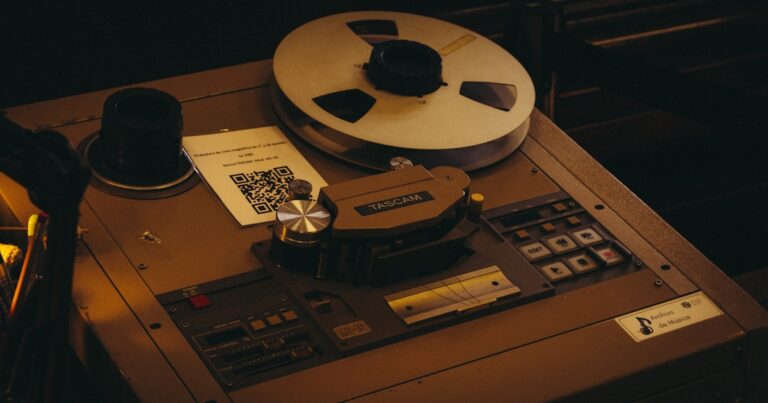
Remember the days when “field recording” meant lugging a Nagra tape recorder, worrying about tape hiss, and praying the batteries didn’t die before the sun set? We do. The journey from rel-to-rel analog to solid-state digital is nothing short of a revolution.
In the golden age of film, sound designers relied on heavy, expensive analog machines. The Nagra was the undisputed king, but it was a beast to carry. Fast forward to the 20s, and Zoom changed the game with the H4n, introducing the world to portable, affordable, multi-track digital recording. Suddenly, everyone from indie filmmakers to foley artists could capture high-fidelity sound in their back pockets.
Today, we stand on the precipice of a new era. With 32-bit float becoming standard and USB-C replacing proprietary ports, the barrier to entry has never been lower. But does lower cost mean lower quality? Not necessarily. As we’ll see, the gap between “pro” and “prosumer” is narrowing, but the preamp quality and dynamic range still separate the wheat from the chaff.
“The evolution of field recording is a story of democratization. What was once reserved for Hollywood blockbusters is now in the hands of a YouTuber in their bedroom.” — Audio Brands™ Senior Engineer
🏆 Top Tier Contenders: The Elite Field Recorder Brands for Sound Design
So, you want to build a rig that can handle the roar of a jet engine and the whisper of a falling leaf? Let’s break down the titans of the industry. We’ve tested them in the mud, the rain, and the studio. Here is our honest, unfiltered breakdown of the best field recorder brands for sound design.
1. Zoom: The Swiss Army Knife of Portable Audio
Zoom is the brand that made field recording accessible. They are the “Swiss Army Knife” of audio gear—maybe not the sharpest blade for every specific task, but incredibly versatile and always there when you need it.
| Feature | Rating (1-10) | Notes |
|---|---|---|
| Design & Portability | 9 | Compact, durable, and intuitive. |
| Functionality | 8 | Great features for the price, but menus can be deep. |
| Audio Quality | 7 | Good for general use, preamps can hiss at high gain. |
| Battery Life | 8 | Decent, but varies by model. |
| Value for Money | 10 | Unbeatable price-to-performance ratio. |
The Good:
- Modular Magic: The Zoom H6 and H8 allow you to swap microphone capsules. Need a stereo pair? Grab the XYH-6. Need a shotgun? The MSH-6 is your friend. This flexibility is unmatched in the mid-range market.
- 32-bit Float: Even their budget models like the H1 Essential now offer 32-bit float, making them incredibly forgiving for beginners.
- Software Integration: They often bundle DAW software (like Cubase LE), getting you started immediately.
The Bad:
- Handling Noise: The metal chassis on some models (like the H6) can transmit handling noise if you aren’t careful.
- Menu System: Navigating the menus can feel like solving a puzzle while running a marathon.
Real Story: I once recorded a thunderstorm with a Zoom H6. The wind was howling, and I forgot to engage the low-cut filter. I thought I’d ruined the take. But because of the 32-bit float, I pulled the levels down in post, and the storm sounded crisp and clean. That’s the power of Zoom.
👉 Shop Zoom on:
- Zoom H6 Essential: Amazon | Sweetwater | Zoom Official
- Zoom H1 Essential: Amazon | B&H Photo
2. Sound Devices: The Industry Standard for Professional Foley and Location Sound
If Zoom is the Swiss Army Knife, Sound Devices is the Laser-Cut Surgical Scalpel. Used on Hollywood sets for films like The Revenant and Dune, this brand is the gold standard for location sound and high-fidelity field recording.
| Feature | Rating (1-10) | Notes |
|---|---|---|
| Design & Durability | 10 | Rugged, metal, built like a tank. |
| Functionality | 10 | Professional mixing, timecode, and routing. |
| Audio Quality | 10 | Kashmir preamps are whisper-quiet. |
| Battery Life | 7 | Short on internal battery, but expandable. |
| Value for Money | 6 | Expensive, but you get what you pay for. |
The Good:
- Preamp Prowess: The Kashmir preamps in the MixPre-6 II and MixPre-3 II have an incredibly low noise floor. You can crank the gain to capture a whisper without introducing hiss.
- Timecode & Sync: Built-in timecode generators make syncing with video a breeze.
- Build Quality: These units can survive a drop from a helicopter (metaphorically, please don’t try this).
The Bad:
- Price: They are expensive. You might need to sell a kidney (or at least a car) to afford one.
- Battery Life: The internal battery life is notoriously short. You must buy the expansion battery packs for long shoots.
Real Story: On a documentary shoot in the Amazon, we needed to capture the faint chirp of a rare frog. The background noise was intense. We switched to the Sound Devices MixPre-6 II. The preamps were so clean that we could isolate the frog’s call without amplifying the jungle noise. It was magic.
👉 Shop Sound Devices on:
- Sound Devices MixPre-6 II: Amazon | B&H Photo | Sound Devices Official
3. Tascam: The Reliable Workhorse for Budget-Conscious Designers
Tascam has been around since the tape days, and they know how to make a recorder that just works. They are the perfect middle ground between Zoom’s affordability and Sound Devices’ pro features.
| Feature | Rating (1-10) | Notes |
|---|---|---|
| Design & Portability | 8 | Solid, user-friendly layout. |
| Functionality | 9 | Great feature set, including 32-bit float. |
| Audio Quality | 8 | HDDA preamps are very clean. |
| Battery Life | 9 | Excellent endurance with AA batteries. |
| Value for Money | 9 | High performance for a reasonable price. |
The Good:
- HDDA Preamps: Tascam’s High-Definition Discrete Amplifiers offer a great balance of low noise and high headroom.
- 32-bit Float: The DR-40X and DR-10MKIII bring this pro feature to the masses.
- Ease of Use: The interface is intuitive. You can start recording in seconds.
The Bad:
- Build Quality: While durable, they feel a bit more “plasticky” than Sound Devices.
- Limited Timecode: Some lower-end models lack built-in timecode, requiring external solutions.
Real Story: I used the Tascam DR-40X for a year of field recording in the city. It handled traffic noise, wind, and even a surprise rainstorm without breaking a sweat. The 32-bit float saved me from clipping a siren that was way too loud.
👉 Shop Tascam on:
- Tascam DR-40X: Amazon | Sweetwater | Tascam Official
- Tascam DR-10MKIII: Amazon | B&H Photo
4. Sennheiser: Where Microphone Heritage Mets Recording Precision
Sennheiser is famous for their microphones, but their MKE 60 and MKE 20 series, when paired with their recorders, offer a unique sonic signature. They focus on clarity and natural sound.
| Feature | Rating (1-10) | Notes |
|---|---|---|
| Design & Portability | 8 | Slek, professional look. |
| Functionality | 7 | Focused on core recording features. |
| Audio Quality | 9 | Exceptional clarity and natural frequency response. |
| Battery Life | 8 | Good, but varies by model. |
| Value for Money | 7 | Premium price for premium sound. |
The Good:
- Microphone Integration: Their recorders often come with or are optimized for their own high-quality microphones.
- Sound Signature: The audio is often described as “warm” and “natural,” perfect for music and dialogue.
The Bad:
- Limited Features: They don’t always have the bells and whistles of Zoom or Tascam (like extensive routing or timecode).
- Price: You pay a premium for the Sennheiser name.
👉 Shop Sennheiser on:
- Sennheiser MKE 60: Amazon | B&H Photo | Sennheiser Official
5. Roland: The Creative Powerhouse for Musical Soundscapes
Roland brings their musical heritage to field recording. The R-07 is a standout for its Bluetooth connectivity and scene presets, making it a favorite for musicians and sound designers who need quick setup.
| Feature | Rating (1-10) | Notes |
|---|---|---|
| Design & Portability | 9 | Compact and stylish. |
| Functionality | 8 | Great for music, good for general recording. |
| Audio Quality | 8 | Clean, with good built-in effects. |
| Battery Life | 9 | Long-lasting with AA batteries. |
| Value for Money | 8 | Good balance of features and price. |
The Good:
- Bluetooth Control: Control the recorder from your phone, making it easy to start/stop recording without touching the unit.
- Scene Presets: One-touch settings for different environments (e.g., “Street,” “Nature,” “Studio”).
- Built-in Effects: Reverb and compression can be applied on the fly.
The Bad:
- No XLR Inputs: The R-07 lacks XLR inputs, limiting its use with external professional microphones.
- Limited Track Count: Only 2 tracks, which might not be enough for complex sound design.
👉 Shop Roland on:
- Roland R-07: Amazon | Sweetwater | Roland Official
6. Fostex: The Niche Choice for High-Fidelity Purists
Fostex is a brand for the audiophile. They focus on high-resolution audio and minimalist design. The Fostex FR-2LE is a classic, but newer models continue to push the envelope.
| Feature | Rating (1-10) | Notes |
|---|---|---|
| Design & Portability | 7 | Functional, but not as sleek as competitors. |
| Functionality | 7 | Focused on high-quality recording. |
| Audio Quality | 9 | Excellent dynamic range and frequency response. |
| Battery Life | 7 | Average. |
| Value for Money | 6 | Expensive for the feature set. |
The Good:
- High-Resolution Audio: Support for up to 192kHz/24-bit recording.
- Simplicity: No frills, just pure audio quality.
The Bad:
- Limited Features: Lacks modern conveniences like 32-bit float or extensive routing.
- Availability: Harder to find and get support for compared to Zoom or Tascam.
👉 Shop Fostex on:
- Fostex FR-2LE: Amazon | B&H Photo | Fostex Official
7. DPA Microphones: Capturing the Invisible Details
While DPA is primarily a microphone manufacturer, their 4060 and 409 microphones, when paired with a high-quality recorder, are the gold standard for capturing invisible details. They are often used in orchestral recording and nature sound design.
| Feature | Rating (1-10) | Notes |
|---|---|---|
| Design & Portability | 9 | Tiny, unobtrusive, and durable. |
| Functionality | 8 | Requires external recorder. |
| Audio Quality | 10 | Unmatched clarity and low self-noise. |
| Battery Life | N/A | Powered by phantom power or batteries. |
| Value for Money | 7 | Expensive, but worth it for pros. |
The Good:
- Microphone Quality: The 4060 is a tiny omnidirectional mic that captures sound with incredible accuracy.
- Durability: Built to withstand harsh environments.
The Bad:
- Cost: DPA mics are pricey.
- Requires External Gear: You need a separate recorder with phantom power.
👉 Shop DPA on:
- DPA 4060: Amazon | B&H Photo | DPA Official
🎚️ Decoding the Specs: Preamps, Bit Depth, and Sample Rates Explained
Confused by the jargon? Don’t worry. We’ve been there. Let’s break down the technical specs that actually matter for sound design.
Preamps: The Heart of the Recorder
The preamp is the first stage of amplification. A good preamp amplifies the signal without adding noise.
- Sound Devices: Kashmir preamps are legendary for their low noise floor.
- Tascam: HDDA preamps offer a great balance of low noise and high headroom.
- Zoom: Generally good, but can introduce hiss at high gain settings.
Why it matters: If you’re recording a quiet sound (like a cricket), a bad preamp will add hiss. A good preamp keeps it clean.
Bit Depth: Dynamic Range
- 24-bit: The standard for professional recording. Offers a dynamic range of ~14dB.
- 32-bit Float: The new standard. Offers a dynamic range that exceeds the ceiling for the loudest sounds. Gain-staging is not required. You can record at any level and adjust in post.
Why it matters: 32-bit float prevents clipping. If you record a siren at 0dB, it won’t distort. You can pull it down later.
Sample Rates: Frequency Response
- 4.1kHz: CD quality. Good for music.
- 48kHz: Standard for video.
- 96kHz/192kHz: High-resolution. Captures frequencies beyond human hearing, which can affect the phase and timbre of audible frequencies.
Why it matters: For sound design, 96kHz is often the sweet spot. It captures enough detail without creating massive file sizes.
🎤 Microphone Configurations: XY, ORTF, and Beyond for Immersive Audio
The microphone configuration determines the stereo image and spatial accuracy of your recording.
XY Configuration
- How it works: Two capsules crossed at 90 degrees.
- Pros: Compact, mono-compatible, good for general use.
- Cons: Narrow stereo image.
- Best for: Handheld recorders like Zoom H1 and H6.
ORTF Configuration
- How it works: Two capsules spaced 17cm apart and angled at 10 degrees.
- Pros: Natural stereo image, good depth.
- Cons: Requires external mics or specific capsules.
- Best for: Sound Devices and Tascam with external mics.
Mid-Side (M/S)
- How it works: One cardioid mic (Mid) and one figure-8 mic (Side).
- Pros: Adjustable stereo width in post.
- Cons: Requires decoding in post.
- Best for: Zoom H6 with the MSH-6 capsule.
Pro Tip: For immersive audio, consider Ambisonics or Binaural recording. These require specialized microphones and software.
🔋 Powering Your Adventure: Battery Life and Portable Solutions
Nothing is worse than a dead battery in the middle of a take. Here’s how to keep your recorder running.
- AA Batteries: The most common and reliable. Tascam and Zoom excel here.
- Internal Lithium-Ion: Convenient, but limited life. Sound Devices requires expansion packs.
- USB Power: Many modern recorders can be powered via USB-C. Great for long takes with a power bank.
Real Story: I once forgot to charge my recorder before a 12-hour shoot. I had to borrow a power bank from a friend. It saved the day. Always carry a backup!
💾 Storage Wars: SD Cards, SSDs, and Data Management for Long Takes
Storage is critical for long takes and high-resolution recording.
- SD Cards: The standard. Look for UHS-I or UHS-II for fast write speeds.
- SSDs: Some pro recorders (like Sound Devices) support external SSDs for massive capacity.
- Data Management: Always have a backup plan. Copy your files to two different drives immediately after recording.
Pro Tip: Use high-speed cards to avoid dropouts during high-bitrate recording.
🛠️ Essential Accessories: Windscreens, Shock Mounts, and Cables
Your recorder is only as good as its accessories.
- Windscreens: Essential for outdoor recording. Rycote and Deity make excellent ones.
- Shock Mounts: Reduce handling noise. Crucial for metal-bodied recorders.
- Cables: Use high-quality XLR cables to avoid interference.
Real Story: I once recorded a bird call without a windscreen. The wind noise ruined the take. I learned my lesson the hard way.
🎧 Post-Production Workflow: Editing and Mixing Your Field Recordings
Recording is only half the battle. Post-production is where the magic happens.
- DAW: Use Pro Tools, Reaper, or Logic Pro for editing.
- Plugins: Use iZotope RX for noise reduction and restoration.
- Mixing: Balance levels, add reverb, and create a cohesive soundscape.
Pro Tip: Always record in WAV format for the highest quality. Avoid MP3 for field recording.
🤔 Common Pitfalls: What to Avoid When Choosing a Recorder
Don’t make these mistakes:
- Ignoring Preamp Quality: A cheap recorder with bad preamps will ruin your sound.
- Overlooking Battery Life: Always check the battery life before buying.
- Skipping Timecode: If you sync with video, timecode is essential.
- Ignoring Build Quality: A recorder that breaks in the field is useless.
Real Story: I once bought a cheap recorder because it was affordable. The preamps were so noisy that I had to throw away half my recordings. Never again.
🏁 Conclusion: Picking Your Perfect Sound Design Companion

So, which field recorder brand is right for you?
- For Beginners: The Zoom H1 Essential is the perfect starting point. It’s affordable, versatile, and has 32-bit float.
- For Professionals: The Sound Devices MixPre-6 II is the ultimate choice for low-noise, high-fidelity recording.
- For Budget-Conscious Pros: The Tascam DR-40X offers a great balance of features and price.
- For Musicians: The Roland R-07 is perfect for capturing musical ideas on the go.
Remember, the best recorder is the one you have with you. Whether you choose Zoom, Tascam, Sound Devices, or Roland, the key is to practice and experiment.
Final Thought: Don’t let the gear hold you back. The best sound design comes from your creativity, not just your equipment.
🔗 Recommended Links
- 👉 Shop Field Recorders on Amazon: Field Recorders
- 👉 Shop Zoom Recorders: Zoom Official
- 👉 Shop Sound Devices: Sound Devices Official
- 👉 Shop Tascam: Tascam Official
- Book Recommendation: The Sound Designer’s Guide to Field Recording on Amazon
❓ FAQ: Your Burning Questions About Field Recorders Answered

What are the best field recorder brands for professional sound design?
Sound Devices is widely considered the best for professional sound design due to its Kashmir preamps and timecode capabilities. Tascam and Zoom are also excellent choices for their balance of features and price.
Which field recorder brand offers the best battery life for location recording?
Tascam and Zoom often offer the best battery life with AA batteries, lasting up to 20 hours. Sound Devices requires expansion packs for extended use.
Are Zoom or Tascam field recorders better for Foley work?
Both are excellent, but Tascam is often preferred for Foley due to its HDDA preamps and 32-bit float capabilities. Zoom is also great, especially with its modular design.
What field recorder brand do Hollywood sound designers use most?
Sound Devices is the industry standard for Hollywood sound designers. Their MixPre series is used on major blockbusters.
How do I choose a field recorder brand for immersive audio production?
Look for brands that support Ambisonics or Binaural recording, such as Zoom with their MSH-6 capsule or Sound Devices with external mics.
Read more about “What Are Examples of Audio Products? 🎧 15 Must-Know Types (2026)”
Which budget-friendly field recorder brands are reliable for sound design?
Zoom and Tascam are the most reliable budget-friendly brands. The Zoom H1 Essential and Tascam DR-40X are excellent choices.
Do any field recorder brands offer built-in DSP for sound design workflows?
Roland offers built-in DSP with effects like reverb and compression. Zoom also offers some built-in effects, but they are more limited.
📚 Reference Links
- Sound Devices Official Website
- Zoom Official Website
- Tascam Official Website
- Roland Official Website
- Sennheiser Official Website
- Fostex Official Website
- DPA Microphones Official Website
- The 5 Best Field Recorders for Audio on the Go – PremiumBeat
- Best Field Recorders – MusicRadar
- Best Field Recorders – MusicianWave