Support our educational content for free when you purchase through links on our site. Learn more
🎧 Audio Equipment Brands to Avoid: 12 Red Flags

The audio equipment brands to avoid aren’t necessarily the ones with unfamiliar names—they’re the ones selling vague specs, unverified claims, poor support, and products you can’t repair or return. Judge the exact model and seller before you buy, rather than trusting a blanket blacklist or a famous logo.
We’ve seen a modest, well-documented speaker outperform a flashy product boasting “mega bass” and huge wattage numbers with no test details. The giveaway wasn’t the price or the name: it was the missing evidence.
This guide covers 12 audio product categories that deserve extra scrutiny, explains how to spot marketing smoke, and points you toward more reliable ways to compare sound quality, durability, and support. Some concerns—like receiver failures or expensive cable claims—can be model-specific or disputed, so we separate verified facts from forum opinions.
Key Takeaways
- Research the exact model, not just the brand. One company can make both excellent and disappointing gear.
- Treat unsupported specs as warning signs. Look for clear test conditions, independent measurements, and model-specific documentation.
- Check reliability and ownership costs. Warranty coverage, replacement parts, repair options, and app dependence matter alongside sound.
- Use reviews as clues, not proof. Look for recurring, detailed reports across independent sources rather than relying on a rating average or one dramatic post.
- Buy from a seller with a clear return policy. If performance claims, warranty terms, and product identity are all murky, keep looking.
Table of Contents
- ⚡️ Quick Tips and Facts
- 🎧 What “Audio Equipment Brands to Avoid” Really Means
- Why a Brand Can Be a Poor Choice Without Every Product Being Bad
- How We Evaluated Reliability, Sound Quality, and Value
- 🕰️ How the Audio Market Got So Crowded
- Big-Box, Online-Only, and Private-Label Audio Brands
- Why Specs and Marketing Claims Can Mislead
- 🚩 Red Flags to Watch for Before Buying Audio Gear
- Suspicious Power, Frequency, and “Hi-Res” Claims
- Fake Reviews, Inflated Ratings, and Copycat Listings
- Weak Warranties, Poor Support, and Missing Parts
- 🔎 Audio Equipment Brands and Product Types to Research Carefully
- 1. No-Name Bluetooth Speaker Brands
- 2. Generic Wireless Earbud Brands
- 3. Mystery-Brand Soundbars
- 4. Overhyped Portable Party Speakers
- 5. Budget Home-Theater-in-a-Box Systems
- 6. Cheap Surround-Sound Receiver Brands
- 7. Low-Cost Turntable Brands with Poor Tonearms
- 8. Bargain Phono Cartridge and Stylus Brands
- 9. Off-Brand Headphone Amplifier and DAC Brands
- 10. Suspiciously Cheap Studio Monitor Brands
- 11. No-Name Car Stereo and Amplifier Brands
- 12. Questionable Speaker Cable and Audio Accessory Brands
- 🧪 “Extreme Snake Oil”: Audio Claims That Deserve Extra Scrutiny
- When Expensive Cables and Accessories Don’t Make Sense
- How to Tell Useful Features from Gimmicks
- ✅ Trustworthy Audio Brands and Better-Reviewed Alternatives
- Reliable Headphone and Earbud Brands
- Dependable Speaker, Soundbar, and Home-Theater Brands
- Reputable Turntable, Hi-Fi, and Studio-Audio Brands
- Why Model-by-Model Reviews Matter More Than Brand Reputation
- 🛒 How to Choose Reliable Audio Equipment
- Match the Product to Your Room, Use, and Budget
- Check Independent Measurements and Long-Term Reviews
- Verify the Seller, Warranty, and Return Policy
- Buy Used Audio Gear More Safely
- 🧰 Troubleshooting: Is the Brand Bad, or Is Something Else Wrong?
- Common Setup Problems That Sound Like Defects
- When to Repair, Return, or Replace Your Equipment
- 📊 Quick Comparison: Audio Brand Warning Signs
- Conclusion
- Recommended Links
- FAQ
- Are there audio brands I should always avoid?
- Are cheap audio brands necessarily bad?
- How can I tell if a speaker or headphone is falsely advertised?
- Is a well-known brand always a safe choice?
- Where can I find reliable audio equipment reviews?
- Reference Links
If you’ve ever searched “audio equipment brands to avoid,” you’ve probably found confident blacklists, heated forum arguments, and a few cables priced like they should arrive with their own personal sound engineer. The useful answer is less dramatic: judge the specific product, the evidence, the warranty, and the support—not just the logo.
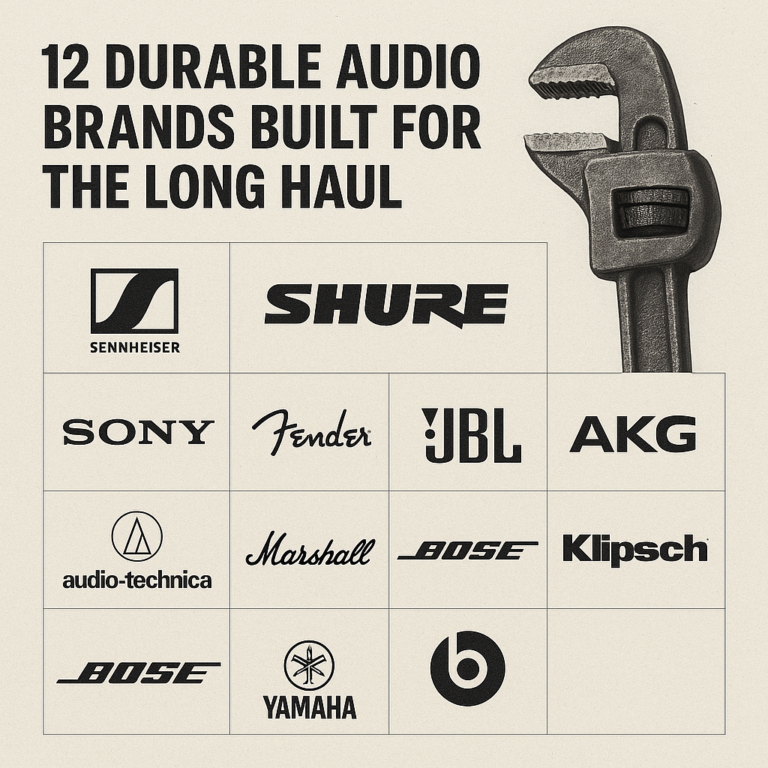
Our first rule: research the model before the brand. We’ve heard excellent gear from companies that also sell products we wouldn’t recommend, and we’ve seen famous names release models with real limitations. For more context on brand reputation and unexpected product pitfalls, see our guide to audio brands monkey wrench and browse our Audio Brand Guides.
| Quick check | Good sign ✅ | Warning sign ❌ |
|---|---|---|
| Product identity | Exact model number, manual, and clear specifications | Vague listing with no model documentation |
| Performance claims | Independent measurements or credible listening tests | Impressive numbers without test conditions |
| Reliability | Repair options, replacement parts, and track record | Sealed product with no support after warranty |
| Connectivity | Standard connections and local playback options | Core features depend on an account or cloud service |
| Reviews | Detailed reviews across more than one source | Repetitive praise, review bursts, or no long-term reports |
| Buying terms | Authorized seller, clear warranty, and practical return policy | Unclear seller identity and warranty exclusions |
A forum thread at Audio Science Review captures the central disagreement well. One participant advised buyers to “avoid brands that don’t have reliable 3rd party measurements”; another cautioned that a brand-wide avoid list can unfairly lump good and bad products together. Both points matter: measurements reduce guesswork, but they don’t tell you everything about comfort, usability, service, or long-term reliability.
The short version: be especially cautious with anonymous products, unverified performance claims, fragile proprietary ecosystems, and gear that cannot be repaired. But don’t mistake “I dislike the marketing” for “this product is technically defective.” We’ll separate those questions as we go.
A brand is not a single circuit, driver, or manufacturing line. Companies sell products at different quality levels, use different suppliers, and sometimes change designs between model years. So a responsible guide to audio equipment brands to avoid should identify patterns and risks—not pretend that one disappointing product condemns every item wearing the same badge.
A headphone can have a well-tuned driver but a fragile headband. An amplifier can measure cleanly yet offer poor service support. A wireless speaker can sound excellent today but become less useful if its app or cloud service disappears tomorrow. Sound quality, reliability, repairability, and ownership experience are separate scorecards.
Why a Brand Can Be a Poor Choice Without Every Product Being Bad
We avoid blanket declarations such as “never buy Brand X” unless there is strong, current evidence of a broad issue. Forum experiences are valuable clues, but a handful of posts can’t establish failure rates across every model and production batch.
Consider the Audio Science Review discussion about brands to avoid. The thread criticizes claims around expensive AudioQuest cables and Shunyata Research accessories, while also warning that even generally respected companies may sell products listeners dislike. One commenter calls AudioQuest “a pure snake oil company indeed,” but that is an individual opinion, not a controlled test or a verdict on every AudioQuest product.
That distinction matters:
- A questionable marketing claim does not automatically prove every product performs poorly.
- A product with excellent measurements may still be inconvenient, uncomfortable, or hard to repair.
- A service complaint can be specific to a region, retailer, model, or warranty period.
- A famous brand may have both strong products and weak ones.
We also treat user reviews as signals, not statistics. A review saying “mine failed in six months” deserves attention, especially when repeated across independent sources, but it doesn’t tell us the failure rate without knowing how many units were sold and how reports were collected.
How We Evaluated Reliability, Sound Quality, and Value
Our approach combines product documentation, independent tests, user reports, serviceability, and real-world use. No single rating can capture every listener’s priorities, so we look for evidence that answers practical questions:
-
Does it do what the manufacturer says?
We compare advertised features with manuals, specifications, and credible test results. -
Does it perform consistently?
For speakers and electronics, measurements can reveal frequency response, distortion, noise, output, and other behavior. Erin’s Audio Corner, Audio Science Review, and Spinorama are useful starting points for relevant products. -
Can you live with it?
We consider setup, controls, app dependence, compatibility, comfort, and whether common functions remain available without an internet connection. -
What happens when something breaks?
Parts, service documentation, warranty clarity, and local repair options can matter more over time than an extra headline feature. -
Is the criticism specific and corroborated?
Repeated reports across different owners and sources deserve more weight than one angry post—or one glowing influencer video.
A claim that a company has “planned obsolescence,” for example, needs evidence about design, repair access, service support, or a documented product failure. It should not be repeated as settled fact just because a dramatic video says it. We’ll discuss this tension again when we get to sealed wireless systems and AV receivers.
Today’s audio market includes specialist manufacturers, legacy hi-fi companies, consumer-electronics giants, private-label sellers, and online storefronts that can change names faster than a pop-up Bluetooth speaker changes its LED color.
That variety is not automatically bad. Contract manufacturing lets smaller companies sell useful products without owning a factory. The challenge is that a new brand name may not tell you who designed, tested, or will service the product.
Big-Box, Online-Only, and Private-Label Audio Brands
Some online-only brands offer good value. Others are difficult to assess because they have little product history, sparse documentation, and no visible repair network. Look for evidence behind the listing:
- A real company address and support contact
- A downloadable manual with model-specific instructions
- Clear information about warranty duration and exclusions
- Replacement ear pads, batteries, styluses, remotes, or power supplies where appropriate
- A consistent product line and a track record beyond one marketplace listing
- Independent reviews that test the exact model, not a similar-looking item
A private-label product may be manufactured by an established original equipment manufacturer, but the seller may still control quality checks, firmware, support, and parts availability. In other words, knowing who built the enclosure is helpful; knowing who will answer your warranty email is even more helpful.
You can compare established companies and newer labels through our Audio Brand Guides and check related components in Audio Accessories.
Why Specs and Marketing Claims Can Mislead
A large number on a box is not automatically a useful number. “1,000 watts” might refer to peak output under a brief test, total system marketing, or a measurement without enough detail to compare fairly. Likewise, a wide frequency-response range says little without tolerance, measurement method, and operating level.
When comparing specs, ask:
| Specification | What to look for | Why it matters |
|---|---|---|
| Amplifier power | Continuous/RMS rating, load impedance, distortion, and number of channels driven | Makes competing amplifier claims more comparable |
| Speaker response | Frequency range plus stated tolerance and measurement conditions | A bare range may hide weak bass or treble peaks |
| Headphone sensitivity | Units and impedance, with measurements from a credible source | Helps estimate how much power a headphone needs |
| Bluetooth | Codec support, multipoint details, and app requirements | Features vary by phone and operating system |
| Battery life | Test volume, codec, ANC status, and age of sample | Manufacturer estimates may not match your use |
| Water resistance | Specific IP rating and what it covers | “Waterproof” is not a precise engineering rating |
The IEC’s IP code overview explains the standardized system used to describe protection against dust and water. And for headphone or speaker performance, a plotted response curve is usually more informative than “studio quality” printed in oversized letters.
A single red flag isn’t proof of a bad product. A pile of them should make you slow down. Think of this as a pre-purchase checklist, not a courtroom verdict.
Suspicious Power, Frequency, and “Hi-Res” Claims
Be cautious when a product page advertises big performance claims but omits the conditions needed to interpret them.
- Peak watts without continuous-power details: ask what load, distortion, and channel count were used.
- “Deep bass” with tiny drivers and no measurements: small speakers can sound full at modest levels, but physics still gets a vote.
- Extreme frequency ranges: a claimed endpoint is less useful without a tolerance such as ±3 dB.
- “Hi-res” labels used as a sound-quality guarantee: file format capability does not guarantee good mastering, conversion, or playback.
- Noise-cancelling claims without context: ANC effectiveness depends on frequency, fit, and the particular noise environment.
For digital-audio concepts and standards, the Audio Engineering Society is a useful professional resource. For consumer electronics safety and compliance, verify the product’s documentation and the applicable regulatory markings rather than treating a graphic on a marketplace image as proof.
Fake Reviews, Inflated Ratings, and Copycat Listings
Marketplace reviews can be useful, but rating averages are easy to overinterpret. A five-star score may combine different revisions, bundled accessories, incentivized feedback, or unrelated products merged into one listing.
Before trusting a review page:
- Confirm the exact model number. Similar names may hide different hardware.
- Read the lowest and middle-rated reviews. Look for repeated, specific defects.
- Check dates. A sudden burst of praise can be less informative than reviews spread over time.
- Look for concrete details. “The left channel cuts out after three weeks” is more useful than “amazing sound.”
- Compare sources. Seek professional testing, specialist forums, and user reports from more than one retailer.
A review pattern becomes more concerning when the same complaint appears independently—say, battery swelling, repeated charging faults, a broken hinge, or an app that no longer connects. But one complaint alone may reflect shipping damage or misuse. Patterns beat anecdotes; detailed anecdotes help you spot the pattern.
Weak Warranties, Poor Support, and Missing Parts
A product is easier to recommend when the company explains what happens after checkout. Before buying, check:
- How long the warranty lasts and when it begins
- Whether the seller or manufacturer handles claims
- Whether batteries and wear parts are excluded
- Whether repairs require shipping overseas
- Whether replacement parts are sold separately
- Whether the product works without an app, account, or subscription
- How long firmware and security support are promised, if relevant
The U.S. Federal Trade Commission’s warranty guidance explains how written warranties and service contracts differ. Warranty rules vary by country, so check your local consumer-protection agency too.
A product may be inexpensive and still be a sensible purchase if it has a dependable seller and an easy return path. Conversely, a premium item with a sealed enclosure and no repair option can be an expensive gamble. The purchase price is only one part of ownership cost.
This is not a blacklist of named companies. It is a map of product categories where the risks are easiest to miss. In each category, investigate exact models, current support, independent testing, and the seller.
1. No-Name Bluetooth Speaker Brands
Some lesser-known portable speakers are perfectly fine for casual listening. The problem is not the lack of a famous logo; it’s the combination of vague specifications, inconsistent quality control, and limited support.
Check for:
- A clear model number and manual
- A realistic battery-life claim with test conditions
- Documented Bluetooth version and codec support
- A stated IP rating rather than “waterproof” alone
- Replaceable or serviceable charging components where possible
- Independent tests at more than one volume level
A tiny speaker that claims room-filling bass, huge output, and marathon battery life deserves extra scrutiny. Those goals compete with enclosure size, driver capability, and battery capacity. If you need a dependable portable speaker, compare established models from JBL, Sony, and Ultimate Ears—but still read reviews of the exact model.
Browse our related Audio Brand Guides before choosing a label you’ve never encountered.
2. Generic Wireless Earbud Brands
Wireless earbuds are especially tricky because battery aging is unavoidable, tiny components are difficult to repair, and firmware can affect basic functions. A low-cost pair may be good enough for commuting, but we’d be cautious about buying one without clear support.
Look for evidence on:
- Battery life with ANC on and off
- Microphone performance in wind and traffic
- Fit options and replacement tips
- App privacy and whether core controls work without the app
- Multipoint reliability and codec compatibility
- Charging-case replacement or service availability
The RTINGS headphone test methodology illustrates why a product’s performance should be examined across multiple factors, not just frequency response. For earbuds, a good fit can change both bass response and noise isolation; the best specification sheet cannot compensate for tips that don’t seal.
Established alternatives include products from Anker Soundcore, Sony, Samsung, and Apple. These brands still have model-specific tradeoffs, especially around battery life and ecosystem features.
3. Mystery-Brand Soundbars
A soundbar listing may promise virtual surround, deep bass, Dolby formats, Bluetooth, and multiple HDMI inputs. But check the exact inputs and supported formats. A product with no HDMI eARC may not deliver the compatibility you expect from a modern TV, while “suround sound” may mean simulated processing rather than discrete speakers.
Before buying, verify:
- HDMI ARC or eARC support and the number of HDMI inputs
- Whether the subwoofer is included or sold separately
- Supported Dolby and DTS formats
- Whether dialogue enhancement and night modes are available
- App or account requirements
- Replacement remote and subwoofer availability
Compare against established options from Sonos, Samsung, Sony, and Yamaha. The best choice depends on your TV, room, and connection needs—not just the soundbar’s channel count.
4. Overhyped Portable Party Speakers
Party speakers are often judged by loudness, bass, battery endurance, and durability. These are demanding requirements, so look for measurements or independent tests that assess output without excessive distortion.
A “peak power” number is especially weak as a comparison unless the manufacturer explains the test. Also confirm whether the battery is user-replaceable, whether the speaker can operate while charging, and what water-resistance rating applies to its ports and controls.
For a real-world comparison, explore current portable and party speakers from JBL, Sony, and Bose. No brand is exempt from model-by-model scrutiny: a product can be loud and entertaining yet still be heavy, awkward to repair, or disappointing at low volume.
5. Budget Home-Theater-in-a-Box Systems
All-in-one packages can make setup simple, but budget systems often use proprietary connectors, undersized subwofers, limited upgrade paths, or unusual speaker impedance. Those choices are not necessarily defects; they become a problem when they limit repairs or replacements.
Ask:
- Can you replace a failed speaker with a standard model?
- Are the speakers passive or powered?
- Does the system support the formats you actually use?
- Are replacement remotes and power supplies available?
- Can you add a center speaker or subwoofer later?
- Does the advertised channel count reflect real discrete channels?
For a flexible system, a separate AV receiver and standard passive speakers are usually easier to expand. Our Amplifiers category can help you compare receiver and amplifier options.
6. Cheap Surround-Sound Receiver Brands
A receiver is a complex piece of equipment: HDMI switching, video processing, network features, amplification, and firmware all share one chassis. That makes repair support and heat management worth checking alongside sound quality.
There are online allegations and video claims about HDMI-board failures in particular Onkyo and Marantz receiver generations. These concerns should be handled carefully: failure reports may apply to specific model ranges and years, not every current receiver. Confirm the exact model, serial range, service notices, and warranty status with the manufacturer or authorized service provider before drawing a brand-wide conclusion.
A repair-focused video perspective in this article argues that heat-sensitive components and densely populated boards can make some receiver failures difficult or uneconomical to repair. That is a useful warning about repairability, but sweeping claims about component specifications, failure rates, or entire product lines need independent documentation. Ask for service bulletins or measured data rather than accepting a dramatic explanation on faith.
When comparing Denon, Yamaha, Onkyo, and Marantz, check:
- Exact model year and HDMI feature set
- Ventilation requirements and operating temperature guidance
- Firmware update history
- Warranty length and local service options
- Availability of replacement HDMI boards
- Independent measurements and long-term owner reports
No receiver brand is a guaranteed safe bet. The exact model and support path matter more than a name on the faceplate.
7. Low-Cost Turntable Brands with Poor Tonearms
A turntable can look polished and still have troublesome tracking, speed stability, hum, or a tonearm that cannot be adjusted properly. The main risk is not simply “cheap turntable”; it is a design that makes correct setup impossible or puts records and styluses at risk.
Check whether it offers:
- Adjustable tracking force and anti-skate, where appropriate
- A replaceable stylus or cartridge
- Stable platter speed
- A proper phono output or an adequately documented built-in preamp
- A counterweight and usable setup instructions
- Replacement belts and support
Some entry-level players from Audio-Technica, Fluance, and Pro-Ject have clearer upgrade and parts paths than anonymous suitcase-style models. Still, evaluate the specific turntable and its included cartridge; brand familiarity doesn’t fix a poor setup.
8. Bargain Phono Cartridge and Stylus Brands
A stylus is the point of contact between record groove and playback system, so unknown replacement styli deserve care. A poorly specified or badly manufactured stylus can perform inconsistently, and an inaccurate tracking force may increase distortion or wear.
Before buying a replacement:
- Match the stylus to the exact cartridge model.
- Check the cartridge maker’s compatibility chart.
- Buy from an authorized or well-established seller.
- Confirm whether it is an original, licensed replacement, or aftermarket part.
- Follow cartridge alignment and tracking-force instructions.
Companies such as Ortofon, Audio-Technica, and Nagaoka publish product information for their cartridge lines. For setup help, consult the Library of Congress preservation guidance and the turntable manufacturer’s manual.
9. Off-Brand Headphone Amplifier and DAC Brands
A DAC or headphone amplifier does not need a luxury badge to perform well. But a mystery product with unclear output limits, poor USB compatibility, or no safety documentation can create avoidable frustration.
Check the measurements that suit the use case:
- Output power into the headphone’s impedance
- Noise and distortion at realistic listening levels
- Output impedance
- USB, optical, and coaxial compatibility
- Driver support and operating-system compatibility
- Whether balanced outputs are genuinely needed
Products from JDS Labs, Schit Audio, Topping, and iFi audio are commonly considered in this category, but compare the exact model’s measurements, features, and service terms. A DAC cannot repair a badly mastered recording, and a balanced connector does not magically improve every system.
See our Audio Software category for playback and compatibility tools, and Amplifiers for hardware comparisons.
10. Suspiciously Cheap Studio Monitor Brands
Studio monitors are tools for making decisions, not merely speakers with a “pro” sticker. If their response is uneven or inconsistent between units, you may compensate in your mix and create problems elsewhere.
Look for:
- Independent frequency-response measurements
- Left/right matching
- Maximum output and distortion data
- Input options and level controls
- Repair support for the amplifier and drivers
- A clear return policy, since room interaction affects perceived sound
Compare models from JBL Professional, Yamaha, Kali Audio, and Genelec. Use Spinorama where applicable, and consult independent testing from Erin’s Audio Corner. A monitor’s response in your room can differ from a lab result, so measurements are a starting point—not a substitute for proper placement and acoustic treatment.
11. No-Name Car Stereo and Amplifier Brands
Car audio adds heat, vibration, electrical noise, and vehicle-specific fitment to the usual audio challenges. An unverified amplifier may advertise unrealistic output, while a head unit may have poor Bluetooth support or unreliable steering-wheel controls.
Before buying, verify:
- Continuous power ratings and supported speaker impedance
- Fuse requirements and wiring recommendations
- Vehicle fitment and dash-kit compatibility
- Preamp output voltage and number of channels
- Safe installation requirements and warranty conditions
- Support for the phone, microphone, camera, and vehicle controls you use
Established names such as Pioneer, Alpine, Kenwood, and Sony still require model-specific research. For installation and system planning, browse our Car Audio Systems category.
Safety note: vehicle electrical work can create fire or airbag risks if done incorrectly. Use the wiring diagram for your vehicle and consult a qualified installer when needed. The National Fire Protection Association offers general electrical-safety resources, while vehicle-specific procedures should come from the manufacturer’s service information.
12. Questionable Speaker Cable and Audio Accessory Brands
Cable quality matters when a cable is too thin, too long, damaged, poorly shielded for its purpose, or incompatible with the connection. But a premium cable’s price or elaborate construction does not by itself prove an audible improvement.
Choose cables based on:
- Correct connector type
- Appropriate gauge and length
- Adequate shielding for the signal and environment
- Secure terminations
- Clear compatibility and return policy
The Audio Science Review thread includes sharp criticism of AudioQuest and Shunyata Research marketing. That discussion is useful as a prompt to ask for evidence, but the thread is not itself proof that every product from those brands is defective—or that every cable design is equivalent. For ordinary home setups, buy a correctly specified cable from a reputable seller and spend the saved effort on placement, room acoustics, or music.
Audio is an emotional hobby, and our ears are powerful pattern-finders. They are also vulnerable to expectation, volume differences, and the “new gear sounds better” effect. That’s why extraordinary claims need a fair test.
When Expensive Cables and Accessories Don’t Make Sense
The debate over premium cables often mixes three separate questions:
- Can cable construction affect electrical behavior? Yes. Resistance, capacitance, inductance, shielding, and connector quality matter in appropriate applications.
- Can a cable be unsuitable for a particular setup? Also yes. Excessive length, poor shielding, or damaged conductors can cause problems.
- Does a more expensive cable necessarily improve audible sound? No. That claim requires evidence under controlled, level-matched conditions.
The Audio Science Review thread’s criticism of AudioQuest and Shunyata is an example of a listener arguing that expensive cable claims lack convincing technical support. Other users may report perceived differences. To resolve the disagreement, separate personal preference from a repeatable, controlled result.
A practical test:
- Keep the same source, amplifier, speakers, and listening position.
- Match playback levels carefully.
- Switch cables without knowing which is in use, if possible.
- Repeat the comparison instead of judging from memory.
- Check for actual faults, hum, channel loss, or interference.
If you can reliably identify a difference under controlled conditions, investigate it. If the difference vanishes when levels and expectations are controlled, the cable probably isn’t the best place to spend your audio budget.
How to Tell Useful Features from Gimmicks
A feature is useful when it solves a problem you have. Room correction may help with bass irregularities. A high-quality phono stage can simplify a vinyl setup. A power conditioner may protect equipment from electrical faults if it is properly designed and suited to the local supply.
A feature is less convincing when:
- Its benefit is not measurable or repeatable.
- The company offers no test method or technical explanation.
- The product adds complexity without solving a real use case.
- The claimed effect contradicts basic measurement or engineering evidence.
- The price depends mainly on mystique, testimonials, or fear-based marketing.
Our rule is simple: ask what problem the feature solves, how the maker tested it, and whether an independent source can reproduce the result. That’s more useful than asking whether an accessory is “audiophile grade.”
“Trustworthy” doesn’t mean flawless. It means you can find product information, real support, credible testing, and a reasonable path to repair or replacement. The following companies have broad, established product lines worth comparing; none gets a free pass on every model.
Reliable Headphone and Earbud Brands
For headphones and earbuds, compare sound, fit, battery life, ANC, microphone quality, and parts support. Models from Sennheiser, Sony, Beyerdynamic, Audio-Technica, and Anker Soundcore cover different budgets and uses.
| Listening need | Brands/models worth researching | What to compare |
|---|---|---|
| Travel and noise cancelling | Sony WH-100X series, Bose QuietComfort series | ANC, comfort, repair parts, microphone behavior |
| Studio and wired listening | Beyerdynamic DT series, Sennheiser HD series | Fit, impedance, replacement pads, tonal balance |
| General wireless use | Anker Soundcore, Sony, Samsung | App support, battery life, multipoint |
| Replaceable parts | Sennheiser, Beyerdynamic, Audio-Technica | Pads, cables, batteries, service availability |
Model quality changes over time, so check current tests and product revisions before buying.
Dependable Speaker, Soundbar, and Home-Theater Brands
For speakers, prioritize measurements, room suitability, and service access. Useful brands to compare include KEF, ELAC, JBL, Polk Audio, Yamaha, and SVS.
For soundbars and wireless speakers, Sonos, Bose, Sony, and Samsung offer products with different ecosystem and connectivity tradeoffs. Before committing, ask what still works if the app, network, or cloud service is unavailable.
A repair-focused video perspective raises concerns about sealed wireless speakers and proprietary streaming platforms. The core caution is sensible: more integration can mean fewer repair options. But claims that a named product is unrepairable or that a large share of devices fail require product-specific evidence. Verify teardown reports, service documentation, and current manufacturer policies rather than generalizing from one device.
Reputable Turntable, Hi-Fi, and Studio-Audio Brands
For turntables, compare Audio-Technica, Pro-Ject, Fluance, and Rega. For amplifiers and receivers, examine Yamaha, Denon, NAD, and Marantz. For studio monitors, consider JBL Professional, Genelec, Kali Audio, and Yamaha.
A vintage Pioneer, Marantz, or Sansui amplifier can be rewarding, but age brings its own risks: dried capacitors, worn switches, noisy controls, and uncertain service history. Vintage is not a synonym for bulletproof. Buy condition, service records, and repairability—not nostalgia alone.
Why Model-by-Model Reviews Matter More Than Brand Reputation
Brand history is useful context, but the model is what you’ll own. A company may use a shared platform across products, revise a design, change suppliers, or discontinue a line. That’s why a strong research process checks the exact model number, revision, and manufacturing period.
Use more than one kind of evidence:
- Measurements for performance and consistency
- Long-term user reports for recurring failures
- Professional reviews for usability and comparisons
- Owner manuals for compatibility and setup
- Warranty documents for the practical support promise
- Service information for repairability
In short: a good brand is a helpful starting filter, not a substitute for product research.
Good buying decisions are less about finding the “perfect” brand and more about avoiding a mismatch. A powerful floorstanding speaker may be a poor fit for a small apartment; wireless earbuds may be a bad choice if you expect easy battery replacement.
Match the Product to Your Room, Use, and Budget
Write down what you need before reading a single review:
- Where will it be used? Bedroom, studio, car, office, outdoors?
- What sources will connect? TV, phone, turntable, computer, game console?
- How loud will you listen? Quiet background music or high-output playback?
- Which features are essential? ANC, HDMI eARC, phono input, Bluetooth multipoint?
- What can you maintain? A modular hi-fi system or a simple all-in-one?
- What should still work offline? Playback, volume controls, presets, and basic inputs?
Then check compatibility. A turntable with a moving-magnet cartridge needs a phono preamp unless it has one built in. A passive speaker requires an amplifier. A receiver may need adequate ventilation. These basics prevent a good product from becoming a very expensive puzzle.
Check Independent Measurements and Long-Term Reviews
Measurements are especially useful when they are transparent and repeatable. For speakers, explore Spinorama and Erin’s Audio Corner. For electronics and headphones, search Audio Science Review and independent lab-style reviewers such as RTINGS.
Read results in context:
- A response curve is not the same as a full listening experience.
- One sample cannot always reveal production variation.
- A measurement may not capture comfort, app stability, or service quality.
- A forum report can identify a failure pattern but usually cannot establish its rate.
The strongest case combines technical tests with owner reports and clear documentation. If no one has tested the model, that doesn’t prove it is bad—but it does leave you with more uncertainty.
Verify the Seller, Warranty, and Return Policy
Before purchasing, confirm that the seller is authorized or has a trustworthy history. Check whether the warranty is valid in your country and whether a return requires original packaging, restocking fees, or shipping at your expense.
A practical checklist:
- Find the manufacturer’s warranty page.
- Confirm the seller is covered by that warranty.
- Read the return policy before opening the box.
- Save the invoice and serial number.
- Test all inputs, controls, and channels soon after delivery.
- Register the product if registration is required or helpful.
For general purchasing and warranty rights, consult the FTC warranty guide in the United States or your local consumer-protection authority elsewhere.
Buy Used Audio Gear More Safely
Used gear can offer excellent value, especially when the product is serviceable and spare parts are available. It can also bring hidden wear, missing accessories, or a fault that only appears after an hour of use.
Ask the seller:
- How long have they owned it?
- Has it been repaired or modified?
- Does every input, channel, button, and remote work?
- Is there a receipt, service record, original manual?
- Are accessories, batteries, and power supplies included?
- Can you test it before purchase or use buyer protection?
For speakers, listen for rubbing, buzzing, and uneven output. For receivers, test HDMI switching, network functions, and every channel. For turntables, check speed, tonearm movement, cueing, and cartridge condition. A clean exterior is not proof of a clean bill of health.
Before condemning the equipment, rule out setup problems. We’ve seen perfectly good speakers blamed for a “bomy” sound when the real culprit was a corner placement; we’ve also seen a cable swap fix what looked like a dead channel.
Common Setup Problems That Sound Like Defects
Try this order:
- Check power and source selection. Confirm the correct input and volume level.
- Swap channels or cables. If the fault moves, the cable or source may be responsible.
- Test another source. A streaming app, TV, or phone can be the weak link.
- Check speaker polarity and connections. Loose or reversed wiring can change bass and imaging.
- Update firmware only from the manufacturer. Avoid unofficial files or random download sites.
- Reset only after saving settings. A factory reset can remove useful configuration.
- Document intermittent faults. Record when they happen, what is connected, and how long the unit has been running.
For wireless products, also test near the router or phone, temporarily disable competing Bluetooth devices, and check whether the problem happens on another device. For turntables, verify tracking force and cartridge alignment before blaming the stylus.
When to Repair, Return, or Replace Your Equipment

If a new product fails during the return period, contact the seller promptly and keep a record of the issue. If it is outside that period, request a written diagnosis from an authorized or qualified repair shop before deciding it is beyond repair.
Repair can make sense when:
- The product is modular and parts are available.
- The failure is limited to a replaceable component.
- The repair has a clear warranty.
- The unit has useful features you can’t easily replace.
Replacement may be more sensible when the device is sealed, essential parts are unavailable, repair costs approach the value of a comparable replacement, or it depends on a service that has ended. But don’t assume a discontinued feature means the hardware is useless: check for local inputs, standard streaming protocols, or third-party control options first.
The video perspective on repairability makes a strong case for thinking beyond initial sound quality. We agree with that principle, while treating broad claims about planned failure or particular manufacturers as allegations until supported by service records, design documents, or well-documented failure data.
| Product type | Main risk to investigate | Evidence to seek | Safer buying move |
|---|---|---|---|
| Bluetooth speaker | Inflated battery, bass, or wattage claims | Independent output tests, manual, IP rating | Buy a clearly documented model with a return policy |
| Wireless earbuds | Battery degradation and app dependence | Battery tests, firmware history, replacement options | Check how basic controls work without the app |
| Soundbar | Unsupported formats or confusing connections | Exact HDMI/ARC/eARC details and format list | Match it to your TV and sources |
| AV receiver | Heat, HDMI faults, expensive board repairs | Model-specific service notices and owner reports | Verify ventilation, warranty, and local service |
| Turntable | Poor tracking or no setup adjustment | Tonearm design, speed tests, stylus compatibility | Choose a model with replaceable parts |
| DAC/headphone amp | Unclear output or driver support | Independent measurements and compatibility info | Match output power to your headphones |
| Studio monitor | Uneven response or poor unit matching | Independent measurements and pair reviews | Check return terms and room placement |
| Car amplifier/head unit | Inflated ratings and fitment problems | Continuous-power specs, wiring, vehicle compatibility | Use a qualified installer when needed |
| Audio cables | Paying for unsupported performance claims | Correct gauge, shielding, and controlled tests | Buy by specification and application |
One final buying filter: if the seller can’t explain the exact model, the manufacturer can’t explain the warranty, and no independent source can verify the main performance claims, keep looking. That doesn’t prove the product is bad—but it does mean you’re being asked to take the most important part on faith.