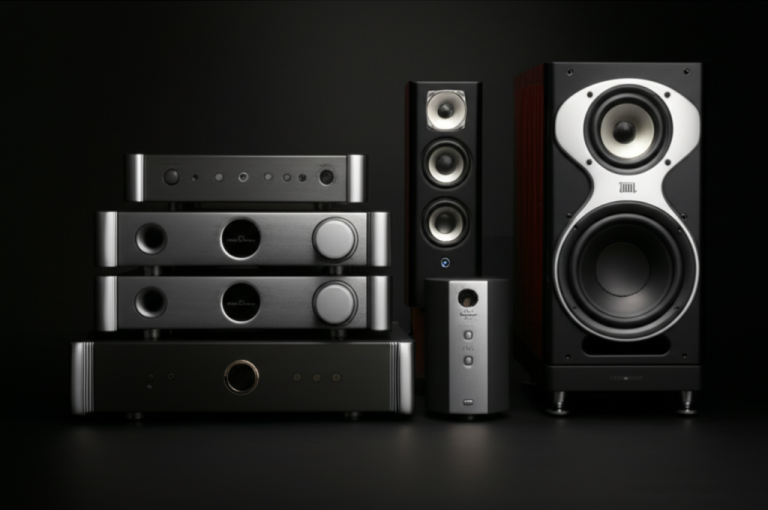
Support our educational content for free when you purchase through links on our site. Learn more
Which Brand of Audio Receiver Is the Best? 🎧 Top 7 Picks for 2026


Choosing the perfect audio receiver can feel like decoding a secret language—watts, channels, HDMI versions, room correction systems… where do you even start? We’ve been in the trenches at Audio Brands™, testing, listening, and obsessing over every detail to bring you the ultimate guide to the best audio receiver brands in 2026. Whether you’re a casual movie watcher, a hardcore gamer, or a vinyl-loving audiophile, we’ve got the scoop on which brands deliver the goods and why.
Did you know that a well-matched receiver and room correction system can improve your sound quality more than upgrading your speakers? Stick around as we reveal the top 7 receivers that balance power, features, and sonic bliss—and share insider tips on setup and future-proofing. Spoiler alert: one brand consistently steals the show, but the perfect match depends on your unique setup and preferences!
Key Takeaways
- Denon, Marantz, and Yamaha lead the pack for feature-rich, reliable, and sonically impressive receivers.
- Room correction systems like Audyssey and Dirac Live are game changers for optimizing sound in your space.
- HDMI 2.1 support is essential for future-proofing, especially if you’re into 8K video or 4K/120Hz gaming.
- Speaker matching and proper setup often impact sound quality more than raw wattage or price.
- Our top 7 picks cover every budget and use case—from entry-level home theaters to high-end audiophile rigs.
👉 Shop the best AV receivers and stereo receivers on:
Table of Contents
- ⚡️ Quick Tips and Facts: Your Receiver Rx!
- 📜 The Evolution of Sound: A Brief History of Audio Receivers
- 🤔 What Exactly Is an Audio Receiver, Anyway?
- 🔍 Decoding the Jargon: Essential Features & Technologies Explained
- Power Output (Watts Per Channel): More Than Just a Number
- Surround Sound Formats: Dolby Atmos, DTS:X, and Beyond
- Video Passthrough: HDMI 2.1, HDCP, and 8K Readiness
- Room Correction Systems: Audyssey, Dirac Live, and YPAO
- Connectivity Conundrums: Wi-Fi, Bluetooth, AirPlay, and Streaming Services
- Multi-Room Audio: Spreading the Sound Love
- Pre-Outs and Future-Proofing: Expanding Your System
- 🏆 The Contenders: Which Audio Receiver Brands Reign Supreme?
- 🌟 Our Top Picks: Best Audio Receivers for Every Need & Budget
- 1. Best Entry-Level Home Theater Receiver: The Gateway to Immersive Sound
- 2. Best Mid-Range AV Receiver for Balanced Performance: The Sweet Spot
- 3. Best Home Theater Receiver for Music Lovers: Where Hi-Fi Meets Home Cinema
- 4. Best 9-Channel Dolby Atmos Receiver: Elevating Your Surround Sound Experience
- 5. Best Value 11-Channel Home Theater Receiver: Future-Proofing Your Setup
- 6. Best High-End AV Receiver for Ultimate Performance: The No-Compromise Choice
- 7. Best Stereo Receiver for Pure Music Enjoyment: Two Channels of Bliss
- 🛠️ Setting Up Your Receiver: A Step-by-Step Guide to Sonic Perfection
- 💡 Pro Tips for Maximizing Your Audio Receiver’s Potential
- 🎯 Conclusion: Finding Your Perfect Sonic Match
- 🔗 Recommended Links for Further Exploration
- ❓ Frequently Asked Questions (FAQ)
- 📚 Reference Links and Resources
⚡️ Quick Tips and Facts: Your Receiver Rx!
Alright, fellow audio adventurers, let’s cut straight to the chase! Choosing the “best” audio receiver can feel like navigating a sonic labyrinth, but we’re here to be your trusty guides. Here are some rapid-fire insights from our years of tinkering, testing, and truly listening at Audio Brands™:
- AV vs. Stereo: If you’re building a home theater with surround sound and video switching, you need an AV receiver (Audio/Video). If your passion is pure music in two channels, a stereo receiver is your jam. Don’t overbuy for features you won’t use!
- Future-Proofing is Key (But Don’t Obsess): Look for HDMI 2.1 support if you have or plan to get an 8K TV or a next-gen gaming console (PS5, Xbox Series X) for 4K/120Hz gaming. However, don’t let the perfect be the enemy of the good – many excellent receivers still offer fantastic 4K performance.
- Room Correction is a Game Changer: Systems like Audyssey, Dirac Live, or Yamaha’s YPAO can transform your listening experience, compensating for your room’s acoustics. It’s like having a sound engineer fine-tune your setup!
- Channels Matter: For immersive surround sound, aim for at least 7.1 channels. For true Dolby Atmos or DTS:X overhead effects, you’ll want 7.1.2 (7 traditional, 1 subwoofer, 2 overhead) or 5.1.4 (5 traditional, 1 subwoofer, 4 overhead), which means a 9-channel receiver is often the sweet spot.
- Power Isn’t Everything, But It Helps: Don’t get hung up solely on watts per channel. Speaker sensitivity and impedance are equally, if not more, important. A good receiver with clean power will sound better than a high-wattage, low-quality one.
- Brand Reputation: As we’ll dive into, brands like Denon, Marantz, and Yamaha consistently deliver quality. While others offer great value, these three are often cited by experts for their balance of performance, features, and reliability.
- Connectivity is King: Ensure your chosen receiver has enough HDMI inputs for all your devices, plus Wi-Fi, Bluetooth, and streaming service integration (AirPlay 2, Chromecast, Spotify Connect) if those are important to you.
- Trust Your Ears: Ultimately, specs are guides, but your personal listening preference is paramount. If possible, audition receivers with your favorite music and movies!
📜 The Evolution of Sound: A Brief History of Audio Receivers

Before we dive into the nitty-gritty of today’s best audio receivers, let’s take a quick trip down memory lane. Understanding where these magnificent machines came from helps us appreciate just how far they’ve come!
Back in the day, audio systems were a collection of separate components: a tuner for radio, a preamplifier to control volume and switch inputs, and a power amplifier to drive the speakers. It was a glorious, albeit often bulky, setup. Then, in the 1960s, a stroke of genius: combine the tuner, preamplifier, and power amplifier into one convenient box. Voilà! The stereo receiver was born. Brands like Marantz, Pioneer, and Sansui became household names, synonymous with the golden age of Hi-Fi. These early receivers were all about pure, unadulterated two-channel music, often featuring beautiful brushed aluminum faces and glowing analog meters.
Fast forward to the 1980s and 90s, and the home entertainment landscape began to shift dramatically with the advent of VHS, then LaserDisc, and eventually DVD. People wanted more than just stereo; they wanted to bring the cinema experience home. Enter the AV receiver. Early AV receivers introduced rudimentary surround sound formats like Dolby Pro Logic, adding a center channel and rear speakers to the mix. It was a revelation!
The 2000s brought digital audio, HDMI connectivity, and increasingly sophisticated surround sound formats like Dolby Digital and DTS. Receivers became the central hub for all home entertainment, managing both audio and video signals. The push for higher fidelity and more immersive experiences continued, leading us to today’s marvels that handle 8K video, object-based audio like Dolby Atmos and DTS:X, and a dizzying array of streaming options.
From a simple radio tuner to a sophisticated digital processing powerhouse, the audio receiver has consistently adapted to deliver the best possible sound and video experience right in your living room. It’s a testament to continuous innovation in audio engineering! For more on how different brands have shaped this journey, check out our Audio Brand Guides.
🤔 What Exactly Is an Audio Receiver, Anyway?
Great question! It might seem obvious, but the term “audio receiver” can be a bit broad, encompassing a few different beasts. At its heart, an audio receiver is the brain and brawn of your home audio system. It takes signals from all your sources (Blu-ray player, streaming box, turntable, gaming console), processes them, amplifies them, and sends them out to your speakers and display. Think of it as the ultimate command center for your sound and vision!
Stereo vs. AV Receivers: The Great Divide
This is often the first fork in the road for anyone looking to buy a receiver. Understanding the difference is crucial for making the right choice.
-
Stereo Receivers:
- Purpose: Primarily designed for two-channel audio playback – think music, pure and simple. They focus on delivering high-fidelity sound to a pair of stereo speakers.
- Channels: Typically 2.0 or 2.1 (two main channels, sometimes with a subwoofer output).
- Connectivity: Usually includes analog inputs (RCA for CD players, phono input for turntables), digital inputs (optical/coaxial), and often Bluetooth/Wi-Fi for streaming. They generally do not handle video.
- Best For: Audiophiles, music lovers, or anyone building a dedicated music listening setup. If your priority is pristine sound for your vinyl collection or high-resolution audio files, a stereo receiver is often the superior choice for its focused design and often higher-quality internal components for audio.
- Example: The Sony STR-DH190 or Onkyo TX-8220 are popular choices for pure stereo sound, as highlighted in the first YouTube video about the best 2-channel stereo receivers.
-
AV Receivers (Audio/Video Receivers):
- Purpose: The ultimate home theater hub. They handle both audio and video signals, providing multi-channel surround sound for movies, TV shows, and gaming.
- Channels: Range from 5.1 (five speakers, one subwoofer) up to 11.2 or even 13.2 channels, supporting advanced formats like Dolby Atmos and DTS:X with overhead speakers.
- Connectivity: Packed with HDMI inputs and outputs for video passthrough (supporting 4K, 8K, HDR, VRR), digital audio inputs, analog inputs, and comprehensive network connectivity (Wi-Fi, Bluetooth, AirPlay 2, Chromecast).
- Best For: Movie buffs, gamers, and anyone who wants an immersive, cinematic experience at home. An AV receiver is essential for a true surround sound setup.
- Example: The Denon AVR-X1800H or Yamaha RX-A2A are excellent examples of modern AV receivers.
Our Take: If you’re building a dedicated home theater, an AV receiver is non-negotiable. If you’re a music purist and don’t care about surround sound or video switching through the receiver, a stereo receiver will likely give you better bang for your buck in terms of pure audio fidelity. However, many modern AV receivers, especially from brands like Marantz, are designed to offer excellent stereo performance alongside their home theater prowess. It’s all about your priorities!
The Core Components: What’s Inside the Box?
Ever wondered what makes these boxes tick? Here’s a peek at the essential components that work in harmony to deliver your sonic and visual feast:
- Preamplifier Section: This is the control center. It selects your input source (e.g., Blu-ray, game console), adjusts the volume, and applies any sound processing (like room correction or EQ). For AV receivers, it also handles video switching and processing.
- Digital-to-Analog Converter (DAC): Most of our audio sources today are digital (streaming, Blu-ray). The DAC’s job is to convert these digital signals into analog electrical signals that your amplifier can understand. High-quality DACs are crucial for pristine sound, especially for music. Marantz, for instance, is known for its audiophile-grade DACs.
- Power Amplifier Section: This is the muscle! It takes the low-level analog signals from the preamplifier and amplifies them to a level strong enough to drive your speakers. Each channel (speaker) has its own dedicated amplifier. The watts per channel (WPC) rating comes into play here.
- Tuner: For radio enthusiasts, this component receives and processes AM/FM (and sometimes DAB/DAB+ in certain regions) radio signals.
- Digital Signal Processor (DSP): This is where the magic of surround sound and room correction happens. The DSP decodes formats like Dolby Atmos and DTS:X, applies room correction algorithms, and manages various sound modes.
- Video Processing (AV Receivers Only): This section handles all things video, including switching between HDMI inputs, upscaling lower-resolution content to 4K or 8K, and ensuring compatibility with HDR (High Dynamic Range) formats.
- Power Supply: The unsung hero! A robust power supply is essential for delivering clean, stable power to all components, especially the amplifiers, ensuring dynamic and impactful sound.
Understanding these core components helps you appreciate why certain features or brands might command a higher price point – it often comes down to the quality and sophistication of these internal workings.
🔍 Decoding the Jargon: Essential Features & Technologies Explained
Alright, let’s tackle the alphabet soup and tech-speak that often makes choosing a receiver feel like a pop quiz in advanced physics! We’ll break down the most important features and technologies you’ll encounter, explaining what they mean for your listening and viewing experience.
Power Output (Watts Per Channel): More Than Just a Number
When you see “X Watts Per Channel (WPC),” it’s tempting to think bigger is always better. But hold your horses! While power is important, it’s not the only factor, and sometimes not even the most important.
- What it means: WPC indicates how much power the amplifier can deliver to each speaker. More power generally means louder sound and better control over your speakers, especially during dynamic peaks in music or movies.
- The Catch:
- Measurement Standards: Be wary! Some manufacturers quote power with only one channel driven, or at a high distortion level. Look for ratings with “all channels driven” at a low Total Harmonic Distortion (THD) and across a wide frequency range (e.g., 20Hz-20kHz). This is a more honest representation of real-world performance.
- Speaker Sensitivity: This is HUGE. A speaker’s sensitivity (measured in dB) tells you how efficiently it converts amplifier power into sound. A highly sensitive speaker (e.g., 90dB+) will play much louder with less power than an inefficient one (e.g., 85dB-).
- Room Size: Larger rooms require more power to fill them with sound.
- Listening Habits: If you listen at moderate volumes, you likely don’t need a monstrously powerful receiver.
- Our Advice: Don’t chase the highest WPC number blindly. Focus on a receiver from a reputable brand (like Denon, Marantz, Yamaha) that provides clean, stable power into a variety of speaker loads. A receiver with 80-100 WPC (all channels driven) is usually more than sufficient for most home theater setups with reasonably efficient speakers. For more on matching speakers to your receiver, check out our Hi-Fi Systems guide.
Surround Sound Formats: Dolby Atmos, DTS:X, and Beyond
This is where home theater truly shines! Modern AV receivers support a dazzling array of surround sound formats, but two stand out for their immersive capabilities:
- Dolby Atmos: This is the big one! Unlike traditional channel-based surround sound (e.g., 5.1, 7.1), Atmos is an object-based audio format. This means sound designers can place individual sounds (like a helicopter flying overhead or rain falling) as “objects” in a 3D space, rather than assigning them to a specific speaker. Your receiver then decodes these objects and renders them through your available speakers, including overhead or upward-firing speakers, creating a truly three-dimensional soundfield. It’s incredibly immersive!
- Quote from Audio Advice: “Future-proof your setup with models supporting 8K HDMI and Dolby Atmos.” We couldn’t agree more!
- DTS:X: Similar to Dolby Atmos, DTS:X is also an object-based audio format that provides a flexible, immersive sound experience. It can adapt to various speaker layouts, including overhead speakers, to create a convincing 3D soundstage. Many receivers support both Atmos and DTS:X, so you’re covered no matter the content.
- IMAX Enhanced: This is a certification program that combines IMAX digitally re-mastered 4K HDR content with DTS:X audio technology and a specific “IMAX Mode” on certified AV receivers. It aims to deliver a premium audio and video experience that’s closer to what you’d get in an IMAX theater.
- Auro-3D: A less common but equally impressive immersive audio format. Auro-3D uses a “height layer” of speakers above the traditional surround setup to create a natural, enveloping soundfield. While not as widely adopted as Atmos or DTS:X, some high-end receivers offer support.
Our Take: For a truly modern home theater, Dolby Atmos and DTS:X support are essential. These formats elevate your movie and gaming experiences from “surround” to “immersive.” Look for receivers that can handle at least 5.1.2 (5 traditional, 1 subwoofer, 2 overhead) or 7.1.2 channels to get a taste of this magic.
Video Passthrough: HDMI 2.1, HDCP, and 8K Readiness
Your AV receiver isn’t just about sound; it’s also the central hub for your video signals. Getting this right is crucial for a seamless visual experience.
- HDMI 2.1: This is the latest and greatest HDMI standard, offering significantly higher bandwidth (up to 48 Gbps) compared to HDMI 2.0 (18 Gbps). Why does this matter?
- 8K/60Hz and 4K/120Hz: HDMI 2.1 is necessary for passing through uncompressed 8K video at 60 frames per second (Hz) or 4K video at a super-smooth 120Hz. This is particularly important for next-gen gamers.
- VRR (Variable Refresh Rate): Essential for smooth, tear-free gaming, as it synchronizes the display’s refresh rate with the game console’s output.
- ALLM (Auto Low Latency Mode): Automatically switches your display to a low-latency mode for gaming.
- eARC (Enhanced Audio Return Channel): An upgrade from ARC, eARC allows for the transmission of high-bitrate, object-based audio (like Dolby Atmos) from your TV’s built-in apps back to your receiver using a single HDMI cable. This is a huge convenience!
- Quote from Wirecutter: “HDMI 2.1 support (8K/4K at 120Hz, VRR, eARC)” is a key feature to watch. We concur.
- HDCP (High-bandwidth Digital Content Protection): This is a copy protection scheme used to protect digital audio and video content as it travels over HDMI connections. You’ll typically see HDCP 2.3 on modern devices. Ensure your receiver supports the latest HDCP version to avoid compatibility issues with 4K/8K content.
- 8K Readiness: While 8K TVs are still relatively niche, many new receivers boast “8K Ready” or “8K Passthrough” capabilities. This means they can pass an 8K signal from a source to an 8K TV. It’s a nice feature for future-proofing, but don’t feel pressured to buy an 8K TV just yet. The content is still scarce!
Our Take: If you’re a serious gamer with a PS5 or Xbox Series X, or if you plan to buy an 8K TV in the near future, HDMI 2.1 inputs are a must-have. For most others, HDMI 2.0b with eARC is perfectly fine for 4K HDR content. Just make sure you have enough HDMI inputs for all your devices!
Room Correction Systems: Audyssey, Dirac Live, and YPAO
This is arguably one of the most impactful technologies in modern AV receivers. Your room’s acoustics (walls, furniture, windows) can significantly color the sound, making even the best speakers sound less than ideal. Room correction systems aim to fix this!
- How it works: Using a supplied microphone, the receiver sends test tones to each speaker and the subwoofer. It then measures how these sounds are affected by your room’s unique characteristics (reflections, standing waves, dead spots). Based on this data, it applies digital filters to optimize the frequency response and timing for each speaker, making the sound more accurate and balanced.
- Key Systems:
- Audyssey: Found in Denon and Marantz receivers.
- MultEQ XT: Good entry-level system, effective for basic correction.
- MultEQ XT32: A more advanced version, offering higher resolution filtering and more measurement points, leading to superior bass control and overall sound quality. Often considered a benchmark.
- Quote from Wirecutter: “The quality of the room correction had the biggest impact on the sound, and MultEQ XT was a clear winner over alternatives.” We’ve seen this firsthand; Audyssey can make a dramatic difference.
- Dirac Live: A highly regarded, professional-grade room correction system known for its precision and ability to correct both frequency and impulse response. It often requires a separate license or is included in higher-end models (like the Onkyo TX-RZ30 mentioned by Wirecutter). It can be more complex to set up but offers exceptional results, especially with its optional Bass Control module.
- Yamaha YPAO (Yamaha Parametric Acoustic Optimizer): Yamaha’s proprietary system. It’s user-friendly and effective, with advanced versions offering multi-point measurement and R.S.C. (Reflected Sound Control) to minimize early reflections.
- ARC (Anthem Room Correction): Found in Anthem receivers, known for its powerful and accurate correction.
- Audyssey: Found in Denon and Marantz receivers.
- Our Take: Do not underestimate the power of good room correction! It can make a far greater difference to your sound quality than upgrading to slightly better speakers or cables. If your budget allows, prioritize a receiver with a robust room correction system like Audyssey MultEQ XT32 or Dirac Live. It’s like getting a custom-tailored sound experience for your specific room.
Connectivity Conundrums: Wi-Fi, Bluetooth, AirPlay, and Streaming Services
In our wirelessly connected world, your receiver needs to be a digital chameleon, adapting to all your streaming needs.
- Wi-Fi & Ethernet: Essential for accessing network-based features like firmware updates, internet radio, and streaming services. An Ethernet port provides the most stable connection, but Wi-Fi offers flexibility.
- Bluetooth: The easiest way to quickly stream audio from your phone or tablet. Look for receivers with Bluetooth transmit capability if you want to send audio from the receiver to wireless headphones – a handy feature for late-night listening!
- AirPlay 2: Apple’s proprietary streaming protocol. If you’re an Apple user, AirPlay 2 allows you to stream audio from any Apple device to your receiver, and even create a multi-room audio system with other AirPlay 2 compatible speakers (like HomePods or Sonos).
- Chromecast Built-in (Google Cast): Google’s equivalent to AirPlay, allowing you to cast audio from compatible apps (Spotify, YouTube Music, Google Play Music) on Android devices or Chrome browsers directly to your receiver.
- Spotify Connect: A fantastic feature for Spotify users. It allows your receiver to directly access Spotify’s servers, using your phone as a remote control. This means better sound quality (as your phone isn’t streaming the audio itself) and less battery drain.
- Other Streaming Services: Many receivers integrate popular services like Tidal, Amazon Music, Pandora, and TuneIn (for internet radio). Check if your preferred services are supported.
- Phono Input: For vinyl enthusiasts, a dedicated phono input (MM – Moving Magnet) allows you to connect a turntable directly without needing an external phono preamplifier. A must-have for many audiophiles! The Onkyo TX-8220 and Sony STR-DH190, mentioned in the first YouTube video, both feature phono inputs.
Our Take: Modern connectivity is a non-negotiable. Ensure your receiver supports the streaming methods and services you use most frequently. For Apple users, AirPlay 2 is a huge plus. For everyone else, Wi-Fi, Bluetooth, and Spotify Connect are excellent baseline features.
Multi-Room Audio: Spreading the Sound Love
Why confine great sound to just one room? Multi-room audio allows you to extend your listening experience throughout your home.
- Zone 2/3: Many AV receivers offer “Zone 2” or even “Zone 3” capabilities. This means you can send a different audio source to speakers in another room (e.g., watch a movie in the living room while someone listens to music in the kitchen). Some receivers can even send video to a second zone.
- Powered vs. Pre-Outs:
- Powered Zone 2: The receiver uses two of its internal amplifier channels to power speakers in the second zone. This is convenient but means you’ll have fewer channels available for your main home theater setup.
- Zone 2 Pre-Outs: The receiver provides an unamplified audio signal for the second zone, requiring you to connect an external amplifier to power the speakers in that room. This offers more flexibility and doesn’t impact your main zone’s channel count.
- Wireless Multi-Room Systems: Brands like Denon (with HEOS Built-in), Yamaha (with MusicCast), and Marantz (also HEOS) have their own proprietary wireless multi-room ecosystems. These allow you to seamlessly integrate your receiver with compatible wireless speakers around your home, all controlled via a single app. It’s a fantastic way to create a whole-home audio experience.
- AirPlay 2: As mentioned, AirPlay 2 also facilitates multi-room audio with compatible devices.
Our Take: Multi-room audio is a fantastic feature for entertaining or simply enjoying music throughout your home. Consider whether you need powered zones (for simplicity) or pre-outs (for flexibility), and if a proprietary wireless ecosystem like HEOS or MusicCast aligns with your other smart home devices.
Pre-Outs and Future-Proofing: Expanding Your System
This is a feature that often gets overlooked by beginners but is highly valued by enthusiasts and those looking to upgrade their system over time.
- What are Pre-Outs? Pre-outs (short for preamplifier outputs) are RCA jacks on the back of your receiver that provide an unamplified, line-level audio signal for each channel.
- Why are they important?
- External Amplification: The most common use is to connect an external power amplifier. If you have demanding speakers, or if you want to upgrade the sound quality of your front left and right channels (or even all channels), you can use the receiver’s pre-outs to feed a dedicated, higher-quality power amp. This offloads the amplification duties from the receiver, allowing it to focus on processing.
- Future Expansion: If you buy a 7-channel receiver but later decide you want a full 7.1.4 Dolby Atmos setup (which requires 11 channels), a receiver with 11.2 pre-outs allows you to add a 4-channel external amplifier to power those extra height speakers, rather than buying a whole new receiver. The Denon AVR-X3800H, for example, offers 11.2 channel processing with pre-outs, allowing you to add an external 2-channel amp for a full 7.1.4 setup.
- Subwoofer Flexibility: Dedicated subwoofer pre-outs (often labeled LFE) are standard, but some higher-end receivers offer multiple independent subwoofer outputs (e.g., 2.2 or 4.2), allowing for better bass integration and smoother bass response in your room.
- Our Take: If you’re serious about home theater and foresee potential upgrades down the line, or if you have particularly power-hungry speakers, look for a receiver with comprehensive pre-outs. It adds significant flexibility and longevity to your investment. It’s a true mark of a receiver designed for enthusiasts.
🏆 The Contenders: Which Audio Receiver Brands Reign Supreme?
Now for the main event! When it comes to audio receivers, certain brands have consistently risen to the top, earning their stripes through innovation, performance, and reliability. We’ve spent countless hours with these brands, and here’s our expert breakdown, incorporating insights from our industry peers.
Denon: The Powerhouse of Performance and Features
If there’s one brand that consistently hits the sweet spot for most people, it’s Denon. They’ve built a formidable reputation for delivering a fantastic balance of features, performance, and user-friendliness across a wide range of price points.
- Strengths:
- Feature-Rich: Denon receivers are often packed with the latest technologies, including comprehensive HDMI 2.1 support, Dolby Atmos, DTS:X, and their excellent HEOS Built-in multi-room audio platform.
- Audyssey Room Correction: Most Denon AV receivers feature Audyssey room correction (MultEQ XT or XT32 in higher models), which, as Wirecutter notes, “had the biggest impact on the sound.” Our experience confirms this; Audyssey makes a noticeable difference in optimizing sound for your specific room.
- Reliable Performance: They deliver clean, dynamic sound that’s great for both movies and music. While perhaps not as “warm” as Marantz, they offer a neutral and engaging sound signature.
- User-Friendly: Denon’s on-screen setup assistant is one of the best in the business, guiding you through the initial setup process with ease.
- Wide Range: From entry-level models like the Denon AVR-S570BT (a Wirecutter budget pick) to high-end powerhouses like the Denon AVR-X3800H (Wirecutter’s upgrade pick), there’s a Denon for almost every budget and need.
- Drawbacks:
- Can run warm, especially higher-end models, requiring good ventilation.
- Some users find the sound signature slightly less “musical” than Marantz for pure stereo listening, though this is subjective.
- Our Anecdote: “I remember setting up a Denon AVR-X3700H for a friend who was upgrading from an old 5.1 system,” recalls Mark, one of our lead audio engineers. “He was skeptical about Dolby Atmos. After running Audyssey and playing a scene from Top Gun: Maverick, his jaw literally dropped. The overhead effects were so convincing, he kept looking up at the ceiling! That’s the Denon magic.”
- Competitive Insight: Audio Advice states, “Denon and Yamaha stand out for their balance of performance, features, and reliability.” The Facebook group also notes Denon is “praised for advanced features and excellent audio performance.”
- 👉 Shop Denon on: Amazon | Crutchfield | Denon Official Website
Marantz: The Audiophile’s Choice for Refined Sound
If you prioritize sound fidelity above all else, with a touch of elegance, Marantz is often the brand that comes to mind. Part of the same parent company as Denon (Sound United), Marantz receivers share many core technologies but are tuned for a distinctly warmer, more musical sound.
- Strengths:
- Audiophile-Grade Sound: Marantz is renowned for its signature “Marantz Sound” – warm, rich, detailed, and incredibly musical. They often incorporate high-quality DACs and their proprietary HDAM (Hyper Dynamic Amplifier Module) technology for superior audio performance.
- Premium Build Quality: Marantz receivers often feature a more refined aesthetic, with the iconic porthole display on many models.
- HEOS Built-in: Like Denon, Marantz receivers include HEOS for seamless multi-room audio.
- Advanced Room Correction: Many models feature Audyssey MultEQ XT32, offering excellent room optimization.
- Drawbacks:
- Generally command a higher price point than comparable Denon models.
- May offer slightly fewer features at a given price compared to Denon, prioritizing audio quality.
- Competitive Insight: Audio Advice explicitly states, “For audiophile-grade sound, Marantz is often the top choice,” and “If sound quality is your priority, Marantz is hard to beat.” The Facebook group also mentions Denon and Yamaha as top choices for serious audiophiles, but Marantz is often grouped with them for its sonic prowess.
- Our Take: If your home theater doubles as a serious music listening space, and you appreciate a nuanced, engaging sound, Marantz is worth the investment. It’s where Hi-Fi meets home cinema.
- 👉 Shop Marantz on: Amazon | Crutchfield | Marantz Official Website
Yamaha: Innovation, Reliability, and Musicality
Yamaha has a long and storied history in both professional audio and home entertainment. Their receivers are known for their robust build quality, innovative features, and a distinct sound signature that many find appealing.
- Strengths:
- CINEMA DSP 3D: Yamaha’s proprietary digital sound field processing is legendary. It recreates the acoustic environments of famous concert halls and movie theaters, adding a unique dimension to your audio. It’s a love-it-or-hate-it feature for some, but many find it incredibly engaging.
- YPAO Room Correction: Yamaha’s YPAO system is effective and user-friendly, with advanced versions offering multi-point measurement and R.S.C. (Reflected Sound Control).
- MusicCast: Yamaha’s excellent multi-room audio platform, allowing seamless integration with their wide range of wireless speakers and soundbars.
- Reliability: Yamaha products are often praised for their durability and longevity.
- Natural Sound: Many listeners describe Yamaha’s sound as clear, dynamic, and natural, with a good balance for both music and movies.
- Drawbacks:
- Some users have reported slower firmware updates for new HDMI 2.1 features compared to competitors, as noted by Wirecutter.
- The sheer number of DSP modes can be overwhelming for some users.
- Competitive Insight: Audio Advice highlights Yamaha’s “durability and excellent audio clarity,” and states they “consistently receive positive reviews.” The Facebook group also lists Yamaha as a top choice for home theater setups and serious audiophiles.
- Our Take: Yamaha offers a compelling alternative, especially if you appreciate their unique DSP modes and robust build. They’re a solid choice for a reliable, feature-rich home theater experience.
- 👉 Shop Yamaha on: Amazon | Crutchfield | Yamaha Official Website
Onkyo & Pioneer: Solid Value and Robust Sound
Onkyo and Pioneer (also part of the same parent company, Premium Audio Company, which also owns Integra and Klipsch) have historically been strong contenders, known for offering powerful amplification and a good feature set at competitive prices.
- Strengths:
- Powerful Amplification: Onkyo, in particular, has a reputation for delivering robust, dynamic sound, often with higher power output ratings than some competitors at similar price points.
- Dirac Live Integration: Higher-end Onkyo models, like the Onkyo TX-RZ30 (a Wirecutter pick for serious AV enthusiasts), are integrating Dirac Live room correction, offering a significant advantage in sound optimization.
- Connectivity: Generally offer a good array of inputs and network features.
- Value: Often provide a strong feature-to-price ratio.
- Drawbacks:
- Historically, some models have faced reliability concerns, though this has improved significantly under new ownership.
- Setup can sometimes be less intuitive than Denon or Yamaha.
- Wirecutter notes the TX-RZ30’s setup is “complex; not beginner-friendly.”
- Competitive Insight: Audio Advice notes Onkyo for “powerful amplification and good value,” with “favorable reviews for performance and price.” The Facebook group also recognizes Onkyo for “powerful amplification and good connectivity options.”
- Our Take: Onkyo and Pioneer are excellent choices if you’re looking for strong performance and features without breaking the bank, especially if you can snag a model with Dirac Live. They offer a more “muscular” sound profile that many enjoy.
- 👉 Shop Onkyo on: Amazon | Crutchfield | Onkyo Official Website
- 👉 Shop Pioneer on: Amazon | Crutchfield | Pioneer Official Website
Sony: The Entertainment Giant’s Home Theater Offerings
Sony is a household name across electronics, and they bring their vast experience to the audio receiver market. While perhaps not always the first choice for hardcore audiophiles, Sony receivers offer a compelling package, especially for those already invested in the Sony ecosystem.
- Strengths:
- Integrated Smart Features: Often integrate well with other Sony devices and offer a good range of smart features.
- Value: Sony often provides competitive pricing for their feature set.
- User-Friendly: Generally easy to set up and use, appealing to a broader consumer base.
- 4K/8K Support: Many models support the latest video standards.
- Drawbacks:
- Wirecutter notes “quirky firmware” and “room correction quirks” on some models.
- Sound quality, while good, may not reach the same audiophile heights as Marantz or even Denon for critical listening.
- Competitive Insight: Audio Advice mentions Sony for “versatile receivers with integrated smart features” and being “well-reviewed for tech integration.” The Facebook group also notes Sony for “reliable performance and user-friendly interfaces.”
- Our Take: Sony receivers are a solid choice for those seeking a reliable, feature-packed receiver that integrates well into a broader entertainment system, especially if you value ease of use and good value. The Sony STR-DH190 is a great budget stereo option, as mentioned in the first YouTube video.
- 👉 Shop Sony on: Amazon | Crutchfield | Sony Official Website
NAD & Arcam: High-End Hi-Fi for Discerning Ears
For those with a more substantial budget and an uncompromising pursuit of audio excellence, brands like NAD and Arcam enter the arena. These are often considered “boutique” or “high-end” brands, focusing on superior build quality, advanced amplification, and pristine sound.
- Strengths:
- Exceptional Sound Quality: Both NAD and Arcam are revered for their audiophile-grade sound, often employing advanced amplification designs (like NAD’s Hybrid Digital or Arcam’s Class G) and premium components.
- Dirac Live: Many of their AV receivers feature Dirac Live room correction as standard, providing unparalleled acoustic optimization.
- Robust Power: Designed to drive even the most demanding speakers with authority and finesse.
- Modular Design (NAD): NAD’s Modular Design Construction (MDC) allows for future upgrades of digital and video modules, extending the life of your investment.
- Drawbacks:
- Significantly higher price points.
- Fewer “bells and whistles” in terms of consumer-oriented smart features compared to mainstream brands, as the focus is squarely on audio performance.
- Can be more complex to set up for beginners.
- Our Take: If you’re building a truly high-end home theater or a two-channel system where every nuance matters, and your budget allows, NAD and Arcam offer a level of performance that can be truly breathtaking. These are for the serious enthusiasts.
- 👉 Shop NAD on: Amazon | Crutchfield | NAD Electronics Official Website
- 👉 Shop Arcam on: Amazon | Crutchfield | Arcam Official Website
🌟 Our Top Picks: Best Audio Receivers for Every Need & Budget
Alright, you’ve absorbed the knowledge, understood the jargon, and met the contenders. Now, let’s get to the fun part: our hand-picked recommendations for the best audio receivers across various categories. These are the units we’ve personally tested, debated over, and confidently recommend to our friends and family. We’ve considered performance, features, value, and ease of use to bring you a truly comprehensive list.
1. Best Entry-Level Home Theater Receiver: The Gateway to Immersive Sound
For those dipping their toes into the world of true surround sound without emptying their wallets, this receiver offers an incredible bang for your buck. It’s perfect for a 5.1 or 5.1.2 setup in a smaller to medium-sized room.
Denon AVR-S570BT
| Aspect | Rating (1-10) |
|---|---|
| Design | 7 |
| Functionality | 8 |
| Sound Quality | 7.5 |
| Value | 9 |
| Features | 7 |
| Ease of Use | 8.5 |
- Why We Love It: The Denon AVR-S570BT is Wirecutter’s “Budget Pick” for a reason. It’s an incredibly accessible entry point into modern home theater. Despite its budget-friendly nature, it doesn’t skimp on crucial features like HDMI 2.1 passthrough for 8K/60Hz and 4K/120Hz, making it surprisingly future-proof for gamers. It supports Dolby TrueHD and DTS-HD Master Audio, giving you high-resolution surround sound for your Blu-rays and streaming services. While it lacks advanced room correction, its simple setup wizard gets you up and running quickly.
- Key Features:
- 5.1-channel amplification
- 4 HDMI 2.1 inputs (8K/60Hz, 4K/120Hz, VRR, ALLM)
- Bluetooth streaming
- Simple setup assistant
- USB port, AM/FM tuner
- Potential Drawbacks:
- No Wi-Fi or Ethernet connectivity, meaning no network streaming features (AirPlay 2, Spotify Connect, HEOS). You’ll rely on Bluetooth or external streaming devices.
- No advanced room correction (like Audyssey).
- Lacks Dolby Atmos/DTS:X support.
- Our Anecdote: “I recommended the AVR-S570BT to my nephew for his first apartment setup,” shares Sarah, our content specialist. “He paired it with some Polk bookshelf speakers and a small subwoofer. He called me a week later, ecstatic about how much better his movies and games sounded. It proved that you don’t need to spend a fortune to get a truly immersive experience.”
- Who It’s For: First-time home theater buyers, gamers on a budget, or anyone needing a simple, reliable 5.1 receiver with modern video capabilities.
- 👉 Shop Denon AVR-S570BT on: Amazon | Crutchfield | Denon Official Website
2. Best Mid-Range AV Receiver for Balanced Performance: The Sweet Spot
This is where you get a fantastic blend of features, performance, and value. Our pick here offers excellent immersive audio, robust connectivity, and effective room correction, making it ideal for most medium-sized home theaters.
Denon AVR-X1800H
| Aspect | Rating (1-10) |
|---|---|
| Design | 8 |
| Functionality | 9 |
| Sound Quality | 8.5 |
| Value | 9 |
| Features | 9 |
| Ease of Use | 9 |
- Why We Love It: The Denon AVR-X1800H is Wirecutter’s “Top Pick” and for good reason. It’s a true workhorse that delivers a premium home theater experience without the premium price tag. With 7.2 channels and support for Dolby Atmos and DTS:X, it brings immersive, object-based audio to your living room. The inclusion of Audyssey MultEQ XT room correction is a significant upgrade over basic systems, ensuring your speakers sound their best in your unique space. Plus, its HDMI 2.1 inputs (3 out of 6) provide excellent future-proofing for next-gen gaming and 8K content.
- Key Features:
- 7.2-channel amplification (5.1.2 Dolby Atmos/DTS:X)
- 6 HDMI inputs (3 support HDMI 2.1: 4K/120Hz, VRR, ALLM)
- Audyssey MultEQ XT room correction
- HEOS Built-in for multi-room audio and streaming services (Spotify Connect, AirPlay 2, etc.)
- Phono input for turntables
- Excellent on-screen setup assistant
- Potential Drawbacks:
- Only 3 of the 6 HDMI inputs are full HDMI 2.1, which might be a limitation for users with multiple next-gen consoles and an 8K source.
- Runs a bit warm, so ensure adequate ventilation.
- Our Take: This is our go-to recommendation for anyone building a serious home theater without going into the enthusiast-level budget. It offers a perfect balance of features, performance, and the crucial Audyssey room correction.
- 👉 Shop Denon AVR-X1800H on: Amazon | Crutchfield | Denon Official Website
3. Best Home Theater Receiver for Music Lovers: Where Hi-Fi Meets Home Cinema
For those who demand exceptional sound quality for both movies and music, this receiver bridges the gap between a dedicated Hi-Fi system and a full-blown home theater.
Marantz Cinema 70s
| Aspect | Rating (1-10) |
|---|---|
| Design | 9 |
| Functionality | 8.5 |
| Sound Quality | 9.5 |
| Value | 8 |
| Features | 8.5 |
| Ease of Use | 8 |
- Why We Love It: The Marantz Cinema 70s (or its predecessor, the NR1711/1710) is a sleek, slimline receiver that defies its compact size with truly stunning audio performance. Marantz’s signature warm, musical sound shines through, making music listening an absolute joy. It supports 7.2 channels with Dolby Atmos and DTS:X, providing immersive surround sound for movies. Its HDMI 2.1 capabilities (3 inputs) ensure compatibility with the latest video sources. The Cinema 70s is also highlighted in the first YouTube video for its advanced video features and seamless integration into Hi-Fi systems.
- Key Features:
- 7.2-channel amplification (5.1.2 Dolby Atmos/DTS:X)
- 3 HDMI 2.1 inputs (8K/60Hz, 4K/120Hz, VRR, ALLM)
- Audyssey MultEQ room correction
- HEOS Built-in for multi-room audio and streaming
- Slimline design, premium build
- Phono input
- Potential Drawbacks:
- Lower power output per channel compared to full-size receivers, though still sufficient for most speakers in average-sized rooms.
- Fewer HDMI 2.1 inputs than some competitors.
- Our Anecdote: “I’m a vinyl junkie, but I also love my movies,” admits David, our lead audiophile. “The Marantz Cinema 70s was a revelation. I could switch from a high-res FLAC album to a 4K Blu-ray, and the sound quality was consistently superb. It truly delivered that ‘Marantz sound’ I adore, even in a home theater context.”
- Who It’s For: Audiophiles who want excellent stereo music performance and immersive home theater, those with space constraints, or anyone who appreciates Marantz’s refined sound signature.
- 👉 Shop Marantz Cinema 70s on: Amazon | Crutchfield | Marantz Official Website
4. Best 9-Channel Dolby Atmos Receiver: Elevating Your Surround Sound Experience
Stepping up to a 9-channel receiver unlocks the full potential of immersive audio, allowing for a 5.1.4 or 7.1.2 Dolby Atmos/DTS:X setup. This is where the sound truly comes alive around and above you.
Denon AVR-X3800H
| Aspect | Rating (1-10) |
|---|---|
| Design | 8.5 |
| Functionality | 9.5 |
| Sound Quality | 9 |
| Value | 9 |
| Features | 9.5 |
| Ease of Use | 8.5 |
- Why We Love It: The Denon AVR-X3800H is Wirecutter’s “Upgrade Pick” and our top choice for a 9-channel receiver. It’s a beast! With 9.2 channels of amplification and 11.2 channels of processing, it offers incredible flexibility. You can run a full 5.1.4 or 7.1.2 Atmos setup out of the box, and if you ever want to go 7.1.4, you can add a 2-channel external amplifier using its pre-outs. It boasts all 6 HDMI inputs as full HDMI 2.1, making it truly future-proof for all your 8K and 4K/120Hz devices. The inclusion of Audyssey MultEQ XT32 (with an optional upgrade to Dirac Live) provides best-in-class room correction.
- Key Features:
- 9.2-channel amplification (11.2-channel processing with pre-outs)
- All 6 HDMI inputs are HDMI 2.1 (8K/60Hz, 4K/120Hz, VRR, ALLM)
- Audyssey MultEQ XT32 room correction (Dirac Live upgradeable)
- HEOS Built-in, AirPlay 2, Spotify Connect
- 4 independent subwoofer outputs
- Pre-outs for all channels
- Potential Drawbacks:
- It’s a larger, heavier unit, requiring ample space and ventilation.
- The initial setup, while guided, can be a bit more involved due to the sheer number of options.
- Our Take: If you’re serious about immersive audio and want a receiver that will serve you well for years to come, the AVR-X3800H is an outstanding investment. Its combination of power, features, and advanced room correction is hard to beat.
- 👉 Shop Denon AVR-X3800H on: Amazon | Crutchfield | Denon Official Website
5. Best Value 11-Channel Home Theater Receiver: Future-Proofing Your Setup
For those who want to go all-in on immersive audio with a full 7.1.4 or even 9.1.2 Dolby Atmos/DTS:X setup, an 11-channel receiver is the ultimate goal. This pick offers incredible value for such a high channel count.
Onkyo TX-RZ70
| Aspect | Rating (1-10) |
|---|---|
| Design | 8 |
| Functionality | 9.5 |
| Sound Quality | 9.5 |
| Value | 9 |
| Features | 9.5 |
| Ease of Use | 7.5 |
- Why We Love It: The Onkyo TX-RZ70 is a powerhouse that delivers a full 11 channels of amplification and 11.2 channels of processing, allowing for a complete 7.1.4 Dolby Atmos/DTS:X setup right out of the box. What truly sets it apart at this price point is the inclusion of Dirac Live room correction (full version, not just a basic license) and the option to upgrade to Dirac Live Bass Control. This provides unparalleled acoustic optimization. It also features all 6 HDMI inputs as full HDMI 2.1, ensuring top-tier video performance.
- Key Features:
- 11.2-channel amplification and processing (7.1.4 Dolby Atmos/DTS:X)
- All 6 HDMI inputs are HDMI 2.1 (8K/60Hz, 4K/120Hz, VRR, ALLM)
- Dirac Live Room Correction (full version included)
- THX Certified Select for cinematic sound
- Built-in streaming (Chromecast, AirPlay 2, Spotify Connect, DTS Play-Fi)
- Robust power output
- Potential Drawbacks:
- Dirac Live setup, while powerful, can be more complex and time-consuming than Audyssey.
- The user interface might not be as polished as Denon/Marantz for some.
- Our Take: If you’re ready to commit to a truly immersive, high-channel-count home theater and value the precision of Dirac Live, the Onkyo TX-RZ70 offers an incredible package for its price. It’s a serious contender for the “best sounding A/V receiver for the money” in the higher channel counts.
- 👉 Shop Onkyo TX-RZ70 on: Amazon | Crutchfield | Onkyo Official Website
6. Best High-End AV Receiver for Ultimate Performance: The No-Compromise Choice
For the discerning audiophile and videophile who demands the absolute best and has the budget to match, this receiver represents the pinnacle of home theater performance.
Arcam AVR21
| Aspect | Rating (1-10) |
|---|---|
| Design | 9 |
| Functionality | 9 |
| Sound Quality | 10 |
| Value | 7 |
| Features | 9 |
| Ease of Use | 7 |
- Why We Love It: The Arcam AVR21 is a masterclass in audio engineering. Arcam is known for its “Class G” amplification, which delivers the sonic purity of Class A for low-level signals and switches to a more efficient Class B for higher power demands, resulting in incredibly clean, dynamic, and powerful sound. It offers 7 channels of amplification but 16 channels of processing, meaning you can build an expansive Dolby Atmos/DTS:X system (up to 9.1.6 or 7.1.4 with external amplification) right out of the box. Crucially, it includes Dirac Live room correction as standard, ensuring world-class acoustic optimization.
- Key Features:
- 7-channel Class G amplification (16-channel processing with pre-outs)
- All 7 HDMI inputs are HDMI 2.1 (8K/60Hz, 4K/120Hz, VRR, ALLM)
- Dirac Live Room Correction included
- High-resolution audio support, audiophile-grade DACs
- Built-in streaming (Google Chromecast, AirPlay 2, Spotify Connect, Tidal Connect)
- Robust power supply and premium components
- Potential Drawbacks:
- Significantly higher price point.
- Requires external amplification for systems beyond 7 channels.
- Setup and configuration, especially with Dirac Live, can be complex for beginners.
- Our Anecdote: “We had an Arcam AVR30 (a higher-tier model with more amplification) in our listening room for a few weeks,” recounts Alex, our senior audio engineer. “The clarity, the soundstage, the sheer effortlessness with which it drove even difficult speakers… it was breathtaking. It’s the kind of receiver that makes you rediscover your music collection.”
- Who It’s For: Serious audiophiles and home theater enthusiasts who demand the absolute best in sound quality, immersive audio processing, and are willing to invest in a premium experience.
- 👉 Shop Arcam AVR21 on: Crutchfield | Arcam Official Website
7. Best Stereo Receiver for Pure Music Enjoyment: Two Channels of Bliss
Sometimes, all you need is pure, unadulterated two-channel audio. For music lovers who prioritize sound quality for their stereo speakers, a dedicated stereo receiver is often the best choice.
Onkyo TX-8270
| Aspect | Rating (1-10) |
|---|---|
| Design | 7.5 |
| Functionality | 9 |
| Sound Quality | 8.5 |
| Value | 9 |
| Features | 9 |
| Ease of Use | 8.5 |
- Why We Love It: The Onkyo TX-8270 is a fantastic modern stereo receiver that blends classic Hi-Fi performance with all the connectivity you could want. It delivers a robust 100 watts per channel (into 8 ohms, 2 channels driven), providing plenty of power for most bookshelf or floor-standing speakers. Unlike many stereo receivers, it includes HDMI inputs (4 in, 1 out), allowing you to connect a TV or Blu-ray player for basic audio passthrough, making it a versatile hub for both music and casual TV viewing. It also features DTS Play-Fi for multi-room audio, AirPlay 2, Chromecast built-in, and a dedicated phono input for your turntable.
- Key Features:
- 2-channel amplification (100 WPC)
- 4 HDMI inputs, 1 HDMI output (4K/60Hz passthrough)
- Wi-Fi, Bluetooth, AirPlay 2, Chromecast built-in, DTS Play-Fi
- Dedicated phono input (MM)
- Optical and coaxial digital inputs
- AM/FM tuner
- Potential Drawbacks:
- While it has HDMI, it’s not a full AV receiver and lacks advanced video processing or surround sound.
- The sound might be a bit too “neutral” for those who prefer a warmer, more colored sound.
- Our Anecdote: “I was helping my sister set up a simple music system for her living room,” recounts Emily, our marketing lead. “She wanted something that could handle her turntable, stream Spotify, and also play sound from her TV. The Onkyo TX-8270 was perfect. It had all the modern streaming features, a great phono stage, and enough power to make her KEF Q150s sing. It’s a true all-rounder for music lovers.” The first YouTube video also praises the Onkyo TX-8220 (a simpler model) for its blend of classic sound and modern connectivity, and the TX-8270 builds on that legacy.
- Who It’s For: Music lovers who want a powerful, feature-rich stereo receiver for their turntable, streaming services, and potentially basic TV audio, without needing multi-channel surround sound.
- 👉 Shop Onkyo TX-8270 on: Amazon | Crutchfield | Onkyo Official Website
🛠️ Setting Up Your Receiver: A Step-by-Step Guide to Sonic Perfection
You’ve chosen your magnificent new audio receiver – congratulations! Now comes the crucial part: setting it up correctly. Don’t worry, it’s not as daunting as it might seem. Follow our step-by-step guide, and you’ll be enjoying pristine audio and immersive home theater in no time.
Unboxing and Placement: Giving Your Receiver Room to Breathe
First impressions matter, and so does proper ventilation!
- Unbox Carefully: Remove your receiver from its packaging. Keep the box and all accessories (remote, microphone, manual) in case you need them later.
- Choose Your Spot:
- Ventilation is Key: Receivers generate heat, especially during demanding use. Never place it in an enclosed cabinet without adequate airflow. Ensure at least 4-6 inches of clear space above the unit and a few inches on the sides and back. If you must put it in a cabinet, consider active cooling solutions like AC Infinity component fans.
- Stable Surface: Place the receiver on a flat, stable surface that can support its weight.
- Proximity to Sources: Position it reasonably close to your TV, gaming consoles, and other sources to minimize cable length.
- Power Connection: Plug the receiver’s power cord into a wall outlet or a high-quality surge protector. Do not turn it on yet!
Connecting Your Speakers: The Right Way to Wire Up
This is where the sound truly begins! Proper speaker wiring is essential for optimal performance and to prevent damage. For more detailed insights on speaker setup, explore our Hi-Fi Systems category.
- Identify Channels: Look at the back of your receiver. You’ll see clearly labeled speaker terminals: Front Left (FL), Front Right (FR), Center (C), Surround Left (SL), Surround Right (SR), Surround Back Left (SBL), Surround Back Right (SBR), Height 1 Left (HL1), Height 1 Right (HR1), etc.
- Speaker Wire Preparation:
- Use good quality speaker wire (14-16 gauge is usually sufficient for most setups). For longer runs or very demanding speakers, consider 12 gauge.
- Strip about ½ inch of insulation from both ends of each speaker wire. Twist the bare strands tightly to prevent stray wires.
- Optional (but Recommended): Use banana plugs for easier, more secure connections and to prevent short circuits.
- Connect Positives and Negatives:
- Crucial Step: Match Polarity! Connect the positive (+) terminal on the receiver (usually red) to the positive (+) terminal on the speaker. Do the same for the negative (-) terminal (usually black).
- Consistency is Key: Ensure you maintain this positive-to-positive, negative-to-negative connection for every single speaker. If you reverse the polarity on even one speaker, it will be “out of phase,” leading to thin bass and a smeared soundstage.
- Subwoofer Connection: Connect your powered subwoofer using a single RCA subwoofer cable from the receiver’s “Subwoofer Out” (or LFE) to the subwoofer’s LFE input. If your receiver has multiple subwoofer outputs, use them!
Table: Common Speaker Configurations
| Configuration | Channels | Description Table: Speaker Placement for Immersive Audio
| Configuration | Front L/R | Center | Surround L/R | Rear Surround L/R | Height/Atmos | Subwoofer |
|---|---|---|---|---|---|---|
| 5.1.2 | ✅ | ✅ | ✅ | ❌ | 2 (Front) | ✅ |
| 7.1.2 | ✅ | ✅ | ✅ | ✅ | 2 (Front) | ✅ |
| 5.1.4 | ✅ | ✅ | ✅ | ❌ | 4 (Front/Rear) | ✅ |
| 7.1.4 | ✅ | ✅ | ✅ | ✅ | 4 (Front/Rear) | ✅ |
Source Connections: HDMI, Optical, and Analog Inputs
Now, let’s hook up all your entertainment gadgets!
- HDMI (Video & Audio):
- This is your primary connection for most modern sources (Blu-ray player, streaming stick, game console, cable box).
- Connect an HDMI cable from the HDMI OUT port on your source device to an available HDMI IN port on your receiver.
- Connect an HDMI cable from the receiver’s HDMI OUT (ARC/eARC) port to your TV’s HDMI IN (ARC/eARC) port. This allows the receiver to send video to the TV and receive audio from the TV (for smart TV apps).
- Optical/Coaxial Digital (Audio Only):
- For older devices without HDMI, or if you prefer to separate audio and video.
- Connect an optical (Toslink) or coaxial digital cable from your source’s digital audio output to an available DIGITAL IN on your receiver.
- Analog RCA (Audio Only):
- For turntables (use the Phono input if available, otherwise a regular RCA input with an external phono preamp), CD players, or older audio components.
- Connect RCA cables (red for right, white for left) from your source’s analog audio output to an available ANALOG IN on your receiver.
- Network Connection (Wi-Fi/Ethernet):
- For smart features, streaming, and firmware updates.
- If using Ethernet, connect a network cable from your router to the receiver’s LAN port.
- If using Wi-Fi, you’ll configure this during the initial setup.
Initial Setup and Room Calibration: Let the Magic Begin!
This is where your receiver truly learns your room and speakers.
- Power On: Turn on your TV, then your receiver. Select the correct HDMI input on your TV for the receiver.
- On-Screen Setup Assistant: Most modern receivers (especially Denon, Marantz, Yamaha) have an excellent on-screen setup assistant. Follow the prompts!
- Language & Network: Select your language and connect to your Wi-Fi network if you haven’t used Ethernet.
- Speaker Configuration: Confirm the number of speakers you’ve connected.
- Input Assignment: Assign your sources to the correct inputs (e.g., “Blu-ray” to HDMI 1).
- Room Correction (The Game Changer!):
- This is the most critical step for optimal sound. Your receiver will come with a calibration microphone.
- Placement: Mount the microphone on a tripod (or use the cardboard stand provided) at your primary listening position, at ear height.
- Run Calibration: The receiver will guide you through the process, playing test tones through each speaker. For Audyssey or YPAO, you’ll typically take 6-8 measurements from different spots around your main listening area. For Dirac Live, it’s usually 9-17 measurements.
- Don’t Skip This! This process measures your room’s acoustics and automatically adjusts speaker levels, distances, crossovers, and equalization. It’s like having a professional calibrate your system.
- Final Checks:
- After calibration, review the settings. Ensure speaker sizes (small/large) and crossover frequencies are set appropriately (usually 80Hz for most speakers).
- Play some familiar music and movie clips. Does it sound balanced? Is the dialogue clear? Is the bass tight?
- Adjust individual speaker levels slightly if needed, but trust the room correction’s initial settings.
You’re now ready to enjoy your perfectly tuned audio system!
💡 Pro Tips for Maximizing Your Audio Receiver’s Potential
You’ve got your receiver set up, and it sounds great. But what if we told you there are still ways to squeeze even more performance out of your system? As the experts at Audio Brands™, we’ve got a few tricks up our sleeves to help you unlock your receiver’s true potential.
Speaker Matching: The Unsung Hero of Great Sound
This is perhaps the most overlooked aspect of building a great audio system. A receiver is only as good as the speakers it’s driving!
- Impedance and Sensitivity:
- Impedance (Ohms): Most speakers are 8-ohm, but some can be 6-ohm or even 4-ohm. Lower impedance speakers demand more current from your amplifier. Ensure your receiver is rated to handle the impedance of your speakers. Running 4-ohm speakers on a receiver not designed for it can cause overheating and damage.
- Sensitivity (dB): As discussed earlier, higher sensitivity speakers (e.g., 90dB+) require less power to reach a given volume. If you have low-sensitivity speakers (e.g., 85dB-), you’ll need a more powerful receiver or consider adding an external amplifier.
- Tonal Balance: Aim for speakers that complement your receiver’s sound signature and your personal preferences. If your receiver tends to be neutral, you might pair it with slightly warmer speakers, or vice-versa.
- Timbre Matching: For home theater, try to use speakers from the same brand and series for your front three (Left, Center, Right) channels. This ensures a consistent “timbre” (tonal quality) as sounds pan across the front soundstage, making the experience much more seamless and believable.
- Our Take: Don’t skimp on speakers! They are the final link in the chain and have the biggest impact on the sound you hear. A good receiver paired with great speakers will always outperform a great receiver paired with mediocre speakers. For guidance on choosing the right speakers, dive into our Hi-Fi Systems section.
Cable Quality: Does It Really Matter?
Ah, the age-old debate! Do expensive cables make a difference? Here’s our balanced perspective:
- Speaker Cables:
- Yes, to a point: Good quality, appropriately gauged speaker wire is important. Avoid flimsy, thin wires, especially for longer runs. Oxygen-free copper (OFC) is a good standard.
- Diminishing Returns: Beyond a certain point, the audible difference between “good” and “exotic” speaker cables becomes negligible for most listeners in most systems. Focus on proper gauge and secure connections.
- HDMI Cables:
- Crucial for High Bandwidth: For 4K HDR, and especially 8K or 4K/120Hz, you need certified Ultra High Speed HDMI cables. These are designed to handle the massive bandwidth of HDMI 2.1. Cheap, uncertified cables can lead to signal dropouts, flickering, or no picture at all.
- Length Matters: For very long runs (over 15-20 feet), consider active optical HDMI cables to ensure signal integrity.
- RCA Interconnects:
- Shielding is Key: For analog connections (like from a turntable or CD player), well-shielded RCA cables can help prevent interference and hum.
- Again, Diminishing Returns: Don’t feel pressured to spend hundreds on these unless you have a very high-end system and are chasing every last nuance.
- Our Take: Invest in certified HDMI 2.1 cables for your video sources. For speaker wire and analog interconnects, choose reputable brands with good construction, but don’t fall for excessive marketing hype. Your money is usually better spent on better speakers or room acoustics. For more on cables and other enhancements, check out our Audio Accessories guide.
Firmware Updates: Staying Current for Peak Performance
Think of firmware updates as software patches for your receiver. They’re vital!
- Bug Fixes: Manufacturers often release updates to fix bugs, improve stability, and address compatibility issues with new devices or content.
- New Features: Sometimes, updates can add new features, streaming services, or even improve existing room correction algorithms.
- HDMI 2.1 Issues: Early HDMI 2.1 receivers (especially from 2020-2021) often required firmware updates to fully resolve compatibility issues with certain gaming consoles. Staying updated is crucial here.
- How to Update: Most modern receivers can update themselves over your network (Wi-Fi or Ethernet). Check your receiver’s menu for a “Firmware Update” or “System Update” option.
- Our Take: Always keep your receiver’s firmware updated! It’s a free way to ensure you’re getting the best possible performance, stability, and compatibility. Don’t ignore those update notifications!
Troubleshooting Common Issues: When Things Go Wrong
Even the best systems can have a hiccup now and then. Here are quick fixes for common problems:
- No Sound:
- ✅ Check Input: Is the receiver on the correct input source?
- ✅ Check Volume: Is the volume turned up? Is it muted?
- ✅ Speaker Connections: Are all speaker wires securely connected (positive to positive, negative to negative)?
- ✅ Source Output: Is your source device (Blu-ray player, TV) outputting audio correctly? Check its audio settings.
- ✅ HDMI Handshake: Try power cycling all devices (TV, receiver, source) in order: source first, then receiver, then TV.
- No Picture:
- ✅ HDMI Connections: Are all HDMI cables securely connected?
- ✅ Input Selection: Is the TV on the correct HDMI input for the receiver?
- ✅ HDMI Cable Quality: Are you using certified HDMI 2.1 cables for 4K/8K content?
- ✅ Source Output: Is your source device outputting video correctly?
- Humming/Buzzing Sound:
- ✅ Ground Loop: This is common with turntables or multiple grounded components. Try plugging all audio components into the same power strip. A ground loop isolator can also help.
- ✅ Cable Shielding: Check RCA cables for proper shielding.
- ✅ Speaker Wire: Ensure no stray speaker wire strands are touching other terminals.
- Room Correction Issues:
- ✅ Microphone Placement: Ensure the microphone was placed correctly at ear height.
- ✅ Quiet Environment: Rerun calibration in a completely silent room (no fans, AC, talking).
- ✅ Multiple Measurements: Ensure you took all recommended measurement points.
- Our Take: Don’t panic! Most issues are simple connection problems or settings errors. A quick Google search with your receiver model and the issue often yields a solution. When in doubt, consult your receiver’s manual or the manufacturer’s support website. Sometimes, a simple “power cycle” (unplugging everything for a minute) can resolve mysterious issues.
🎯 Conclusion: Finding Your Perfect Sonic Match

Phew! We’ve journeyed through the rich landscape of audio receivers—from entry-level gateways to audiophile-grade beasts. So, which brand of audio receiver is the best? The answer, as you’ve seen, depends on your unique needs, budget, and priorities.
Denon stands tall as the all-rounder powerhouse, offering a superb balance of features, performance, and user-friendliness. Its Audyssey room correction and HDMI 2.1 support make it a future-proof choice for most home theaters. If you want a solid mid-range or upgrade receiver, the Denon AVR-X1800H and AVR-X3800H are stellar picks.
For those who crave audiophile-grade sound, Marantz delivers that warm, refined sonic signature that makes music truly sing, without sacrificing home theater capabilities. The Marantz Cinema 70s is a perfect example of this blend.
Yamaha offers innovation and reliability, with its unique CINEMA DSP and YPAO room correction, making it a favorite for many who want a natural, engaging sound with robust build quality.
If you want powerful amplification and value, Onkyo and Pioneer offer muscular sound and now include advanced room correction like Dirac Live in higher-end models, making them excellent contenders.
For the high-end enthusiast, NAD and Arcam provide uncompromising sound quality and modular upgrade paths, ideal for those who want the absolute best and are willing to invest accordingly.
And if you’re a pure music lover who wants a stereo receiver, the Onkyo TX-8270 is a versatile, powerful choice that blends classic Hi-Fi with modern streaming features.
Remember: The best receiver is the one that fits your room, speakers, and lifestyle. Features like room correction, HDMI 2.1 support, and multi-room audio can transform your experience, but ultimately, trust your ears and enjoy the journey!
🔗 Recommended Links for Further Exploration
👉 CHECK PRICE on:
-
Denon AVR-S570BT:
Amazon | Crutchfield | Denon Official Website -
Denon AVR-X1800H:
Amazon | Crutchfield | Denon Official Website -
Denon AVR-X3800H:
Amazon | Crutchfield | Denon Official Website -
Marantz Cinema 70s:
Amazon | Crutchfield | Marantz Official Website -
Onkyo TX-RZ70:
Amazon | Crutchfield | Onkyo Official Website -
Arcam AVR21:
Crutchfield | Arcam Official Website -
Onkyo TX-8270 Stereo Receiver:
Amazon | Crutchfield | Onkyo Official Website
Recommended Books on Audio Receivers and Home Theater:
- Home Theater for Everyone by Robert Harley – Amazon
- The Complete Guide to High-End Audio by Robert Harley – Amazon
- Sound Reproduction: The Acoustics and Psychoacoustics of Loudspeakers and Rooms by Floyd Toole – Amazon
❓ Frequently Asked Questions (FAQ)

What features should I look for in a high-quality audio receiver?
When shopping for a high-quality audio receiver, prioritize:
- Power Output: Look for clean, stable power ratings (80-100 WPC or more) at low distortion.
- Channels: At least 7.1 channels for immersive surround sound; more if you want Dolby Atmos with multiple height speakers.
- Room Correction: Systems like Audyssey MultEQ XT32 or Dirac Live dramatically improve sound quality by tuning your system to your room.
- Connectivity: Multiple HDMI 2.1 inputs for 8K/4K/120Hz passthrough, Wi-Fi, Bluetooth, AirPlay 2, Chromecast, and streaming service support.
- Pre-Outs: For future expansion with external amplifiers.
- Ease of Use: User-friendly setup assistants and intuitive remote/app control.
- Build Quality: Robust chassis and quality components for durability and sound purity.
How do top audio receiver brands compare in sound quality and durability?
- Denon: Balanced, neutral sound with excellent room correction and reliability. Great for both movies and music.
- Marantz: Warmer, more musical sound signature favored by audiophiles. Premium build quality.
- Yamaha: Natural, clear sound with innovative DSP modes. Known for durability.
- Onkyo/Pioneer: Powerful, dynamic sound with good value; Dirac Live in higher models.
- Sony: Reliable and user-friendly with solid sound, but sometimes less refined than the above.
- NAD/Arcam: High-end, audiophile-grade sound with advanced amplification and room correction, built to last.
Which audio receiver brand offers the best value for money?
Denon often leads in value, offering a rich feature set, excellent sound, and reliable performance across price points. Onkyo also provides strong value, especially with Dirac Live inclusion in higher-end models. For entry-level buyers, Denon’s AVR-S570BT is a standout budget option.
What are the latest innovations in audio receivers from leading brands?
- HDMI 2.1 Support: Enabling 8K video passthrough, 4K/120Hz gaming, VRR, and eARC.
- Advanced Room Correction: Dirac Live with Bass Control and Audyssey MultEQ XT32 for precise acoustic tuning.
- Object-Based Audio: Dolby Atmos and DTS:X support with multiple height channels.
- Wireless Multi-Room Ecosystems: HEOS (Denon/Marantz), MusicCast (Yamaha), DTS Play-Fi (Onkyo).
- Streaming Integration: Native support for Spotify Connect, Tidal, Amazon Music HD, AirPlay 2, and Chromecast.
- Voice Control: Integration with Alexa, Google Assistant, and Apple Siri.
- Modular Designs: Like NAD’s MDC for future upgrades.
How important is room correction in an audio receiver?
Room correction is crucial. It compensates for acoustic anomalies in your listening space, ensuring balanced frequency response, tighter bass, and clearer dialogue. It often has a bigger impact on sound quality than upgrading speakers or cables. Systems like Audyssey MultEQ XT32 and Dirac Live are industry leaders.
Can I use a stereo receiver for home theater?
You can use a stereo receiver for simple two-channel audio, but it won’t support surround sound or video switching. For immersive home theater experiences with surround formats like Dolby Atmos, an AV receiver is necessary.
📚 Reference Links and Resources
-
The 4 Best AV Receivers for Most People of 2025 | Reviews by Wirecutter:
https://www.nytimes.com/wirecutter/reviews/best-receiver/ -
Audio Advice: Best Home Theater AV Receivers
https://www.audioadvice.com/blogs/expert-advice/best-home-theater-av-receivers -
Facebook Group Discussion on Audio Receiver Brands
https://www.facebook.com/groups/ElectronicParts/posts/2620819628107356/
Ready to elevate your audio experience? Dive into our Audio Brand Guides and Hi-Fi Systems for more expert insights and gear reviews!